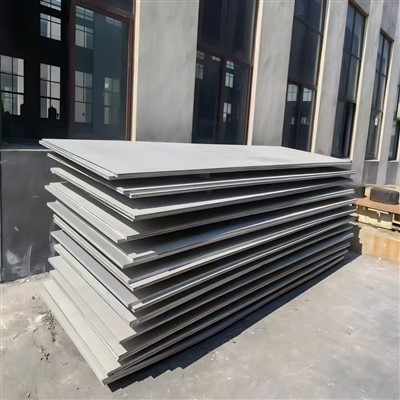

In lithium battery manufacturing, battery aluminum foil serves as the cathode current collector, directly affecting coating quality, electrical performance, and long-term battery reliability.
Among all quality indicators, pinhole rate is often underestimated-but in reality, it is a critical parameter that directly impacts yield, safety, and consistency.

01
High Quality
02
Advanced Equipment
03
Professional Team
04
Custom Service
What Is a Pinhole in Battery Aluminum Foil?
A pinhole is a microscopic through-thickness defect in aluminum foil, typically formed during rolling or caused by inclusions, surface contamination, or material inconsistencies.
In battery aluminum foil, pinholes are usually:
Invisible to the naked eye
Detected through light inspection or electrical methods
Measured as pinhole count per unit area
Even at extremely small sizes, pinholes can have disproportionate negative effects in battery applications.
Why Battery Aluminum Foil Requires Ultra-Low Pinhole Rate
2.1 Ensuring Uniform Cathode Coating
Lithium battery cathode slurry requires uniform wetting and adhesion on the aluminum foil surface.
Pinholes disrupt slurry spreading
Binder may penetrate through defects
Results in non-uniform coating thickness
This leads to:
Localized coating weakness
Edge peeling or powder shedding after drying
Reduced process stability on high-speed coating lines
2.2 Preventing Electrical and Electrochemical Risks
In lithium-ion batteries, aluminum foil functions as a stable current collector.
Pinholes can introduce:
Local current density concentration
Micro short-circuit risks after calendaring
Abnormal electrochemical behavior during cycling
For EV power batteries and energy storage systems, even minor defects can compromise long-term safety and reliability.
2.3 Improving Battery Yield and Manufacturing Efficiency
High pinhole rates directly reduce production yield:
Increased rejection during coating inspection
More defects detected after calendaring
Higher scrap rate and rework cost
Battery manufacturers operating continuous, high-speed lines require aluminum foil with consistently low pinhole levels to maintain stable throughput.
2.4 Supporting High Energy Density Battery Designs
As battery technology advances toward:
Thinner aluminum foil (10–12 μm)
Higher energy density electrodes
Tolerance for defects becomes much lower.
Low pinhole aluminum foil is no longer optional-it is mandatory for next-generation lithium battery systems.
Relationship Between Pinhole Rate and Other Key Properties
It is important to clarify that pinhole rate is independent from surface treatment such as high dyne value.
| Property | Function | Process Origin |
|---|---|---|
| Low Pinhole Rate | Structural integrity | Base foil quality & rolling |
| High Dyne Value | Coating adhesion | Surface treatment |
| Thickness Uniformity | Mechanical stability | Rolling & tension control |
| Cleanliness | Coating consistency | Degreasing & handling |
A professional battery foil supplier must control all parameters simultaneously, not rely on surface treatment to mask structural defects.
What Causes Pinholes in Aluminum Foil?
Common root causes include:
Impurities or inclusions in molten aluminum
Non-metallic particles trapped during rolling
Poor surface cleanliness before cold rolling
Excessive rolling reduction or unstable tension
Equipment vibration or roll surface defects
Battery-grade aluminum foil requires much stricter process control than packaging or industrial foil.
How Battery-Grade Manufacturers Control Pinhole Rate
Professional manufacturers apply multi-stage control:
5.1 High-Purity Raw Materials
Use battery-grade aluminum ingots
Strict chemical composition control (e.g. 1235, 8011 alloys)
5.2 Optimized Rolling Process
Precision cold rolling with controlled reduction ratios
Online thickness and surface monitoring
5.3 Cleanliness Management
Oil-free rolling environment
Advanced degreasing and cleaning systems
5.4 100% Pinhole Inspection
Light inspection systems
Statistical pinhole count analysis
Batch traceability
5.5 Third-Party Verification
Pinhole inspection and quality performance can be verified through independent organizations such as SGS, increasing buyer confidence and audit readiness.
Typical Pinhole Requirements for Battery Aluminum Foil
While exact limits vary by battery manufacturer, common expectations include:
Extremely low pinhole count per square meter
No continuous or clustered pinholes
Stable pinhole performance across coil length
Compliance with internal battery OEM standards
Low pinhole rate is especially critical for:
EV power batteries
Energy storage system (ESS) batteries
High-speed, wide-width coating lines
What Buyers Should Check When Sourcing Battery Aluminum Foil
When evaluating suppliers, buyers should focus on:
Pinhole inspection method and frequency
Historical pinhole performance consistency
Base foil thickness and alloy stability
Cleanliness and surface defect control
Quality system compliance, such as ISO
A low price without stable pinhole control often leads to higher downstream manufacturing costs.
Our Certificates