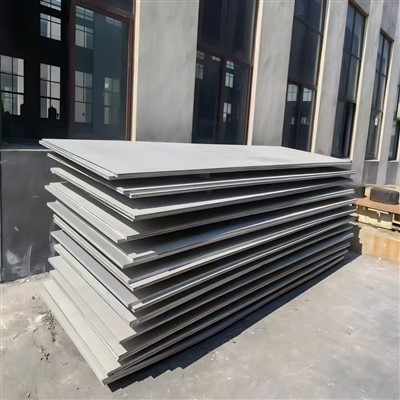

Why Is 316 More Expensive Than 304 Stainless Steel? (Industry Guide for B2B Buyers)
316 stainless steel is widely recognized as a premium-grade austenitic stainless steel, and it is consistently more expensive than 304. While both grades belong to the 18Cr stainless steel family, there are critical differences in chemical composition, performance, production cost, and global supply trends that result in a higher market price for 316. This article explains the key reasons behind the price gap to help industrial buyers make informed purchasing decisions.
🔍 1. Higher Alloy Content: Molybdenum Is the Biggest Cost Driver
The primary reason 316 stainless steel is more expensive is its 2–3% molybdenum (Mo) content.
In comparison:
| Grade | Cr (%) | Ni (%) | Mo (%) |
|---|---|---|---|
| 304 | 18–20 | 8–10.5 | 0 |
| 316 | 16–18 | 10–14 | 2–3 |
Why Mo increases cost:
Molybdenum is a trading commodity with high global price volatility.
It is significantly more expensive than chromium and nickel.
316 requires a stable Mo content to achieve its corrosion-resistant properties.
Result → 316 sheet price is typically 30–60% higher than 304 worldwide.
🔍 2. Superior Corrosion Resistance = Higher Material Value
316 outperforms 304 especially in:
✔ Chloride / seawater environments
✔ Chemical processing
✔ Acidic and alkaline media
✔ High humidity and high salinity conditions
This enhanced corrosion resistance allows 316 to be used in more demanding industries, including marine equipment, pharmaceuticals, medical devices, heat exchangers, offshore structures, and food processing lines.
The superior performance means:
Higher production cost → higher selling price.
🔍 3. Higher Nickel Content Increases Raw Material Cost
316 contains more nickel than 304, another expensive alloying element.
Nickel adds:
Better corrosion resistance
Improved toughness
Stability during fabrication
Global nickel price remains high due to demand in:
Stainless steel industry
EV battery production
This further widens the price gap between 304 and 316.
🔍 4. More Complex Production Requirements
316 stainless steel requires:
Tighter chemical control
More advanced melting and refining
Higher grade inspection
Better inclusion control for corrosion-sensitive applications
Manufacturers must maintain stricter quality tolerance, increasing:
Melting cost
Processing cost
Inspection cost
This contributes to a naturally higher price.
🔍 5. Certification and Compliance Costs Are Higher
316 stainless steel is often used in industries requiring:
FDA compliance
EU food-contact approval
Pharmaceutical-grade certification
Marine-grade approval
Pressure vessel / chemical equipment certification (PED, ASME)
These certifications add to the overall cost of producing 316 sheets.
🔍 6. Market Demand Differences
304 is the world's most widely used stainless steel grade (more than 50% of global stainless steel production).
316 has:
Smaller production volume
More specialized demand
Limited supply availability in some regions
Lower output → Higher unit cost.
💡 When Should Buyers Choose 316 Instead of 304?
Choose 316 when your application involves:
✔ Seawater or high-chloride exposure
✔ Chemical tank, reactor, heat exchanger
✔ Pharmaceutical or medical equipment
✔ High-end food processing machinery
✔ Outdoor environments with high humidity or salt
Choose 304 for:
✔ Indoor equipment
✔ Food containers, kitchen equipment
✔ Architectural decoration
✔ Household appliances
✔ General industrial fabrication
❓ Professional FAQ for B2B Buyers
1. How much more expensive is 316 compared to 304?
Typically 30–60% higher, depending on raw material prices (especially Mo and Ni).
2. Does 316 always perform better than 304?
Yes in corrosive conditions, but not necessary for mild indoor or dry environments.
3. Is 316 required for food-grade applications?
No-304 already meets global food-contact standards.
But 316 is preferred for high-acid or high-salt foods.
4. Does 316 have better mechanical strength?
Strength is similar to 304, but corrosion resistance is significantly better.
5. Is 316 magnetic?
No, both 304 and 316 are non-magnetic in annealed condition.