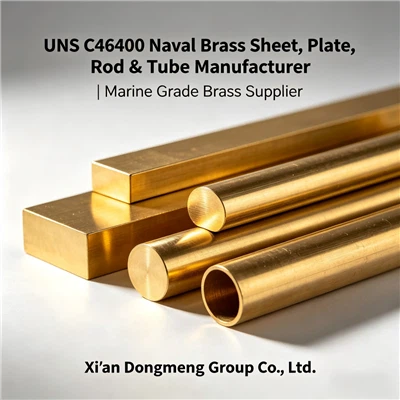

What are the material properties of copper pipes?
Physical properties of copper
Copper is a purple-red metal that is tough and malleable. It has high thermal conductivity and electrical conductivity, making it an excellent material for electrical and thermal conductivity. At 20°C, the thermal conductivity of copper is 397w/m·k, and its electrical conductivity is 94% of silver. The melting point of copper is 1083.4±0.2℃, the boiling point is 2567℃, and the density is 8.92g/cm³.
01
Chemical composition
Copper is a chemical element with the chemical symbol Cu and atomic number 29. Pure copper is a soft metal. When cut, the surface is reddish-orange with a metallic luster, and the pure copper is purple-red. Copper is less mobile and insoluble in non-oxidizing acids.
02
The grade of copper pipe
Copper tubes: Such as H59, H62, H65, etc. They are copper materials made of copper as the main component and adding a small amount of other elements.
Brass tube: such as H68, H80, H90, etc. Brass is an alloy of copper and zinc, generally containing 70% to 90% copper and 10% to 30% zinc.
Aluminum bronze tube: such as C68700, C70600, C71500, etc. Aluminum bronze is an alloy material of copper, aluminum, manganese and other elements.
Oxygen-free copper tubes: such as TU1, TU2, etc. Oxygen-free copper tubes refer to copper materials that have been deoxidized.
Nickel copper tube: such as B111 C70600, B111 C71500, etc. Nickel copper tube is a copper material made of copper and nickel as the main components, with other elements added.
03
Comparison between copper pipes and other metal pipes
Excellent thermal conductivity: Copper tubes have very excellent thermal conductivity, so they are widely used in refrigeration, air conditioning and other fields.
Good corrosion resistance: Copper pipes can resist corrosion from a variety of chemicals
Good plasticity and weldability: Copper pipes are easy to bend, cut and weld, making construction and installation convenient.
Antibacterial properties: Copper has natural antibacterial properties.
Corrosion resistance
thermal conductivity
Solderability
04

Material: Copper material with copper as the main component and a small amount of other elements added.
Common grades:
T series grades:
T1: Industrial pure copper with a copper content of up to 99.95%, extremely high purity.
T2: The copper content is about 99.90%. It is one of the commonly used grades in copper tubes.
T3: The copper content is about 99.70%, and the purity is slightly lower than T1 and T2.
H series grades (usually used in brass, but there are also corresponding grades in copper):
H85: A copper tube grade with a copper content of approximately 85%. It has excellent physical and mechanical properties, good corrosion resistance, and high thermal conductivity.
H62: High copper content, about 62%, with excellent electrical and thermal conductivity, as well as good ductility and plasticity.
Other brands:
TP2:
C1100, C1011, C1020, etc.

Material: An alloy of copper and zinc, generally containing 70% to 90% copper and 10% to 30% zinc.
Common grades: H68, H80, H90, etc.
Features: It has good processing performance and corrosion resistance, and is mainly used in furniture, bathroom equipment, auto parts and other fields.

Material: Copper material made of copper, aluminum, manganese and other elements as the main components, with a small amount of other elements added.
Common grades: C68700, C70600, C71500, etc.
Features: It has good strength and corrosion resistance and is mainly used in marine engineering, train braking systems, heat exchangers and other fields.

Material: Deoxidized copper material.
Common grades: TU1, TU2, etc.
Features: It has good electrical conductivity, plasticity and weldability, and is mainly used in air conditioning, refrigeration equipment, water heaters and other fields.

Material: Copper material made of copper and nickel as the main components, with other elements added.
Common grades: B111 C70600, B111 C71500, etc.
Features: It has good strength, corrosion resistance and wear resistance, and is widely used in marine engineering, metal processing machinery and other fields.

Features: Contains 0.015-0.04% phosphorus, has good welding and cold bending properties.
Application: Mainly used for gas line connecting pipes of stoves, air conditioning and refrigeration connecting pipes, electric heating pipes, etc.
What are the key advantages of using copper for pipe material?
office@dongmjd.com
Copper has stable chemical properties and combines cold resistance, heat resistance, pressure resistance, corrosion resistance and fire resistance, and can be used in different environments for a long time. For example, the copper pipes used in Ruijin Hotel and Union Hospital are still in good condition after 80 years.
Copper pipes have a long service life and may even exceed the life of the building.
Excellent hygiene:
The copper pipe has a fine structure and contains no chemical components. It is difficult for internal and external substances to enter the polluted water source, which can effectively prevent the growth and reproduction of microorganisms.
Biological research shows that E. coli in the water supply can no longer reproduce in copper pipes; more than 99% of the bacteria in the water are completely killed after entering the copper pipes for 5 hours.
Good thermal conductivity:
Copper has good thermal conductivity and can transfer heat quickly, so copper water pipes can transfer hot water faster and increase the speed of water supply.
Good corrosion resistance:
Copper has strong corrosion resistance and is not easy to oxidize. It will not rust easily after long-term use. It can be kept clean and hygienic without affecting water quality.
The inner diameter of the copper pipe is smooth and easy to install. It is especially suitable for special occasions such as hot and cold water pipes and oxygen pipes.
Environmentally friendly:
Copper is a recyclable material, and using copper pipes is conducive to resource recycling and reducing environmental pollution.
Easy to install and maintain:
Most copper pipes are connected with copper threads, which ensures the firmness of the connection and facilitates installation and maintenance.
Broad range of applications:
Copper pipes occupy a monopoly in water supply and drainage systems in developed countries or regions, with a market share of about 70%, and are suitable for a variety of environments and applications.
There are significant differences between soft copper tubes and hard copper tubes. The following is a detailed point-by-point representation and summary of the differences between the two:
1.Material and structure:
Soft copper tubing (also called flexible copper tubing or LWC) is made from a soft copper material that has been annealed to enhance its flexibility. Its tube wall is relatively thin and easy to bend and shape.
Hard copper tubes are formed through cold working, semi-cold working and cold drawing, and have thicker tube walls. Hard copper pipe has high hardness, high strength, corrosion resistance and excellent mechanical properties.
2. Application scenarios
Soft copper tube:
Residential water pipes: Due to their good flexibility and ease of installation, soft copper pipes are often used for water supply lines inside homes.
Condenser, cold air pipe: In refrigeration and air conditioning systems, soft copper pipes are used to connect the condenser and cold air pipes to ensure the circulation of refrigerant.
Solar water heater: Soft copper pipes are also commonly used in the water system of solar water heaters because of their good thermal conductivity and corrosion resistance.
Other civil fields: such as water supply and drainage pipelines in bathrooms, kitchens, etc.
Hard copper tube:
Main water supply pipe: In large buildings, industrial plants, etc., hard copper pipes are used as the main water supply pipes and can withstand higher pressure and flow.
Gas Pipe: Due to its high strength and corrosion resistance, hard copper pipe is also commonly used in gas piping systems.
Refrigeration and air conditioning: In addition to condensers and cold air pipes, hard copper pipes are also used in other parts of refrigeration and air conditioning systems, such as condensers, evaporators, etc.
Water supply system: In the fields of industry, commerce and public buildings, hard copper pipes are an important part of the water supply system to ensure the stability and smooth flow of water.
3. Features:
Soft copper pipe has good ductility and plasticity, moderate hardness (generally R220), and is easy to bend and shape. In addition, soft copper pipes are relatively affordable and can be processed by manual bending.
Hard copper pipe has the characteristics of high strength, high corrosion resistance, and not easy to deform. However, the price of hard copper pipe is relatively high, but its strong performance makes it last longer. Hard copper pipes need to be processed by special bending machines and will basically maintain their shape during use.
4. Processing and installation:
Soft copper pipes can be processed by manual bending, and installation and maintenance are relatively easy.
Hard copper pipe needs to be processed through specialized bending machines, and due to its sturdiness, installation may require more tools and techniques.
In summary, there are significant differences between soft copper pipes and hard copper pipes in terms of material, structure, use, characteristics, processing and installation. Which type of copper pipe to choose depends on the specific application and needs.
The thickness of the copper tube has a significant impact on its performance, mainly in the following aspects:
Pressure endurance:
The pressure-bearing capacity of copper pipes increases as the thickness increases. Generally speaking, the thicker the wall thickness of a copper pipe, the stronger its pressure-bearing capacity and the ability to withstand greater pressure. This is because the greater the wall thickness, the smaller the surface area of the copper tube, and the external force is dispersed over a smaller area, making the copper tube stronger and more pressure-resistant.
Hot and cold performance:
The thickness of the copper tube has a direct impact on its cooling and heating performance. Due to its larger thickness, thick copper pipe has higher strength, can withstand greater pressure and tension, and also has better corrosion resistance. However, in terms of heat transfer, thick copper pipes have a slower heat transfer rate because the heat needs to pass through more material to spread, which may lead to easy deformation and thermal cracks when the heat load is large.
Heat transfer efficiency:
The wall thickness of the copper tube is the resistance to heat transfer inside the copper tube and affects the heat transfer effect. Experimental data shows that copper tubes with thinner walls can transfer heat in a short time and have good heat transfer effects. As the wall thickness continues to increase, the heat transfer effect gradually decreases, and when the wall thickness is greater than 1 mm, the decrease in heat transfer effect is more obvious.
cost:
The thickness of the copper pipe also affects its cost. Generally speaking, the material cost of copper pipes with thinner wall thickness is lower, but the production process requirements are high and the processing is difficult, so the selling price may be higher. Copper pipes with thicker walls have higher material costs but are less difficult to process, so their selling prices are relatively low.
Application scenarios:
When selecting copper pipes, the appropriate thickness needs to be determined based on the actual application scenario. For example, in places with high heat loads and in local parts such as condensers and evaporators, thin copper tubes are more suitable because of their faster heat transfer speed and good heat dissipation performance. In situations where it is necessary to withstand greater pressure and require high corrosion resistance, thick copper pipes are more suitable.
In summary, the thickness of the copper tube has an important impact on its pressure-bearing capacity, cooling and heating performance, heat transfer efficiency, cost, and application scenarios. When selecting copper pipes, these factors need to be considered based on specific needs and actual conditions to select the most appropriate copper pipe thickness.
How does the temperature affect the performance of copper tubing?
1. Changes in physical properties:
Copper pipes will undergo physical changes in temperature changes. When the temperature increases, the length of the copper pipe will increase and the diameter will shrink; conversely, when the temperature decreases, the length of the copper pipe will shorten and the diameter will expand. This is because when copper changes temperature, its internal structure changes, resulting in changes in the overall physical properties.
For example, the linear expansion coefficient of copper pipe is 0.018mm/m·k. When the temperature rises by 60°C, a 1m long copper pipe will increase by 1mm.
2. Thermal conductivity and electrical conductivity:
At high temperatures, the thermal conductivity and electrical conductivity of copper pipes will increase. This makes copper pipes widely used in heating and cooling fields, especially in solar energy and air conditioning systems, where its performance is particularly excellent.
Applications and Notes:
At high temperatures, the shape and size of copper pipes change. Therefore, certain calculations and predictions are required when using it to ensure the stability and safety of the system.
High-quality copper pipes can ensure that they will not bend or deform under temperature conditions between -200°C and 200°C, will not burn when exposed to open flames, and will not release toxic gases when exposed to heat. This shows that copper pipes are highly adaptable to temperature and can withstand a wide range of temperature changes from extreme cold to extreme heat.
3. Thermal expansion and contraction:
Any pipe will expand with heat and contract with cold, and copper pipes are no exception. However, compared to pipes made of other materials, copper pipes have a smaller linear expansion coefficient, which makes them less deformable when temperature changes.
During engineering installation, in order to cope with thermal stress caused by temperature changes, it may be necessary to take corresponding measures, such as installing telescopic knots or elbow sleeves.