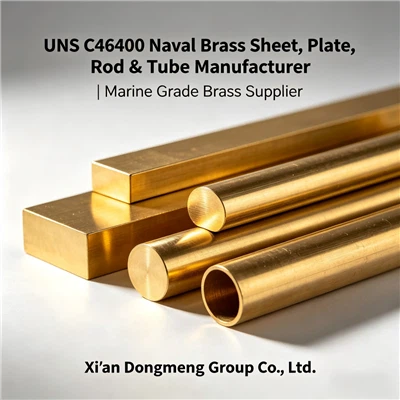

What are the advantages and characteristics of copper pipes in water supply and drainage systems?
office@dongmjd.com
Advantages and features
Copper pipe has a series of significant advantages and characteristics in water supply and drainage systems, which make copper pipe the material of choice in many applications. The following are the main advantages and features of copper pipes:
1. Corrosion resistance: Copper is a metal with natural corrosion resistance. It can resist the erosion of most acids, alkalis and salt solutions. This corrosion resistance allows copper pipes to be used in water supply and drainage systems for a long time without being easily damaged.
2. Good thermal conductivity: Copper has excellent thermal conductivity and can quickly transfer heat energy to water, which makes copper pipes particularly effective in heating systems. At the same time, it can also effectively maintain water temperature in cold water systems.
3. Antibacterial properties: Copper has natural antibacterial properties and can inhibit the growth of bacteria and microorganisms, helping to keep water clean and hygienic. This characteristic is particularly important for drinking water systems.
4. Easy to connect and install: Copper pipes can be connected in a variety of ways, such as welding, crimping, socket connections, etc., which makes the installation process easy and fast. In addition, copper pipes also have good bendability and can adapt to various complex pipeline layouts.
5. Long service life: Due to the corrosion resistance and sturdiness of copper pipes, their service life is usually very long, up to decades. This makes copper pipe an economical and durable option.
6. Environmental protection: Copper is a recyclable metal, and using copper pipes helps reduce the impact on the environment. In addition, copper pipes will not release harmful substances into the water and are safe and harmless to water quality.
7. Aesthetics: Copper pipes have an elegant appearance and luster, which can add beauty to the building. In some high-end residences and public facilities, copper pipes are often used to demonstrate their high quality and luxury.
8. Good adaptability: Copper pipes are suitable for various temperature and pressure conditions and can cope with various complex environments and applications. Whether it is a home, commercial building or industrial facility, copper pipes provide reliable plumbing solutions.
Application scenarios
The application scenarios of copper pipes in water supply and drainage systems are quite wide. The following is a clear summary according to different fields and application characteristics:
1. Residential construction
Hot and cold water pipes: As a traditional material in water supply systems, copper pipes are widely used in hot and cold water pipes in buildings to meet the water temperature needs of different areas of the home.
Heating pipes: Copper pipes have excellent thermal conductivity and can effectively transmit heat. They are widely used in heating pipes to ensure a suitable temperature inside the home.
2. Public facilities
Hotels, restaurants, hospitals: The application of copper pipes in these public facilities is gradually expanding, especially in places with high water quality and hygiene requirements. Copper pipes are favored for their hygiene and recyclability.
High-end buildings: In high-end residences, office buildings and other buildings, copper pipes are increasingly used as water supply pipes due to their excellent performance and long-term reliability.
3. Industrial field
Industrial water treatment: Copper pipes are widely used in the field of industrial water treatment, such as seawater desalination devices, water purifiers, etc. Its corrosion resistance and antibacterial properties provide guarantee for industrial water treatment.
4. Specific environment
Irrigation system: Copper pipes can be used in farmland irrigation systems to provide fresh water for farmland and ensure the growth needs of crops.
Ponds and pools: Provide fresh water for ponds or pools and keep water bodies clean and hygienic.
5. Environmental protection and sustainability
Recyclability: Copper is a recyclable metal. Using copper pipes helps reduce the impact on the environment and meets the requirements of sustainable development.
6. International market application
Developed countries and regions: Copper pipes are widely used in developed countries and regions, such as the United States, Canada, Australia and other countries. More than 85% of building water supply and drainage systems use copper pipes; in the United Kingdom, copper pipes are used as building water supply pipes. The usage rate is as high as 95%.
7. Historical verification
Long-term reliability: Copper pipes have a long history of use. For example, the water supply pipes in the ancient Egyptian pyramids are copper pipes and are still used today. In China, the copper pipes installed in the Peking Union Medical College Hospital in the 1920s have gone through more than 70 years of vicissitudes and still perform well today.
The standards and specifications for copper tubing can be broadly categorized into domestic and international standards, as well as specifications related to material, dimensions, and performance. Here is a clear breakdown of the key points:
Domestic Standards
GB/T1527-2017 (Seamless Copper Tubes): This standard specifies the requirements for seamless copper tubes, including classification, materials, chemical composition, mechanical properties, dimensions and tolerances, surface quality, inspection, and test methods.
GB/T1528-2017 (Welded Copper Tubes): This standard covers the requirements for welded copper tubes, including types, materials, chemical composition, mechanical properties, dimensions and tolerances, surface quality, inspection, and test methods.
International Standards
ASTM Standards:
ASTM B88 (Seamless Copper Water Tube): Specifies requirements for seamless, straight-length, copper water tube intended for use in water systems in buildings and for general applications where bending, flaring, brazing, soldering, and similar forming operations are involved.
ASTM B111 (Copper-Nickel Seamless Condenser Tubes): Covers seamless, straight-length, copper-nickel (Cu-Ni) condenser and heat exchanger tubes.
ASTM B251 (General Purpose Copper and Copper-Alloy Plate, Sheet, Strip, and Rolled Bar): Includes requirements for copper and copper-alloy plate, sheet, strip, and rolled bar for general applications.
JIS Standards:
JIS H3300 (Copper and Copper Alloy Tubes): Specifies the requirements for copper and copper alloy tubes.
JIS H4080 (Copper and Copper Alloy Seamless Tubes for Air Conditioners and Refrigerators): Covers seamless tubes made of copper and copper alloys for use in air conditioners and refrigerators.
EN Standards:
EN 1057 (Copper and Copper Alloys - Seamless, Round Copper Tubes for General Purposes): Specifies the requirements for seamless, round copper tubes for general purposes.
EN 12449 (Copper and Copper Alloys - Welded Round Copper Tubes for General Purposes): Covers welded, round copper tubes for general purposes.
Specifications
Materials and Chemical Composition: Copper tubing standards specify the materials and chemical composition to ensure good conductivity, corrosion resistance, and processing performance.
Dimensions and Tolerances: Standards define the outer diameter, inner diameter, wall thickness, and length of copper tubing, along with the associated tolerances.
Mechanical Properties: Requirements for tensile strength, yield strength, elongation, and other mechanical properties ensure the tubing's structural integrity and durability.
Surface Quality: Standards specify the surface finish, oxide layer thickness, and other surface quality requirements to maintain the tubing's appearance and corrosion resistance.
Classification
Copper tubing is typically classified based on its diameter and wall thickness, with specifications for small, medium, and large sizes. Common specifications include dimensions such as 6.00×0.50mm, 16.00×0.75mm, and 25.00×1.20mm.