
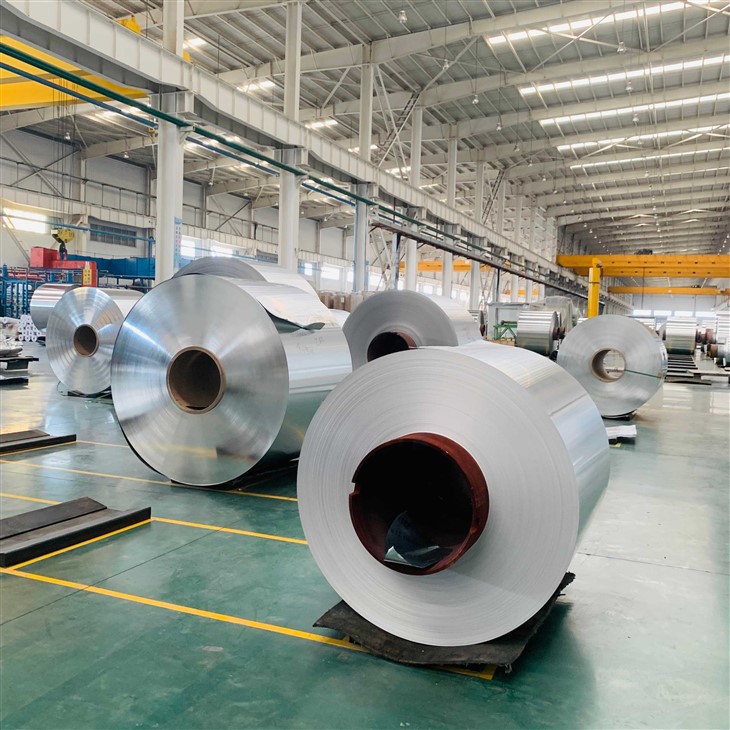
1235 Aluminum Foil

1235 Aluminum Foil
Details:
Typical alloys: 1235 3003 8011 etc.
Material status: O、H14、H16、H18、H19 etc.
Thickness (mm): 0.014-0.2
Width (mm): 20-1600
Length (mm): C
Delivery date: 7-35 business days
contact us: office@dongmjd.com
Send Inquiry
Description
Send Inquiry

Xi'an Dongmeng Group Co., Ltd. is one of the most reliable manufacturers and suppliers of 1235 aluminum foil in China, also supports customized service. With abundant experience, we warmly welcome you to wholesale cheap products in stock here and get free sample from our factory. For price consultation, contact us.


What is Aluminum Foil?

Aluminum foil is a very thin aluminum product, usually less than 0.2 mm thick. It is made of high-purity aluminum metal and contains about 92-99% aluminum and can be easily bent or torn. The width and strength of aluminum foil will vary greatly for different applications. It is a durable, non-toxic, oil-proof and chemical-resistant material.

1235 Aluminum Foil - High-Purity Commercial Pure Aluminum Foil

1235 aluminum foil is one of the most widely used and highest-volume types of aluminum foil, belonging to the industrial pure aluminum foil series (1xxx series). Its core characteristic is its extremely high aluminum content, offering excellent formability, electrical and thermal conductivity, moisture resistance, and non-toxicity.

I. Chemical Composition

The chemical composition of 1235 aluminum foil primarily consists of aluminum with minor allowable impurity elements. Its core requirement is an aluminum content of no less than 99.35%. Specific composition ranges typically adhere to standards such as ASTM B479 or GB/T 3198:

Element Content Notes
Aluminum (Al) ≥ 99.35% Primary constituent
Silicon (Si) ≤ 0.05%  
Iron (Fe) ≤ 0.60% Key Feature: Iron content is typically significantly higher than silicon (Fe > Si), forming Fe-Al-Si intermetallic compounds. This facilitates fine grain structure, improving the foil's processing performance and final mechanical properties.
Copper (Cu) ≤ 0.05%  
Manganese (Mn) ≤ 0.05%  
Zinc (Zn) ≤ 0.10%  
Titanium (Ti) ≤ 0.03%  
Vanadium (V) ≤ 0.05%  
Other Individual Impurities ≤ 0.03% Typically refers to other trace elements not listed above.
Total Other Impurities ≤ 0.65%  

Key Points:

High Purity: ≥99.35% Al ensures excellent ductility, electrical/thermal conductivity, and corrosion resistance.

Iron-Silicon Ratio (Fe/Si Ratio): A significant feature of 1235 foil is its higher iron content relative to silicon. This composition promotes the formation of fine, dispersed Fe-Al-Si phase particles during processing. These particles inhibit grain growth, enabling the foil to achieve a fine, uniform grain structure after subsequent rolling and annealing. This enhances the foil's strength, toughness, formability (deep drawing, tensile properties), and surface finish. This distinguishes 1235 from higher purity foils like 1145 (Al ≥99.45%).

Low Alloying Elements: Very low levels of Cu, Mn, Zn, etc., ensure good corrosion resistance and workability.

II. Product Introduction

1235 aluminum foil is produced by casting 1235 alloy ingots, followed by multiple stages of hot rolling and cold rolling down to the desired thickness (typically between 0.006mm - 0.2mm). Depending on the end use, it may undergo different heat treatment states (Annealed - O temper, or Hard - H18/H19 temper, etc.) and surface treatments.

Key Product Characteristics:

Excellent Formability: High purity and O temper (fully annealed) provide exceptional ductility, enabling complex forming operations like deep drawing, stamping, bending, and wrapping without cracking. H temper (hard) offers higher strength and flatness.

Superior Barrier Properties: Provides excellent barriers against moisture vapor, gases (e.g., oxygen, nitrogen), grease, and light, making it ideal for food and pharmaceutical packaging.

Good Thermal & Electrical Conductivity: Inherent properties of pure aluminum.

Non-Toxic: Complies with food and pharmaceutical contact material safety standards (e.g., FDA).

Corrosion Resistance: Good resistance in dry environments and neutral media. Requires surface protection (e.g., coating, lamination) in strong acids/bases or damp/salty environments.

Light Reflectivity: High surface finish provides good reflection of light and heat.

Laminating Capability: Easily laminated with paper, plastic films (e.g., PE, PET, CPP, NY), non-wovens, etc., to form high-performance composite materials.

Printability: Good printability after appropriate surface treatment (e.g., chemical treatment, priming).

Lightweight: Low density of aluminum contributes to product lightweighting.

III. Application Areas

Leveraging its excellent overall properties, 1235 aluminum foil is widely used across numerous industries:

Packaging Industry: This is the primary application area for 1235 foil.

Food Packaging: Chocolate, candy, butter, cheese, yogurt lids, deli foods, tea, coffee, instant noodles, flexible packaging (retort pouches, stand-up pouches), beverage cap liners (e.g., inner layer in Tetra Paks), wine bottle cap seals, baking containers (e.g., cupcake cups, pie pans), lunchbox dividers. Provides barrier, freshness preservation, moisture resistance, aroma retention, and light blocking.

Pharmaceutical Packaging: PTP (Push-Through-Pack) blisters, pharmaceutical aluminum-plastic composite bags, ointment tubes, bottle cap seals. Provides barrier, light protection, moisture resistance, and hygienic protection.

Cosmetic Packaging: Cosmetic tubes (toothpaste, cream tubes), bottle cap seals, mask pouch liners. Provides barrier, aroma retention, and aesthetics.

Industrial Packaging: Moisture-proof packaging for electronic components, packaging for photosensitive materials, chemical reagent packaging.

Electronics Industry:

Anode/Cathode Foil for Electrolytic Capacitors: After special electrochemical etching and forming (anodizing) processes, it develops a high surface area and dielectric oxide layer, making it a core material for aluminum electrolytic capacitors. Due to its high purity and suitable Fe/Si ratio for forming stable, high-quality oxide films, 1235 is commonly used for low-voltage (typically ≤100V) etched/formed foil (higher voltages often use higher purity foils like 1070, 1060).

Cable Shielding: Used as shielding in communication and power cables for EMI protection and moisture barrier.

Heat Sinks for PCBs: Utilizes its good thermal conductivity.

Household & Consumer Goods:

Household Foil: Rolls or sheets for grilling, baking, and food wrapping/storage.

Containers: Disposable roasting pans, food containers.

Cap Seals: Inner seals for beverage bottles, medicine bottles, etc.

Decorative Materials: Holographic foil (gold/silver cardstock), gift wrapping.

Construction Industry:

Insulation Material: Facing for building insulation materials (e.g., fiberglass, rock wool) to enhance thermal insulation by reflecting radiant heat.

Waterproofing Membranes: Facing material for modified bitumen roofing membranes, providing weather resistance and reinforcement.

Other Areas:

Labels: Beer labels, beverage labels, offering metallic luster and texture.

Flexible Connectors: Used for connections requiring conductivity and flexibility (e.g., battery tabs).

Heat Exchanger Fins: Utilizes thermal conductivity (though alloy foils are more common).


What are the Advantages of Aluminum Foil?
 

Easy to Use
Jumbo roll foil is very easy to tear, cut and shape to your packaging needs. Even wide rolls of industrial paper can be cut effortlessly with standard cutters or scissors. Because aluminum foil is flexible and malleable, you can shape it around irregularly sized items or create custom containers. foil foil aluminium rolls offer a cost-effective and simple solution for lightweight packaging.

Provides an Effective Barrier
One of the main reasons to use aluminum foil as a packaging material is its excellent barrier properties. foil foil aluminium rolls form a physical barrier that blocks moisture, light, gases and germs. This makes it an ideal choice for wrapping food items and keeping them fresher for longer. The shiny surface of the aluminum foil also acts as an effective reflector, helping to reduce the loss of vitamins from exposure to light.

Preserves Taste and Freshness
Because aluminum foil provides a reliable moisture and odor barrier, it helps preserve the flavor and freshness of packaged items. Loose tea leaves, fresh herbs and cheese will retain their flavor longer when wrapped in foil. Cookies, chips and snacks will stay fresher when stored in foil. The foil's barrier properties also help prevent cross-contamination of flavors and aromas between different foods.

Provides Heat Protection
While excellent at blocking heat, aluminum foil is also capable of reflecting it. This makes foil rolls ideal for use as oven liners or baking foils. When wrapping meat for grilling, foil helps seal in moisture and flavor while protecting the food from direct contact with the heating element. You can even wrap food in foil and place it on hot coals or a campfire for camping snacks.

Various Applications of Aluminium Foil
 

Home/Personal Use
This is perhaps the most common use for aluminum foils. Most of us have at a time in our lives, used a foil roll for packing food items like rotis and utensils, in our lunch boxes. The biggest advantage of aluminium foil over paper rolls & saran wraps is their ability to retain heat and keep the food from going cold.


Food Packaging
Many food manufacturing industries use aluminium foil for the purpose of creating airtight packaging for their food. We can also create custom disposable food-holding trays from aluminium foil. These are spill-proof and help keep the food warm and protected from the elements. These can include anything from frozen readymade food, chocolates, dairy products like yogurt, etc.


Pharmaceutical Packaging
The biggest issue with medicine packaging is that it needs to be easily accessible/openable & yet provide good enough protection & airtight seal against moisture and other contaminants. All the while, not adding significant weight & cost to the final product. That is why, one of the primary components used in pharmaceutical packaging, is aluminium foils. As they fulfill all of the required roles. Aluminum is the second least dense metal, making it extremely light. Being a metal, it provides an airtight seal and enough rigidity to not be damaged during transportation.


Electrical Devices & Safety
A very less known application of aluminium foil is its use in electrical applications. Aluminium provides some of the most sought out qualities in electrical industrial applications. These are – Good electrical conductivity, high-temperature resistance, resistance to corrosion/non-reactive, and durability. These characteristics allow aluminium foils to be used in applications like-

  • Cable insulation, as they provide excellent insulation against electromagnetic interference.
  • High resistance to heat and low density makes aluminium the perfect material for heat sinks.
  • Conducting tapes, these items provide a bonding substrate for different components, and due to aluminium's excellent electrical conductivity, allows the current to flow freely between the different parts.
 

Packing Liquids &Creams
Before the invention of aluminum packaging, packing & transporting liquids used to be a very costly operation. This was because glass bottles/containers consist of the majority of the weight of the total product, almost 75% to 80%. This increases the cost significantly by decreasing the total number of products that can be transported per shipment.

What is the Difference between Aluminum Foil and Tin Foil?


Appearance of Aluminum Foil and Tin Foil
Aluminum foil and tin foil are very similar in appearance, but there are some obvious differences that help us tell them apart. The first is the color. Aluminum foil is silver-white, while tin foil and aluminum foil are similar in color, but tin foil is much brighter than aluminum foil. Second is the texture. Aluminum foil is relatively hard, with a thickness generally between 0.006-0.2 mm. Tin foil is relatively soft, with a thickness generally between 0.006 and 0.2 mm. Between 0.009-0.05 mm, you can easily feel the difference by touching it with your hands.

Melting Points of Aluminum Foil and Tin Foil
The melting point of aluminum foil is 660°C and the boiling point is 2327°C. The melting point of tin foil is 232°C and the boiling point is 2260°C. Therefore, aluminum foil is usually preferred over tin foil in environments with higher temperatures such as grilling, cooking, and air frying.

Ductility of Aluminum Foil and Tin Foil
Aluminum foil has very good ductility, and tin foil also has certain ductility. However, compared with aluminum foil, the ductility of tin foil is still much worse. The fundamental reason for these differences is the difference in material composition, material crystal structure and processing method.

Thermal Conductivity of Aluminum Foil and Tin Foil
The thermal conductivity of aluminum is 237 W/mK, and that of tin is only 66.6 W/mK, so the thermal conductivity of aluminum foil is much better than that of tin foil. Due to its high thermal conductivity, aluminum foil is often used in cooking, for example, to wrap food to promote even heating and grilling, and to make heat sinks to facilitate rapid heat conduction and cooling.

Conductivity of Aluminum Foil and Tin Foil
The resistivity of aluminum is about 2.82×10^-8Ω·m, while the resistivity of tin is about 11.5×10^-8Ω·m, which is much larger than aluminum, so under the same conditions, the conductivity of aluminum foil is better than Tinfoil is much better. Therefore, aluminum foil is particularly suitable for the production of high-frequency precision circuit boards and capacitor foil materials in high-power circuits, while tin foil is suitable for internal connections of electronic equipment that does not require high conductivity but requires a certain degree of ductility.

Aluminum Foil and Tin Foil Prices
The price of tin foil is usually higher than that of aluminum foil, mainly because tin is more expensive as a raw material and its manufacturing process is relatively complex. Due to the advantages of aluminum resources and mature processing technology, the price of aluminum foil is generally lower than that of tin foil, which is one of the reasons why aluminum foil is more popular.

Food Packaging
Aluminum foil and tin foil both have good air tightness, anti-corrosion and non-stick properties and are widely used in the field of food packaging, but there are still some differences between the two. If the food wrapped in tin foil is left for too long, it will leave a bitter taste and affect the taste, while aluminum foil packaging is relatively stable and will not produce odor. This is also the main reason why most food packaging now chooses aluminum foil.

Recycling and Reuse
Aluminum foil can be reused after cleaning, and due to the complete and mature process, the recycling of aluminum foil is simpler, and the recycling rate can reach more than 75%. The recycling of tin foil involves purification from the material. The process is relatively complex and the recycling cost is high. The recycling rate is about 25-45%.

How To Transport Aluminum Foil
 
1

Consolidate and flatten rolls: Store partially used rolls in protective bags or seal tightly to flatten before stacking for transport. Creased or misshapen foil is more prone to damage.

2

Reinforce edges: Apply clear packing or medical tape around cut or torn edges of rolls or sheets to prevent unraveling during transport.

3

Clean surfaces: Wipe down aluminium foil with a dry cloth to remove crumbs, grease, or debris that could soil other items or container interiors.

4

Choose suitable containers: Rigid, tightly closing plastic bins, paint cans, toolboxes or cardboard boxes provide structure and buffering compared to loose paper or plastic bags.

5

Cushion with padding: Add wadded paper, bubble wrap, foam, or fabric scraps to fill voids and cushion between foil stacks or rolls to prevent jostling and dents.

6

Seal and label: Use heavy-duty plastic bags, duct tape, or lid fasteners to fully enclose containers. Write intended destination clearly on the outside.

7

Secure for vehicle: Tie down containers safely away from direct sunlight or potential crushing under heavier items like bikes or coolers.

What You Should Avoid When Store the Aluminum Foil?
 

Aluminum foil rolls should not be placed together with active chemical products such as acids, alkalis and high-humidity shed items. This helps prevent the foil from rusting or sticking together, ensuring it is ready for use when needed.


Storing place be somewhere that can not be exposed to sunlight overtime, as it may degrade the quality of aluminum foil.


When transporting from low-temperature areas to high-temperature and high-humidity areas, it is not advisable to open the packaging rushly. It is best to store it in a dry place for a certain period of time. Wait for the foil to warm up before opening the package.


For food grade aluminum foil with strict hygiene requirements, please protect them from grease splash, moisture and other possible polutants. Then you can protect their surfaces and ensure they're safe for food packaging uses.


Dents, creases and tears that could compromise the functionality of the foil should be avoided. When storing new rolls or retrieving old rolls, be careful no damage of the fragile layer of aluminum foil. Avoid delicate items or damage when handling rolls by using proper handling methods, you can ensure that your foil stays clean and ready to do its job when you need it.

Our Factory
 

2

Companies We Have As Clients


product-1-1

Our Certifications
 
product-1-1
product-1-1
product-1-1
product-1-1
product-1-1
product-1-1


Ultimate Guide


Q: How is aluminum foil manufactured?

A: Aluminum foil is manufactured through a process called rolling. First, pure aluminum ingots are melted and cast into large slabs. These slabs are then rolled several times until they reach the desired thickness. The rolling process also stretches the aluminum, making it thinner and longer. After rolling, the aluminum is annealed (heated and cooled) to soften it, and then it is coiled into large rolls of aluminum foil. Finally, the rolls are slit into the desired width and cut into smaller rolls or sheets for packaging and distribution.

Q: Where is the ideal location for storing household aluminum foil rolls?

A: Location matters when it comes to storing aluminum foil rolls. Avoid storing them in areas with high humidity, such as near the sink or dishwasher. Instead, opt for a cool, dry place like a pantry or a drawer away from heat sources. This helps prevent the foil from developing rust or sticking together, ensuring it's ready for use when needed.

Q: What are the packaging specification of aluminium foil?

A: Aluminum foil is a soft metal film, which is usually packaged and transported in rolls after rolling. Since aluminum foil rolls are easily damaged by squeezing and collision, special special packaging boxes are required during transportation and storage. In order to improve the structural reliability of the packaging box, the traditional aluminum foil roll packaging box is made of wood as a whole. The wood packing box not only has high strength, but also has the characteristics of moisture-proof, which can protect the aluminum foil roll well.

Q: How does aluminium foil react in chemistry?

A: Within a very short time, aluminium forms a micrometer-thick layer of aluminium oxide on the surface. It protects against a reaction with water. If this thin film is destroyed, a chemical reaction of the aluminium can be detected. The aluminium ions on the aluminium foil in combination with other compounds also undergo hydrolysis. The light aluminium foil often has a silver-grey, dull appearance due to a very thin oxide layer forming in the air. Pure aluminium foil has an impenetrable oxide layer. Therefore, this aluminium foil is corrosion resistant.

Q: How is aluminum foil used for packaging?

A: Aluminum foil provides a complete barrier to light, oxygen, moisture and bacteria. For this reason, foil is used extensively in food and pharmaceutical packaging. Aluminum foil is also used to make aseptic packaging. This type of packaging enables storage of perishable goods without refrigeration.

Q: Is aluminum foil permeable?

A: Aluminium foils thicker than 0.025 mm (0.001 in) are impermeable to light, gases (including oxygen) and water vapour. Foils thinner than this become slightly permeable due to minute pinholes caused by the production process.

Q: Is aluminium foil packaging sustainable?

A: As it is one of the few packaging materials that does not degrade through the recycling loop, aluminium foil can be used and recycled an infinite number of times. It is estimated 75% of all the aluminium ever made is still in use somewhere in the world in one form or another.

Q: Is aluminum foil flammable?

A: If something is wrapped in the aluminum foil and set on fire it will not burn because the ignition temperature of the aluminum foil is 660 degrees celsius and this temperature is very high to be there in an oven or even in a gas stove. Therefore, the aluminum foil does not get burnt.

Q: Is tin foil the same as aluminum foil?

A: As it turns out, tin foil and aluminum foil aren't interchangeable words, simply because tin foil is made out of tin.

Q: Why is my aluminum foil turning black?

A: Aluminium is not a noble metal. So, it discolors with passage of time. This is mainly because of tarnishing. Slight oxidation takes place on the surface layers of the foil which causes discoloration.

Q: Does aluminum foil degrade over time?

A: Foil thrown away with general waste will either end up in landfill or be incinerated. Aluminium foil isn't biodegradable and will take between 80 and 400 years to decompose.

Hot Tags: 1235 aluminum foil, China 1235 aluminum foil manufacturers, suppliers, factory, 1060 Aluminum Foil, 1100 Aluminum Foil, 8011 Aluminum Foil, 8021 Aluminum Foil, Food Grade Aluminum Foil Roll, Printed Aluminum Foil

Send Inquiry