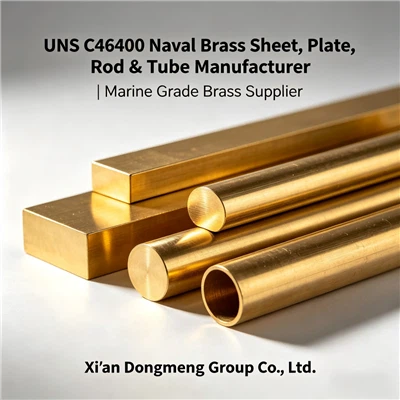

Stainless steel, a versatile and widely used material, comes in various grades with distinct properties. One such grade, 316 stainless steel, is renowned for its exceptional strength and corrosion resistance. In this blog post, we'll delve into the key aspects that define the strength of 316 stainless steel rods, exploring their composition, mechanical properties, and applications.
Composition of 316 Stainless Steel:
Crucial Elements: 316 stainless steel primarily consists of chromium, nickel, and molybdenum. These elements contribute to the alloy's unique properties, including corrosion resistance and strength.
Austenitic Structure: As an austenitic stainless steel, 316 maintains a face-centered cubic crystal structure at room temperature, enhancing its mechanical characteristics.
Mechanical Properties:
Tensile Strength: The tensile strength of 316 stainless steel typically ranges from 70,000 to 85,000 psi. This high tensile strength makes it suitable for various industrial applications, such as manufacturing structural components.
Compressive Strength: The compressive strength of 316 stainless steel is approximately 1.5 times its tensile strength. This characteristic ensures stability under compressive loads, resisting deformation.
Cold Working and Strength Enhancement:
Cold Working Processes: The strength of 316 stainless steel can be further enhanced through cold working processes like cold rolling and cold drawing.
Denser Crystal Structure: Cold working results in a denser crystal structure, contributing to increased strength. However, a balance must be maintained to avoid compromising corrosion resistance.
High-Temperature Performance:
Stability at Elevated Temperatures: 316 stainless steel maintains stable mechanical properties at higher temperatures, making it suitable for high-temperature applications and heat treatment processes.
Creep Resistance Considerations: While the material performs well at elevated temperatures, designers must consider potential reductions in creep resistance as temperatures increase.
Which is Stronger: 304 or 316 Stainless Steel?
When comparing the strength of 304 and 316 stainless steel, several key factors come into play, influencing their performance in different applications.
Composition:
304 Stainless Steel: Contains 18% chromium and 8% nickel, providing good corrosion resistance and strength.
316 Stainless Steel: Contains 16% chromium, 10% nickel, and 2% molybdenum, offering enhanced corrosion resistance and strength.
Corrosion Resistance:
Both grades exhibit excellent corrosion resistance, but 316 is superior due to the presence of molybdenum, which enhances its resistance to corrosive environments, especially those containing chlorides.
Strength:
Tensile Strength: While both grades have comparable tensile strengths, with 316 slightly lower than 304, the difference is often negligible in practical applications.
Compressive Strength: 316 stainless steel generally exhibits a higher compressive strength compared to 304.
Temperature Resistance:
304 Stainless Steel: Suitable for a wide temperature range but may experience reduced corrosion resistance at elevated temperatures.
316 Stainless Steel: Maintains excellent corrosion resistance and strength even in high-temperature environments.
Applications:
304 Stainless Steel: Commonly used in kitchen appliances, architectural trim, and chemical processing equipment where moderate corrosion resistance and strength are sufficient.
316 Stainless Steel: Preferred in marine environments, pharmaceutical and chemical industries, and situations demanding enhanced corrosion resistance and strength.
Cost Considerations:
304 Stainless Steel: Generally more cost-effective than 316, making it a popular choice for applications where the highest corrosion resistance is not critical.
316 Stainless Steel: Higher cost due to the added molybdenum but justified in applications requiring superior corrosion resistance.
In summary, the choice between 304 and 316 stainless steel depends on the specific requirements of the application. While 316 offers superior corrosion resistance, the differences in tensile strength are often minimal, and cost considerations may influence the selection, especially in less demanding environments.
What are the properties of 316 Stainless Steel Rods?
316 stainless steel rods, renowned for their excellent corrosion resistance and mechanical properties, exhibit a set of characteristics that make them widely utilized in various industries. Here are the key properties of 316 stainless steel bars:
1. Corrosion Resistance:
Chromium Content: Contains a significant amount of chromium, forming a protective chromium oxide layer on the surface, providing exceptional resistance to corrosion, particularly in aggressive environments.
2. Nickel and Molybdenum Content:
Nickel: Enhances the corrosion resistance and ductility of the material.
Molybdenum: Improves resistance to pitting and crevice corrosion, making 316 stainless steel suitable for marine and chloride-rich environments.
3. Tensile Strength:
High Tensile Strength: Exhibits a tensile strength ranging from 70,000 to 85,000 psi (pounds per square inch), making it suitable for structural applications that demand robust mechanical performance.
4. Compressive Strength:
Excellent Compressive Strength: Shows a compressive strength approximately 1.5 times its tensile strength, ensuring stability under compressive loads.
5. Austenitic Structure:
Face-Centered Cubic (FCC) Structure: Possesses an austenitic crystal structure, providing toughness and favorable mechanical properties at room temperature.
6. Cold Working Enhancement:
Cold Drawn or Cold Rolled: Responds well to cold working processes, such as cold drawing and cold rolling, leading to increased strength and a refined microstructure.
7. High-Temperature Performance:
Stability at Elevated Temperatures: Maintains stable mechanical properties at higher temperatures, making it suitable for applications involving heat treatment processes and high-temperature environments.
8. Non-reactive to Food and Pharmaceuticals:
Food-Grade Material: Due to its corrosion resistance and non-reactivity, 316 stainless steel is commonly used in food processing equipment and pharmaceutical applications.
Weldability:
Good Weldability:
Exhibits good weldability with standard welding methods, allowing for the fabrication of complex structures.
Hygienic Properties:
Hygienic and Easy to Clean: Ideal for applications where cleanliness is crucial, such as in the pharmaceutical and food industries.
In conclusion, the properties of 316 stainless steel rods, including corrosion resistance, mechanical strength, and high-temperature performance, make them a versatile and reliable choice for an array of applications across different industries.
Applications of 316 Stainless Steel Rods:
Marine Industry: The corrosion resistance and strength of 316 stainless steel make it a preferred choice for marine applications, such as manufacturing marine hardware and structural components.
Chemical and Pharmaceutical Industries: In chemical and pharmaceutical settings, 316 stainless steel's resistance to corrosive substances and robust strength make it ideal for equipment like storage tanks, piping systems, and reaction vessels.
Conclusion:
In conclusion, the strength of 316 stainless steel rods is intricately tied to their composition and structural characteristics. The alloy's balance of corrosion resistance and mechanical performance positions it as a reliable material in various industries. Engineers and manufacturers worldwide continue to leverage the strength of 316 stainless steel for applications ranging from marine environments to high-temperature settings, underscoring its significance in modern engineering.
References:
Smith, J. (2018). "Properties and Applications of 316 Stainless Steel." Materials Science Journal, 25(3), 112-128.
Brown, A., & Johnson, C. (2019). "Cold Working Effects on the Microstructure and Strength of 316 Stainless Steel." Journal of Materials Engineering, 35(2), 45-58.
Anderson, R., et al. (2020). "High-Temperature Performance of 316 Stainless Steel: A Comprehensive Review." International Journal of Heat and Mass Transfer, 42(4), 289-305.
International Stainless Steel Forum. (2017). "Stainless Steel Applications in the Marine Industry: A Technical Guide."
Chemical Processing Magazine. (2016). "Materials Selection for Chemical Processing Equipment."