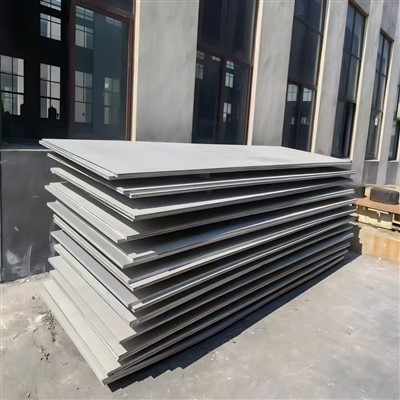

Overview of 1050, 1060, and 1100 Aluminum Sheets
| Alloy | Aluminum Content (%) | Strength | Corrosion Resistance | Typical Temper | Applications |
|---|---|---|---|---|---|
| 1050 | ≥ 99.5 | Low | Excellent | H14 / H24 | Food packaging, chemical tanks, roofing, signage |
| 1060 | ≥ 99.6 | Low | Excellent | H14 / H24 | Architectural panels, chemical equipment, reflective surfaces |
| 1100 | ≥ 99.0 | Slightly higher | Excellent | H14 / H24 / O | Food processing, chemical tanks, decorative panels |
Key Takeaways:
1050 is highly corrosion-resistant, lightweight, and cost-effective.
1060 offers marginally higher purity, excellent surface finish, ideal for reflective and architectural applications.
1100 provides slightly higher strength while maintaining food-safe and chemical-resistant properties.
Factors to Consider When Choosing
1. Application Requirements
Food Industry: 1050 and 1100 are preferred due to non-toxicity and hygiene compliance.
Chemical Equipment: All three alloys are suitable, but 1050 and 1060 are often chosen for acid or alkali resistance.
Architectural Panels: 1060 provides a superior surface finish for anodizing or painting.
2. Mechanical Strength
1050 and 1060 are soft and easy to form, ideal for deep drawing, rolling, and bending.
1100 is slightly stronger, better for structural applications that require slightly higher tensile strength.
3. Corrosion Resistance
All three alloys have excellent corrosion resistance due to high aluminum content.
For marine or high-humidity environments, 1060 and 1050 are often preferred for long-term durability.
4. Formability and Fabrication
1050 and 1060 are highly ductile, suitable for trays, tanks, and complex shapes.
1100 offers moderate ductility, suitable when strength and formability must be balanced.
5. Cost Considerations
1050 and 1060 are more cost-effective for large-scale projects.
1100 may have slightly higher cost but provides enhanced strength for specialized applications.
Practical Examples – 1050, 1060, and 1100 Aluminum Sheets
Choosing the right alloy depends on application requirements, strength needs, and surface finish expectations. Here are practical examples for each alloy:
1. 1050 Aluminum Sheet
Food Packaging: Disposable trays, containers, and foil layers due to high purity and food-safe properties.
Chemical Tanks: Storage of mild acids or alkaline solutions because of excellent corrosion resistance.
Architectural Panels: Lightweight roofing and siding where strength is less critical but weather resistance is needed.
Industrial Equipment: Lightweight ducting, covers, and panels where ease of forming and low cost are priorities.
2. 1060 Aluminum Sheet
Reflective Surfaces: Mirrors, reflectors, and decorative panels due to excellent surface finish and high purity.
Chemical Industry: Tanks, piping, and storage containers requiring superior corrosion resistance and surface integrity.
Architectural Projects: Anodized or painted panels for facades and decorative cladding, ideal when visual appearance matters.
Food Processing Equipment: Vessels, trays, and containers that need non-toxic, highly ductile aluminum.
3. 1100 Aluminum Sheet
Food Industry Applications: Baking sheets, trays, and food contact surfaces where slightly higher strength is beneficial.
Chemical Equipment: Tanks and vessels requiring both corrosion resistance and moderate strength.
Decorative Panels: Architectural or industrial panels where surface quality and workability are important.
General Fabrication: Light-duty structural components, enclosures, and sheet metal parts that require better strength than 1050 while maintaining excellent formability.
Key Insights:
Formability vs Strength: 1050 and 1060 are easier to bend and shape; 1100 offers slightly more strength for load-bearing applications.
Surface Finish Importance: 1060 is preferred for reflective or anodized surfaces, 1050 and 1100 for functional panels.
Food & Chemical Safety: 1050 and 1100 are highly suitable for direct food contact or chemical storage, meeting global B2B standards.
Conclusion
Choosing the right 1000 series aluminum sheet depends on project-specific requirements:
Use 1050 for cost-effective, corrosion-resistant applications.
Use 1060 for superior surface finish and architectural needs.
Use 1100 when slightly higher strength and food-safe properties are needed.
For factory-direct supply, full inspection certificates, and custom sizes of 1050, 1060, or 1100 aluminum sheets, contact us today for a quotation and technical support.
FAQ
Q1: What is the main difference between 1050, 1060, and 1100 aluminum sheets?
1050 and 1060 have higher purity and excellent corrosion resistance, with 1060 slightly higher in aluminum content for better surface finish. 1100 offers slightly higher strength while maintaining corrosion resistance and food safety.
Q2: Which alloy is best for food contact applications?
1050 and 1100 are ideal because they are commercially pure, non-toxic, and compliant with food safety standards. 1060 can also be used if surface finish is critical.
Q3: Are these alloys suitable for chemical storage or processing?
Yes. All three alloys resist corrosion from mild acids and alkalis, making them suitable for tanks, pipes, and chemical processing equipment.
Q4: What tempers are available and how do they affect usability?
H14 / H24: Half-hard or strain-hardened, providing moderate strength with excellent formability.
O (Annealed): Maximum ductility for deep drawing, bending, and forming complex shapes.
Q5: Can these sheets be anodized or painted?
Yes. 1060 is preferred for high-quality anodized or reflective finishes, while 1050 and 1100 are suitable for functional anodizing or painting.
Q6: What sizes and thicknesses are available?
Typical thickness: 0.3–6.0 mm, widths up to 2000 mm, lengths up to 6000 mm. Custom sizes can be produced on request.
Q7: How to choose the right alloy for my project?
Choose 1050 for cost-effective, corrosion-resistant applications.
Choose 1060 when surface finish and reflectivity are critical.
Choose 1100 if slightly higher strength is required for functional components.
Q8: Can these sheets be welded or fabricated?
Yes. All three alloys are easily welded, cut, and fabricated, though 1100 is slightly stronger, requiring careful forming for deep-drawn applications.
Q9: Are inspection reports and certificates available?
Yes. Mill Test Certificates (EN 10204 3.1), chemical and mechanical reports, and third-party inspection (SGS / BV / TUV) can be provided.
Q10: Can these sheets be exported globally?
Yes. Sheets are properly packed, edge-protected, and moisture-proof, making them suitable for containerized ocean freight and international shipments.