
Products Description
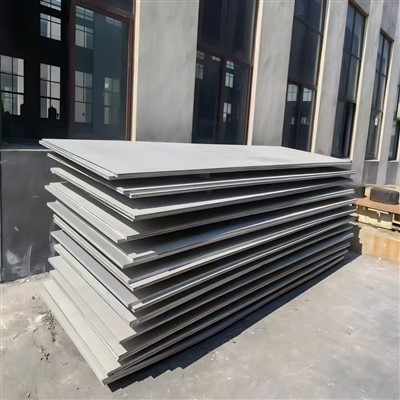
1050 Aluminum Sheet is a commercially pure aluminum alloy (≥99.5% Al) widely used in food packaging, chemical tanks, roofing, architectural panels, and industrial fabrication. Understanding the relevant manufacturing standards is crucial for B2B buyers, engineers, and international procurement managers, ensuring quality, compliance, and export readiness.
This article provides a detailed comparison of ASTM, EN, and ISO standards for 1050 aluminum sheet, helping buyers make informed purchasing decisions.
ASTM Standards for 1050 Aluminum Sheet
ASTM (American Society for Testing and Materials) provides the most widely recognized standards in North America. Relevant standards include:
| Standard | Description |
|---|---|
| ASTM B209 | Standard specification for aluminum and aluminum-alloy sheets and plates. Defines chemical composition, mechanical properties, temper, thickness, width, length, and surface quality. |
| ASTM B221 | Covers aluminum and aluminum-alloy extruded bars, rods, wire, profiles, and tubes, often used in conjunction with sheet/plate specifications for fabrication. |
| Key Features | Detailed tolerances, tempers (H14, H24), surface finishes (mill, bright, anodizing-ready). |
| Usage | Widely used in food processing, chemical equipment, construction, and general fabrication industries. |
EN (European Norm) Standards
EN standards are widely adopted in Europe, Middle East, and parts of Asia, focusing on dimensional accuracy, chemical composition, and mechanical properties.
| Standard | Description |
|---|---|
| EN 573-3 | Defines chemical composition of wrought aluminum alloys, including 1050 (Al99.5). |
| EN 485-2 | Specifies mechanical properties of aluminum sheets and plates, including tensile strength, yield strength, and elongation for H14, H24 tempers. |
| EN 515 / 573-2 | Covers aluminum tempers, dimensions, and tolerances for B2B industrial applications. |
| Usage | Common in architectural panels, chemical storage tanks, roofing, and export projects to Europe. |
ISO (International Organization for Standardization) Standards
ISO standards provide internationally recognized quality and specification guidance, enabling global B2B compliance.
| Standard | Description |
|---|---|
| ISO 6361 | Covers aluminum and aluminum alloy flat products; specifies chemical composition, mechanical properties, thickness, width, and surface finish. |
| ISO 209-1 | Provides guidelines for aluminum sheet tolerances and flatness for industrial fabrication. |
| Key Features | Ensures traceability, quality control, and suitability for export markets, compatible with ASTM and EN standards. |
| Usage | Preferred for international contracts, global suppliers, and projects requiring multi-standard compliance. |
Key Comparisons Between ASTM, EN, and ISO
| Feature | ASTM | EN | ISO |
|---|---|---|---|
| Chemical Composition | Al ≥ 99.5%, Mn ≤ 0.05%, Fe ≤ 0.4% | Al ≥ 99.5%, Mn ≤ 0.05%, Fe ≤ 0.4% | Al ≥ 99.5%, Mn ≤ 0.05%, Fe ≤ 0.4% |
| Temper / Hardness | H14, H24 | H14, H24 | H14, H24 |
| Mechanical Properties | Tensile Strength 70–120 MPa, Yield Strength 35–70 MPa | Tensile Strength 70–120 MPa, Yield Strength 35–70 MPa | Tensile Strength 70–120 MPa, Yield Strength 35–70 MPa |
| Surface Finish | Mill, Bright, Anodizing-ready | Mill, Bright | Mill, Bright, Anodizing-ready |
| Dimensional Tolerances | ASTM B209 specifies | EN 485-2 specifies | ISO 6361 specifies |
| Global Usage | North America | Europe, Middle East, Asia | Worldwide |
Insights:
All three standards ensure high-purity aluminum, corrosion resistance, and B2B quality compliance.
ASTM is more commonly used for North American markets.
EN is preferred for European construction and industrial projects.
ISO provides global alignment for international trade and export.
Benefits for B2B Buyers
Ensures compliance with global manufacturing and quality standards
Guarantees consistent chemical composition and mechanical properties
Facilitates international trade and export with proper certification
Reduces risks of corrosion, poor forming, or defective sheets
Enables smooth integration into industrial, chemical, and food-grade applications
FAQ
Q1: What are the main standards for 1050 aluminum sheet?
The primary standards are:
ASTM B209 (USA) – Defines chemical composition, mechanical properties, tempers, and surface finish.
EN 573-3 / EN 485-2 (Europe) – Covers chemical composition, mechanical properties, and dimensions.
ISO 6361 (International) – Provides globally recognized specifications for aluminum sheets.
Q2: Are ASTM, EN, and ISO standards interchangeable?
Yes, the chemical composition and mechanical properties are largely equivalent, but dimensional tolerances and certification formats may vary. Buyers should check market-specific compliance requirements.
Q3: How do I verify that a 1050 aluminum sheet meets these standards?
Request a Mill Test Certificate (EN 10204 3.1) from the supplier, which documents:
Alloy and temper (e.g., H14 / H24)
Chemical composition analysis
Mechanical properties
Compliance with ASTM, EN, or ISO
Q4: Can a single 1050 aluminum sheet meet both ASTM and EN standards?
Yes. Many high-quality suppliers manufacture sheets compliant with multiple standards for export and international industrial projects.
Q5: Why is standard compliance important for B2B buyers?
Standard compliance ensures:
Consistent strength, ductility, and corrosion resistance
Legal and contractual acceptance in international projects
Reduced risk of defective materials or fabrication issues
Compatibility with industrial, chemical, food, and architectural applications
Q6: Which standard should I request for my project?
ASTM – Preferred for North American markets.
EN – Widely used in Europe, Middle East, and parts of Asia.
ISO – Recommended for global export and multi-standard compliance.
Q7: Can 1050 aluminum sheets under these standards be anodized or painted?
Yes. All three standards ensure high-purity aluminum with excellent surface quality, suitable for anodizing, painting, or coating.
Q8: Are inspection and third-party verification available?
Yes. Suppliers can provide chemical and mechanical reports, SGS/BV/TUV inspection certificates, and traceable batch numbers for export projects.