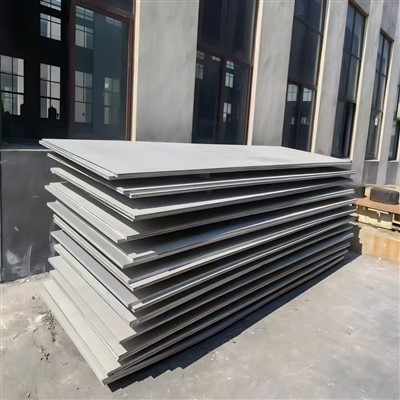

2Cr12NiMo1W1V and 2Cr12NiMo1W are both high-alloy martensitic/ferritic steels widely used in high-temperature, high-pressure, and corrosive environments such as power plants, chemical equipment, and nuclear systems. The primary difference lies in vanadium (V) content, which influences high-temperature strength, creep resistance, and toughness.
Chemical Composition Comparison
| Element (wt%) | 2Cr12NiMo1W1V | 2Cr12NiMo1W |
|---|---|---|
| C (Carbon) | 0.08–0.15 | 0.08–0.15 |
| Cr (Chromium) | 11.0–13.0 | 11.0–13.0 |
| Ni (Nickel) | 0.8–1.5 | 0.8–1.5 |
| Mo (Molybdenum) | 0.4–0.6 | 0.4–0.6 |
| V (Vanadium) | 0.15–0.25 | ≤0.10 |
| W (Tungsten) | 0.3–0.5 | 0.3–0.5 |
| Si (Silicon) | 0.2–0.5 | 0.2–0.5 |
| Mn (Manganese) | 0.3–0.7 | 0.3–0.7 |
| P (Phosphorus) | ≤0.03 | ≤0.03 |
| S (Sulfur) | ≤0.02 | ≤0.02 |
Key Insight:
The main difference is the higher vanadium content in 2Cr12NiMo1W1V, which improves high-temperature strength, creep resistance, and impact toughness.
2Cr12NiMo1W is slightly more economical due to the lower V content, while still maintaining good corrosion resistance and high-temperature performance.
Mechanical Properties
| Property | 2Cr12NiMo1W1V | 2Cr12NiMo1W |
|---|---|---|
| Service Temperature | ≤550°C | ≤540°C |
| Tensile Strength | 550–750 MPa | 520–700 MPa |
| Yield Strength | 320–480 MPa | 300–450 MPa |
| Impact Toughness | ≥40 J @20°C | ≥30 J @20°C |
| Corrosion Resistance | Excellent | Good |
| Weldability | Good | Good |
| Heat Treatment | Annealing, Normalizing + Tempering | Annealing, Normalizing + Tempering |
Analysis:
2Cr12NiMo1W1V offers higher strength and toughness at elevated temperatures due to vanadium.
2Cr12NiMo1W is sufficient for less demanding high-temperature applications and provides cost efficiency.
Typical Applications
| Application Area | 2Cr12NiMo1W1V | 2Cr12NiMo1W |
|---|---|---|
| High-Temperature Boiler Tubes | √ | √ |
| Pressure Vessels | √ | √ |
| Chemical Equipment | √ | – |
| Seawater / Acidic Environments | √ | – |
| Thermal / Nuclear Power Equipment | √ | √ |
Application Insight:
2Cr12NiMo1W1V is preferred for high-stress, high-temperature, and corrosive environments.
2Cr12NiMo1W is suitable for conventional high-temperature power plants and industrial boiler systems where extreme toughness is less critical.
Advantages Comparison
| Feature | 2Cr12NiMo1W1V | 2Cr12NiMo1W |
|---|---|---|
| High-Temperature Strength | Higher (≤550°C) | Adequate (≤540°C) |
| Impact Toughness | Superior | Moderate |
| Corrosion Resistance | Excellent | Good |
| Creep Resistance | Enhanced due to V | Standard |
| Cost | Higher | Lower |
| Weldability | Good | Good |
| Application Range | Chemical, seawater, nuclear | Conventional boilers |
Summary:
2Cr12NiMo1W1V: High vanadium content increases creep resistance, high-temperature strength, and toughness for demanding applications.
2Cr12NiMo1W: Lower cost alternative for conventional boiler tubes and pressure vessels with slightly reduced high-temperature performance.
Conclusion
Choose 2Cr12NiMo1W1V for high-end chemical, seawater, nuclear, or ultra-high-temperature applications requiring long-term reliability and enhanced creep resistance.
Choose 2Cr12NiMo1W for conventional power plants, industrial boilers, and applications where cost efficiency and standard high-temperature performance are sufficient.