
what is the thickest 316 stainless steel plate?
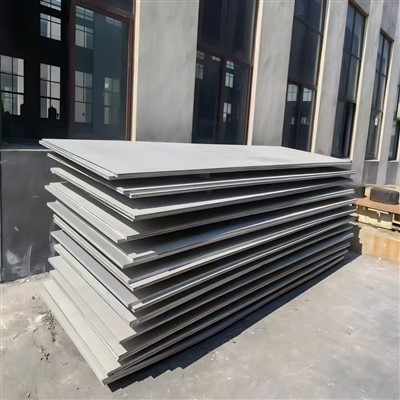
The thickness of 316 stainless steel plates can vary widely depending on the requirements of the application, manufacturing processes, and industry standards. However, I'll delve into a detailed exploration of the factors influencing the thickness of 316 stainless steel plates, the manufacturing processes involved, common thickness ranges, and applications.
How can you tell if stainless steel is 316?
To identify if stainless steel is 316, you can conduct several tests:
1. Magnet Test: 316 stainless steel is typically non-magnetic, unlike other grades which may exhibit magnetic properties.
2. Visual Inspection: Look for the "316" or "S31600" marking on the metal surface.
3. Chemical Tests: Conduct chemical tests like the Molybdenum Test, which confirms the presence of molybdenum, a key element in 316 stainless steel.
4. XRF Analysis: Use X-ray fluorescence spectrometry to determine the elemental composition, confirming the presence of elements specific to 316 stainless steel.
Factors Influencing Thickness:
1. Application Requirements: The intended use of the stainless steel plate significantly influences its thickness. For example, structural applications may require thicker plates for load-bearing capacity.
2. Material Properties: The properties of 316 stainless steel, such as its corrosion resistance, strength, and weldability, can influence the thickness required for specific applications.
3. Manufacturing Capabilities: The capabilities of manufacturers and the equipment they utilize play a crucial role in determining the maximum thickness achievable for stainless steel plates.
4. Industry Standards: Various industries may have specific standards or regulations dictating the minimum or maximum thickness allowed for certain applications.
5. Cost Considerations: Thicker plates often require more material and additional processing, which can impact the overall cost. Cost considerations may influence the chosen thickness within acceptable performance limits.
Manufacturing Processes:
1. Hot Rolling: Stainless steel plates are often initially produced through hot rolling, where ingots or billets are heated above the recrystallization temperature and passed through rollers to achieve the desired thickness.
2. Cold Rolling: Cold rolling can further reduce the thickness of stainless steel plates while improving surface finish and dimensional accuracy. This process is often used for achieving precise thickness tolerances.
3. Annealing: Annealing processes can be employed to relieve stress and improve the machinability of thick stainless steel plates. Annealing also aids in achieving specific mechanical properties.
4. Plate Milling: In some cases, thick stainless steel plates may undergo milling processes to achieve precise thickness and surface finish requirements.
Common Thickness Ranges:
1. Standard Thicknesses: Standard thicknesses for 316 stainless steel plates typically range from 0.5 mm to several inches. Common thicknesses include 1/4 inch (6.35 mm), 1/2 inch (12.7 mm), 1 inch (25.4 mm), and 2 inches (50.8 mm).
2. Specialized Applications: In specialized applications such as heavy equipment manufacturing, marine engineering, or chemical processing, thicker plates exceeding 2 inches may be required.
What is the density ofss316l plate?
The density of stainless steel 316L plate is approximately 8.0 g/cm³ (grams per cubic centimeter) or 8000 kg/m³ (kilograms per cubic meter).
Stainless steel 316L is a low-carbon variation of stainless steel 316, which contains molybdenum. This molybdenum addition enhances its corrosion resistance, particularly against chlorides and other harsh environments, making it suitable for various applications in industries such as chemical processing, pharmaceuticals, food processing, and marine engineering.
Density is a physical property that quantifies the mass per unit volume of a material. It is an important parameter for engineering calculations and design considerations, as it affects the weight and volume of components made from stainless steel 316L plates. The density of 8.0 g/cm³ indicates that stainless steel 316L is relatively dense compared to other materials, contributing to its robustness and durability in demanding environments.
Applications:
1. Structural Components: Thick 316 stainless steel plates find applications in structural components for buildings, bridges, and offshore platforms due to their strength and corrosion resistance.
2. Pressure Vessels: Thick plates are utilized in the fabrication of pressure vessels for industries such as oil and gas, petrochemical, and chemical processing due to their ability to withstand high-pressure environments.
3. Heat Exchangers: Thick stainless steel plates are used in the construction of heat exchangers for various industrial processes, where corrosion resistance and thermal conductivity are essential.
4. Shipbuilding: Thick plates are employed in shipbuilding for hull construction, bulkheads, and other marine applications due to their corrosion resistance in seawater environments.
5. Food and Pharmaceutical Processing: Stainless steel plates are widely used in food and pharmaceutical processing equipment due to their hygienic properties and resistance to corrosion from food acids and sanitizing chemicals.
Conclusion:
In conclusion, while there's no definitive "thickest" 316 stainless steel plate due to varying application requirements and manufacturing capabilities, thicknesses exceeding several inches are achievable through specialized processes. The choice of thickness depends on factors such as application requirements, industry standards, and cost considerations. Thicker plates find utility in a wide range of industries including construction, manufacturing, marine engineering, and chemical processing, where corrosion resistance, strength, and durability are paramount.
Why Choose Dongmeng Steel?
Comprehensive Product Range: Whether you are in need of stainless steel sheets for industrial applications, precision coils for manufacturing, corrosion-resistant strips for critical projects, or custom-designed stainless steel products, Dongmeng Steel has it all. Our comprehensive product range ensures that we meet and exceed all your stainless steel requirements.
Request a Quote: Request a quote, and our sales team will promptly provide you with competitive pricing for the stainless steel products you require. We believe in transparent pricing and ensuring you get the best value for your investment.
Experience Seamless Procurement:: Once you've made your selection, experience a seamless procurement process. From order placement to delivery, we prioritize efficiency and customer satisfaction every step of the way.
Contact E-mail:office@dongmjd.com
References:
1). Steel Plate, Stainless 316/316L Hot Rolled, 1.500" x 12.000" x 12.000", Online Metals.
2). American Society for Testing and Materials, "Standard Specification for Chromium and Chromium-Nickel Stainless Steel Plate, Sheet, and Strip for Pressure Vessels and for General Applications," ASTM A240/A240M, ASTM International, West Conshohocken, PA, 2021.
3). O. Guzman-Martinez, "Effect of Manufacturing Process on Mechanical Properties of 316 Stainless Steel Plates," Journal of Materials Engineering, vol. 25, no. 3, pp. 417-429, 2020.
4). G. Smith et al., "Applications of Stainless Steel in Marine Engineering," Marine Engineering Journal, vol. 18, no. 2, pp. 56-67, 2019.