
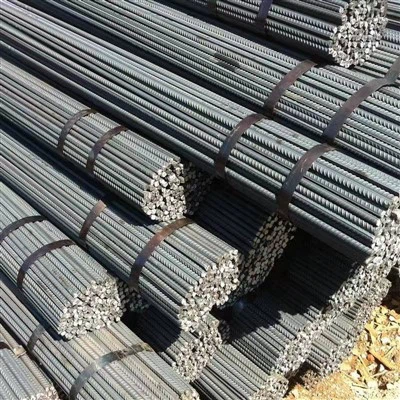
Reinforcing steel typically consists of carbon steel, which is hotrolled with deformation patterns (The ribbed profiles you see on therebar and wire), allowing for a stronger bond to the concrete. Thesteel bars and mesh are produced from iron ore and recycled steelin different steel mills around the world.
What is rebar?
Rebar, short for "reinforcing bar" or "reinforcement bar", is a metal bar that is used to help increase the tensile strength ofconcrete. As a result, it helps concrete structures withstand tensile, bending, torsion, and shearing loads. Since these areareas of weakness for concrete, rebar strengthens concrete structures that would otherwise fall apart under these forces.
Rebar is not typically visible in concrete structures because it is usually buried within the concrete structure. it is almostalways made of steel because steel has thermal expansion properties like concrete which reduces temperature changeissues. Rebar is usually not smooth, it is made with ribs to prevent slippage within the concrete structure.
How is rebar made?
Rebar is almost always made from steel, which has excellent tensile properties relative to concrete. interestingly, it iscommonly made from recycled steel such as old cars, appliances, and machinery that are melted down with electric arcfurnaces, cooled in the form of billets, and then stored. Once the billets are ready to be used for making rebar, they arereheated to an elevated temperature (but below thelr melting temperature and are fed rapidly throuah a series of extrusiontools. The different stages of extrusion tooling continue to neck down the steel bilet into smaer and smaler diameter rodsuntil the desired rebar diameter is achieved. A set of tooling creates the deformations needed to prevent slippage within theconcrete, The rebar is then sheared to the desired lenath.



How does rebar work?
The tensile strength of the steel rebar complements the compressive strength of concrete to create structures that have ablend of both types of strength. This reduces the risk of fractures and allows the structure to better withstand movementsand forces that might otherwise cause a concrete structure to fail.
Rebar is often laid in a grid pattern. This means that different segments of rebar are placed parallel and perpendicular to oneanother so that it can withstand tensile forces from many directions, The deformations on the exterior of the rebar ensurethat the rebar does not slip out of the concrete structure. Sometimes rebar is bent at the ends to further anchor it in placewithin a concrete structure.
What is Steel Reinforcement?
Better known simply as rebar or steel reinforcement,reinforced steel consists of long steel bars.These bars often have a series of jagged, uneven notches andgrooves on them, designed forincreased grip and tensiltly. Steel reinforcement is pimarly used to reinforce concrete by ading strength, tension, and durabiityt concrete proiects, it's used for vertical and flat concrete structures such as walls, skvscrapers, bridges, and foundations.
Rebar is typically made using a method caed the Electric Arc furnace steel-making process. Using this method,scraps of steel of all kinds are melted andmolded toether untilit forms moten stee. his concoction is then poured into casting and undergoes several other processes unilit comes out in the form ot asolid, durable steel bar.
Why is Steel Reinforcement Necessary?
People who are unfamiliar with how concrete works don't understand why it needs reinforcing steel.They see a thick,solid wall of concrete and think there's noway that anything could ever happen to it. Howeve,concrete in and ofitself has very litle tension and way too much compression. As a result, concrete can'tshift or move at all, which means it will crack and break under heavy weiaht or pressure.
By periodicaly adding reinforcing steel (rebar) into the concrete it has increased tension without osing anv compression As a result it's far less likelv to crackdue to heavy pressure,increased weight, ortemperature changes. Cracking is a leading cause of concrete damage and repairs and also presents structuralissues that could lead to serious problems.
Different Types of Reinforcing Steel
To accommodate any concrete construction prject,there are several diferentypes of reinforcing steel rebar that you can use. Each type of rebar serves thesame purpose,but it's bult and designed diferently depending on your needs. Contact us f you aren't sure which type of reinforcing steel is right for you.
►Prestressing Steel Bars
Prestressing steel bars are more like thick, hard wires than bars. Essentially,this type of reinforcing steel consists of two to seven carbon steel wires or rods thaare welded together into a thin, exible, solid bar. Prestressing stee! bars have the most flexibltly and tension but aren't necessarly the strongest type of rebar.
►Hot Rolled Deformed Steel Bars
Hotroled deformed stee! bars are the most popuar and common type of reinforcing stelin the construction industry. theyre the bars you typicaly see on anyconstuction sie and are used in foundations, wals, and other siuctures, Hotioled. deiommed steel bars also have the ribbed edoes vou otten see on rebar.
►Mild Steel Plain Bars
Unlike hotrolled deformed steel bars that have ribbed edges, mild steel plain bars are a smooth type of rebar.As such, they aren't auite as strong or tensile asother types of rebar but are more eco-friendly to produce.
►Cold Worked Steel Bars
Coldworked steel bars are very similar to hotroled deformed steel bars, with one exception. Afer geting hotroled,the steel bars undergo a second roling, thistime with cold working, While similar, cold-worked steel bars are slightly weaker and less ductile than their hot-rolled counterparts.
Our address
Room 4107, Runfeng Building, Sanqiao New Street, Weiyang District, Xi'an City, Shaanxi Province
Phone Number
+86 15769214734