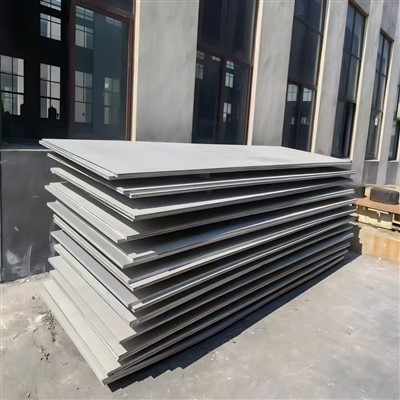

Duplex stainless steel type 2205, also known as UNS S32205/S31803, is a highly corrosion-resistant alloy characterized by its combination of austenitic and ferritic microstructures. With approximately equal proportions of austenite and ferrite phases, duplex stainless steels offer a unique set of properties that make them suitable for a wide range of applications across various industries.
Composition and Microstructure:
Duplex stainless steel type 2205 typically consists of about 22% chromium, 5-6% nickel, 3% molybdenum, and approximately 0.15% nitrogen. These elements contribute to the alloy's excellent corrosion resistance, mechanical strength, and toughness. The microstructure comprises roughly 50% austenite and 50% ferrite, which provides a balance of properties not achievable with either phase alone.
What ASTM grade is duplex 2205 equivalent to?
Duplex stainless steel 2205 is equivalent to several ASTM grades, with the most commonly referenced being ASTM A182 F51 and ASTM A240/A240M UNS S31803/S32205. These ASTM specifications cover various forms of duplex 2205, including bars, forgings, fittings, plates, and sheets. ASTM A182 F51 specifies duplex stainless steel forgings for high-temperature and corrosive service, commonly used in industries like oil and gas, chemical processing, and marine engineering.
On the other hand, ASTM A240/A240M covers duplex stainless steel plate, sheet, and strip for general applications, offering specifications for composition, mechanical properties, and dimensions. Both ASTM specifications ensure compliance with international standards for duplex 2205, providing guidelines for material properties, fabrication, and quality assurance. Engineers and manufacturers often refer to these ASTM grades to ensure the proper selection and use of duplex stainless steel 2205 in various applications.
Corrosion Resistance:
One of the most significant advantages of duplex stainless steel 2205 is its exceptional corrosion resistance. It exhibits superior resistance to various types of corrosion, including pitting, crevice corrosion, stress corrosion cracking, and general corrosion in chloride-containing environments. This makes it suitable for applications in aggressive environments such as chemical processing, marine structures, and oil and gas exploration.
Mechanical Properties:
Duplex stainless steel type 2205 offers excellent mechanical properties, including high tensile strength, yield strength, and impact toughness. Its strength is typically twice that of austenitic stainless steels like 304 or 316, allowing for the design of lighter and more cost-effective structures. Additionally, its high ductility and elongation properties make it relatively easy to form and fabricate.
Weldability:
While duplex stainless steel 2205 is weldable, special considerations are necessary to maintain its corrosion resistance and mechanical properties. Preheating, interpass temperature control, and post-weld heat treatment may be required to minimize the risk of detrimental effects such as precipitation of intermetallic phases and loss of corrosion resistance in the heat-affected zone.
Applications:
Duplex stainless steel type 2205, renowned for its exceptional combination of corrosion resistance, mechanical strength, and cost-effectiveness, finds diverse applications across various industries.
1. Oil and Gas Industry:
Duplex stainless steel 2205 is extensively used in the oil and gas sector for:
Offshore Platforms: Withstanding harsh marine environments and high-pressure conditions.
Subsea Pipelines: Resisting corrosion from seawater and corrosive chemicals.
Oil Refineries: Providing reliability in equipment like reactors, heat exchangers, and storage tanks.
2. Chemical Processing:
In chemical plants, 2205 duplex stainless steel is preferred for:
Reactor Vessels: Offering resistance to acidic and alkaline environments.
Heat Exchangers: Maintaining integrity in high-temperature and corrosive conditions.
Storage Tanks: Withstanding aggressive chemicals while ensuring long-term durability.
3. Desalination Plants:
Duplex stainless steel 2205 plays a vital role in desalination applications:
Seawater Processing Equipment: Providing corrosion resistance to chloride-rich environments.
Reverse Osmosis Systems: Ensuring reliability in equipment components subjected to seawater exposure.
4. Pulp and Paper Industry:
In pulp and paper manufacturing, 2205 duplex stainless steel is used for:
Digesters and Reactors: Resisting corrosion from chemicals used in the pulping process.
Pipelines and Conveyors: Ensuring longevity and reliability in transporting corrosive fluids and materials.
5. Structural Applications:
The structural integrity and corrosion resistance of 2205 duplex stainless steel make it suitable for:
Bridges and Overpasses: Providing strength and durability in corrosive environments.
Architectural Components: Ensuring aesthetic appeal along with longevity and reliability.
What is the difference between duplex 2205 and ss304?
The main difference between duplex 2205 and stainless steel 304 lies in their microstructures and chemical compositions. Duplex 2205 contains approximately 22% chromium, 5-6% nickel, 3% molybdenum, and about 0.15% nitrogen, resulting in a dual-phase microstructure of austenite and ferrite. This provides higher strength and better corrosion resistance compared to stainless steel 304, which contains 18% chromium and 8% nickel but lacks molybdenum and nitrogen.
While both materials offer good corrosion resistance in various environments, duplex 2205 excels in more corrosive and high-stress conditions, making it suitable for applications in industries such as oil and gas, chemical processing, and marine engineering. Stainless steel 304, on the other hand, is commonly used in less demanding environments, such as food processing, architectural, and household applications.
Environmental Sustainability:
The longevity and durability of duplex stainless steel 2205 contribute to environmental sustainability by reducing the need for frequent replacements and maintenance. Its recyclability also supports sustainable practices in material sourcing and waste reduction.
Conclusion:
Duplex stainless steel type 2205 is a versatile material with a unique combination of properties that make it suitable for demanding applications in various industries. Its corrosion resistance, mechanical strength, weldability, and environmental sustainability position it as a preferred choice for critical infrastructure and equipment where reliability and performance are paramount. As technology continues to advance, further innovations in alloy composition and processing techniques may enhance the capabilities and applications of duplex stainless steels, ensuring their relevance in the years to come.
Why Choose Dongmeng Steel?
Comprehensive Product Range: Whether you are in need of stainless steel sheets for industrial applications, precision coils for manufacturing, corrosion-resistant strips for critical projects, or custom-designed stainless steel products, Dongmeng Steel has it all. Our comprehensive product range ensures that we meet and exceed all your stainless steel requirements.
Request a Quote: Request a quote, and our sales team will promptly provide you with competitive pricing for the stainless steel products you require. We believe in transparent pricing and ensuring you get the best value for your investment.
Experience Seamless Procurement:: Once you've made your selection, experience a seamless procurement process. From order placement to delivery, we prioritize efficiency and customer satisfaction every step of the way.
Contact E-mail:office@dongmjd.com
References:
Gu, J., & Xu, W. (2019). Duplex stainless steels and their applications. Materials at High Temperatures, 36(1), 35-45.
Karthikeyan, S., & Viswanathan, V. (2015). Duplex stainless steel 2205. International Journal of Mechanical and Production Engineering Research and Development, 5(1), 91-94.
Rahimi, M., & Farahani, M. (2017). Microstructural characterization and properties of duplex stainless steel 2205 weldments. Materials Science and Engineering: A, 688, 113-121.