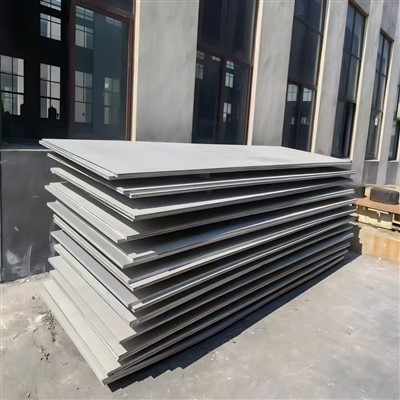

Note: The above three tables of chemical composition, physical performance parameters, and comparison of stainless steel grades in various countries are all from the Chinese national standard stainless steel and heat-resistant steel grades and chemical composition "GB/T 20878-2007"
Note: The above three tensile properties such as solution treatment, H1/4 H1/2, etc. are all from the national standard stainless steel cold-rolled steel plate and strip "GB/T 3280-2015".
Features and uses
304 stainless steel is the most widely used stainless heat-resistant steel, used in food equipment, general chemical equipment, atomic energy industry, etc.
Heat treatment system
The heat treatment temperature and cooling method of 304 stainless steel are ≥1040°C, water cooling or other rapid cooling.
304 stainless steel is the most commonly used one in the stainless steel family, with a density of 7.93/cm³. In the terminology of the stainless steel industry, it is also called 18/8 stainless steel, which means that it contains more than 18% chromium and more than 8% nickel; high temperature resistance 800 ℃, and has good processing performance and toughness, most of them are used in industry, furniture and other industries.
One thing to note is that 304 is also divided into ordinary 304 and food grade 304. Compared with food 304, its content is more stringent. For example, ordinary stainless steel contains 18%-20% chromium and 8%-10% nickel, while food-grade stainless steel 304 contains 18% chromium and 8% nickel, and various metals are restricted.
The common labeling methods on the market include 06Cr19Ni10 and SUS304, among which 06Cr19Ni10 generally indicates the national standard production, 304 generally indicates the ASTM standard production, and SUS 304 indicates the Japanese standard production
304 is a stainless steel that is often used in reality, and it is widely used in good equipment and industry.
304 stainless steel features
The advantages of 304 stainless steel faucets are: corrosion resistance, oxidation resistance, lead-free, no rust, no oil, easy to clean, and easy to maintain! The disadvantages are: the process is complicated and the production cost is high.
|
Chemical composition of 304 stainless steel |
|
|
C |
≤ 0.08 |
|
Si |
≤ 1.00 |
|
Mn |
≤ 2.00 |
|
P |
≤ 0.045 |
|
S |
≤ 0.030 |
|
Ni |
8.00 ~ 11.00 |
|
Cr |
18.00 ~ 20.00 |
|
Physical performance parameters |
||
|
Density/(kg/dm3)20℃ |
7.93 |
|
|
Melting point/℃ |
1398~1454 |
|
|
Specific heat capacity(KJ/KG*K)0~100℃ |
0.50 |
|
|
Thermal conductivity W/M*K |
100℃ |
16.3 |
|
500℃ |
21.5 |
|
|
Linear expansion coefficient(10-5/K) |
0~100℃ |
17.2 |
|
0~500℃ |
18.4 |
|
|
Resistivity/(Ωmm²/m)20℃ |
0.73 |
|
|
193 |
||
|
Magnetic |
No |
|