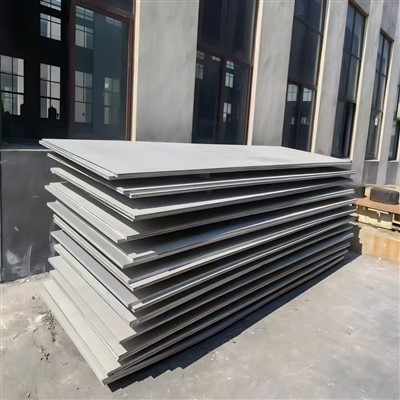

Overview of ASTM B209 and EN 485
ASTM B209 (American Society for Testing and Materials – USA):
Governs aluminum and aluminum-alloy sheet and plate.
Defines chemical composition, mechanical properties, temper designations, and tolerances.
Widely used in the North American market, including aerospace, automotive, construction, and industrial applications.
Covers alloys from pure aluminum (1000 series) to heat-treatable alloys (2000, 6000 series).
EN 485 (European Norm – Europe):
Specifies aluminium and aluminium alloy sheet, strip, and plate properties.
Divided into EN 485-1 (technical conditions), EN 485-2 (mechanical properties), and EN 485-3 (tolerances on dimensions and shape).
Commonly applied across European industries, with strong relevance for architectural, automotive, and machinery sectors.
Focuses on consistency, testing methodology, and European compliance requirements.
Key Differences Between ASTM B209 and EN 485
| Aspect | ASTM B209 | EN 485 | Notes |
|---|---|---|---|
| Region / Origin | USA | Europe | Global buyers may need to convert between standards |
| Scope | Aluminum & Aluminum Alloy Sheet and Plate | Aluminum & Aluminum Alloy Sheet, Strip, and Plate | EN 485 includes strip; ASTM B209 focuses on sheets and plates |
| Temper Designations | O, H12, H14, H18, T4, T6, etc. | F, O, H14, H18, T4, T6, etc. | Slight differences in temper naming; mechanical property values may vary |
| Mechanical Properties | Minimum tensile strength, yield strength, elongation | Minimum tensile strength, yield strength, elongation | EN 485 often provides slightly stricter tolerance ranges for thickness and width |
| Chemical Composition | Defines maximum % for alloying elements | Defines minimum & maximum % for alloying elements | ASTM may allow slightly higher variability for minor elements |
| Dimensional Tolerances | Thickness ±0.1–0.5 mm depending on thickness | Thickness ±0.05–0.3 mm depending on thickness | EN 485 generally has tighter tolerances, beneficial for precision applications |
| Surface Finish & Defects | Smooth, brushed, mill finish | Smooth, brushed, mill finish | Both standards specify acceptable defects; EN 485 may require more rigorous inspection for cosmetic applications |
| Testing & Certification | Material test report (MTR) required; may follow ASTM E8 for mechanical testing | Material certificate EN 10204 3.1 or 3.2; mechanical testing follows EN standards | European buyers often prefer 3.1 or 3.2 certification |
| Application Focus | Aerospace, construction, general industry | Construction, transportation, architectural, European machinery | Differences are subtle but important for compliance |
ASTM B209 vs EN 485 – Alloy & Temper Comparison
| Alloy Series | Typical Alloy | ASTM B209 Temper | EN 485 Temper | Min Tensile Strength (MPa) | Min Yield Strength (MPa) | Elongation (%) | Thickness Range (mm) | Typical Applications |
|---|---|---|---|---|---|---|---|---|
| 1000 Series | 1100 | O | O | 70–105 | 35 | 20–35 | 0.3–6.0 | Decorative panels, roofing, signage, lightweight applications |
| 1000 Series | 1350 | H14 | H14 | 120 | 55 | 8–12 | 0.5–3.0 | Anodized sheets, architectural facades |
| 3000 Series | 3003 | H14 / H18 | H14 / H18 | 130–160 | 55–95 | 8–12 | 0.3–6.0 | Roofing panels, cladding, elevator interiors |
| 3000 Series | 3105 | H14 / H18 | H14 / H18 | 130–170 | 70–105 | 8–12 | 0.3–6.0 | Exterior panels, decorative architecture |
| 5000 Series | 5052 | H32 / H34 | H32 | 180–220 | 90–150 | 7–12 | 0.5–6.0 | Marine, automotive, outdoor structural panels |
| 5000 Series | 5754 | H22 / H24 | H22 / H24 | 190–230 | 100–155 | 6–10 | 1.0–6.0 | Automotive body panels, structural cladding |
| 6000 Series | 6061 | T6 | T6 | 290–310 | 240 | 8–12 | 1.0–6.0 | Structural applications, machinery panels, window/door frames |
| 6000 Series | 6063 | T5 / T6 | T5 / T6 | 200–260 | 145–200 | 8–12 | 1.0–6.0 | Architectural extrusions, anodized panels, window/door frames |
Key Takeaways:
Temper Equivalence:
ASTM and EN standards have slightly different naming conventions, but most common tempers (O, H14, H18, T4, T6) are directly comparable.
Mechanical Differences:
EN 485 generally requires tighter tolerances on tensile and yield strength, which is critical for precision applications.
Thickness & Dimensional Tolerances:
ASTM B209 allows broader ranges, while EN 485 specifies stricter flatness and thickness tolerances, improving accuracy for architectural and industrial use.
Application Guidance:
1000 Series: Lightweight, highly corrosion-resistant, decorative purposes.
3000 Series: Moderate strength, excellent corrosion resistance, suitable for exterior panels.
5000 Series: High corrosion resistance and moderate-to-high strength, ideal for marine and structural use.
6000 Series: Strong, structural, often anodized for windows, doors, and machinery.
Certification & Compliance:
ASTM B209: Material Test Report (MTR)
EN 485: EN 10204 3.1 or 3.2 certificate for European projects
Practical Implications for Material Selection
Project Compliance:
North American projects often require ASTM B209 compliance, while European projects require EN 485.
Some international clients may accept either standard if material properties match.
Mechanical Performance:
For high-precision applications, EN 485's tighter tolerances may reduce waste and rework.
ASTM B209 provides a broader range, allowing flexibility in sourcing.
Chemical Composition:
Both standards cover major aluminum series (1000, 3000, 5000, 6000), but minor element allowances differ, which may affect corrosion resistance and machinability.
Certification & Documentation:
EN 10204 certificates (3.1 or 3.2) are preferred in Europe for legal and contractual compliance.
ASTM material test reports (MTR) suffice in North America but may need translation or additional verification for EU projects.
Conversion Considerations
When switching between ASTM B209 and EN 485, it is critical to:
Compare alloy designation equivalence (e.g., 5052-H32 in ASTM vs EN 485 equivalent).
Check mechanical property tolerances: tensile strength, yield strength, and elongation.
Verify dimensional tolerances: thickness, width, and flatness.
Confirm surface finish requirements: cosmetic vs functional needs.
Ensure proper certification and traceability are acceptable to project owners.
Conclusion
While ASTM B209 and EN 485 both regulate aluminum sheet and plate quality, the regional focus, tolerance ranges, and certification requirements are distinct. Buyers and engineers must carefully review:
Alloy and temper equivalency
Mechanical and chemical specifications
Dimensional and surface tolerances
Documentation standards
Understanding these differences ensures that aluminum sheets and plates meet project specifications, reduce compliance risks, and maintain consistent quality across international markets.
ASTM B209 aluminum sheet, EN 485 aluminum sheet, aluminum standards comparison, ASTM vs EN aluminum, alloy sheet specification, international aluminum standards, 5052 aluminum sheet, 6061 aluminum sheet, architectural aluminum, B2B aluminum suppliers