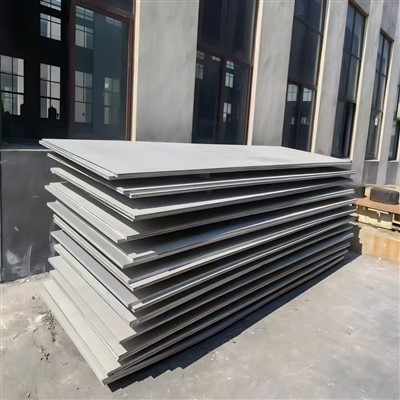

Here's a detailed comparison between AA 5059 and AA 5083 aluminum alloys, focusing on strength, corrosion resistance, and applications:
Overview of Alloys
| Alloy | Series | Key Feature |
|---|---|---|
| AA 5059 | 5xxx (Al–Mg) | High-strength, marine-grade aluminum with excellent corrosion resistance; commonly used in naval vessels and armored vehicles |
| AA 5083 | 5xxx (Al–Mg) | Very good corrosion resistance, especially in seawater; widely used for ship hulls and offshore structures |
Both belong to the 5xxx aluminum series, meaning they are aluminum–magnesium alloys, non-heat-treatable, and excellent for marine environments.
Chemical Composition Comparison
| Element | AA 5059 (%) | AA 5083 (%) |
|---|---|---|
| Magnesium (Mg) | 5.0 – 5.9 | 4.0 – 4.9 |
| Manganese (Mn) | 0.5 – 1.0 | 0.4 – 1.0 |
| Chromium (Cr) | 0.3 – 0.7 | 0.05 – 0.25 |
| Zinc (Zn) | ≤0.3 | ≤0.25 |
| Copper (Cu) | ≤0.4 | ≤0.1 |
| Iron (Fe) | ≤0.5 | ≤0.4 |
| Aluminum (Al) | Balance | Balance |
Observation:
AA 5059 has higher magnesium and chromium, which contributes to higher strength and better corrosion resistance in aggressive environments.
AA 5083 has slightly lower strength but excellent marine corrosion performance.
Mechanical Properties
| Property | AA 5059 (H116/H321) | AA 5083 (H116/H321) |
|---|---|---|
| Ultimate Tensile Strength | 310 – 350 MPa | 290 – 340 MPa |
| Yield Strength | 210 – 250 MPa | 215 – 275 MPa |
| Elongation | 10 – 18% | 12 – 20% |
| Hardness (HB) | 90 – 100 | 85 – 95 |
| Density | 2.68 g/cm³ | 2.66 g/cm³ |
Observation:
AA 5059 has slightly higher ultimate tensile strength, making it better for structural and armored applications.
AA 5083 has comparable yield strength and better ductility in some tempers, making it suitable for formable hull plates.
Corrosion Resistance
| Environment | AA 5059 | AA 5083 |
|---|---|---|
| Seawater | Excellent | Excellent |
| Salt Spray | Excellent | Very good |
| Stress Corrosion Cracking | High resistance | Very high resistance |
| Pitting & Crevice | Excellent | Excellent |
Observation:
Both alloys are highly resistant to corrosion in marine environments.
AA 5059 performs slightly better under stress corrosion conditions due to its higher chromium content.
Applications
| Alloy | Typical Applications |
|---|---|
| AA 5059 | Naval ships, patrol boats, yachts, armored vehicles, aerospace components, high-strength transport vehicles |
| AA 5083 | Ship hulls, offshore structures, LNG tanks, pressure vessels, marine tanks, bridges |
Summary:
Use AA 5059 where maximum strength and corrosion resistance under stress are critical.
Use AA 5083 where marine corrosion resistance and formability are more important, e.g., large hull sheets.
Welding & Fabrication
Both alloys are excellent for TIG/MIG welding.
Both are non-heat-treatable; properties are controlled by cold working and temper.
AA 5059 requires careful welding in thick sections to maintain high strength.
Conclusion
| Feature | AA 5059 | AA 5083 |
|---|---|---|
| Strength | Higher | Slightly lower |
| Ductility | Moderate | Higher |
| Corrosion Resistance | Excellent | Excellent |
| Marine Applications | High-strength naval vessels | Large ship hulls and offshore structures |
| Best Use | Armored, high-stress, military, yachts | Ship hulls, tanks, marine structures |