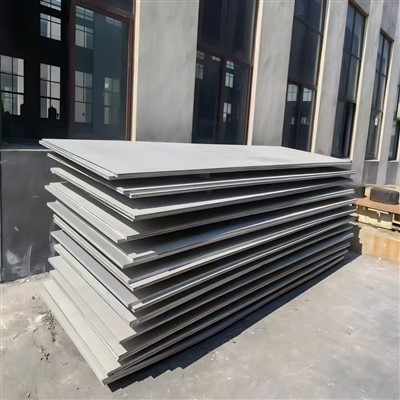

How to make Duplex stainless steel sheets?
Duplex stainless steel sheets are produced through a series of carefully controlled processes that involve melting, casting, hot rolling, cold rolling, annealing, and finishing.The manufacturing process is crucial in determining the microstructure, properties, and quality of the final product. In this point by point clarification, we will investigate each step of the fabricating step of these stainless steel sheets.
What is the production process?
1. Raw Materials
The manufacturing process begins with the selection of high-quality raw materials. These typically include primary metals such as iron, chromium, nickel, and molybdenum, along with secondary alloys such as ferrochromium, ferromolybdenum, and ferrosilicon. The precise composition of the raw materials is crucial in achieving the desired properties of the final duplex stainless steel sheets.
2. Melting
The selected raw materials are melted in an electric arc furnace or an induction furnace under controlled conditions. The melting process is carried out in a vacuum or under inert gas atmosphere to prevent oxidation and ensure the purity of the molten metal. Alloying elements are added to the melt to achieve the desired composition, and the molten metal is thoroughly stirred to homogenize the alloy.
3. Casting
Once the molten metal reaches the desired composition and temperature, it is cast into ingots or slabs using continuous casting or ingot casting techniques. Continuous casting involves pouring the molten metal into a water-cooled mold, where it solidifies into a continuous strand. In ingot casting, the molten metal is poured into individual molds to form ingots. The choice of casting method depends on the specific requirements of the manufacturing process.
4. Hot Rolling
The cast ingots or slabs are then reheated to high temperatures and hot rolled into thin sheets or coils using a series of rolling mills. Hot rolling reduces the thickness of the material while improving its mechanical properties and grain structure. The hot rolling process is typically carried out in multiple passes to achieve the desired thickness and surface finish.
5. Cold Rolling
After hot rolling, the duplex stainless steel sheets undergo cold rolling to further reduce their thickness and improve their dimensional accuracy and surface finish. Cold rolling involves passing the sheets through a series of rolling mills at room temperature, applying high pressure to deform the material. Cold rolling also imparts a work-hardened surface to the sheets, enhancing their mechanical properties and strength.
6. Annealing
Following cold rolling, the stainless steel sheets are annealed to relieve internal stresses, refine the grain structure, and improve their formability and ductility. Annealing is carried out by heating the sheets to elevated temperatures in a controlled atmosphere, followed by controlled cooling. This process helps to optimize the microstructure and mechanical properties of these stainless steel sheets for further processing and applications.
7. Finishing
Once the annealing process is complete, these stainless steel sheets undergo various finishing processes to achieve the desired surface finish, dimensions, and mechanical properties. These finishing processes may include pickling, grinding, polishing, and coating to remove surface defects, enhance surface appearance, and provide corrosion protection.
8. Quality Control
Throughout the manufacturing process, rigorous quality control measures are implemented to ensure the integrity and quality of the stainless steel sheets. This includes chemical analysis, mechanical testing, dimensional inspection, surface inspection, and non-destructive testing to verify compliance with industry standards and customer specifications.
Advantages of Duplex stainless steel sheets
It exhibits the following characteristics:
- Excellent corrosion resistance, particularly in chloride, acidic, and seawater environments.
- High strength, suitable for structural applications requiring robustness.
- Outstanding toughness, maintaining resilience even at low temperatures.
- Easy weldability using conventional techniques.
- Good fatigue performance, suitable for cyclic loading applications.
- Superior resistance to stress corrosion cracking, ideal for stress-prone environments.
How to ensure the quality of it?
Ensuring the quality of duplex stainless steel sheets requires implementing rigorous quality control measures throughout the manufacturing process. Here are key strategies to ensure quality:
1. Raw Material Inspection:
Begin by thoroughly inspecting incoming raw materials to verify their quality and composition. Conduct chemical analysis and mechanical testing to ensure that the raw materials meet the required specifications for duplex stainless steel production.
2. Process Control:
Implement strict process control measures at every stage of manufacturing, including melting, casting, rolling, annealing, and finishing. Monitor process parameters such as temperature, pressure, speed, and time to ensure consistency and reproducibility.
3. Microstructural Analysis:
Perform microstructural analysis using techniques such as metallography, microscopy, and electron microscopy to evaluate the grain structure, phase distribution, and presence of any defects or inclusions. This helps ensure that the duplex microstructure is properly formed and free from defects.
4. Chemical Analysis:
Conduct regular chemical analysis of the duplex stainless steel sheets to verify their composition and ensure compliance with specifications. This involves testing for the presence of alloying elements and impurities that could affect the material's performance.
5. Mechanical Testing:
Perform mechanical testing, including tensile testing, hardness testing, impact testing, and bend testing, to evaluate the mechanical properties of these stainless steel sheets. This helps ensure that the material meets the required strength, toughness, and ductility standards.
6. Dimensional Inspection:
Conduct a dimensional inspection to verify the thickness, width, length, and flatness of the stainless steel sheets. Use precision measuring tools and techniques to ensure that the sheets meet the specified dimensional tolerances.
7. Surface Inspection:
Inspect the surface of these stainless steel sheets for defects such as scratches, pits, cracks, and corrosion. Use visual inspection, dye penetrant testing, and magnetic particle inspection to detect surface defects and ensure the integrity of the material.
8. Non-Destructive Testing:
Employ non-destructive testing methods such as ultrasonic testing, radiographic testing, and eddy current testing to detect internal defects and ensure the quality of the stainless steel sheets without compromising their integrity.
By implementing these comprehensive quality control measures, manufacturers can ensure the consistent quality and reliability of the stainless steel sheets, meeting the stringent requirements of various industrial applications and providing customers with high-performance materials that deliver superior performance and durability.
Conclusion
In conclusion, the manufacturing process of duplex stainless steel sheets involves a series of carefully controlled steps, starting from the selection of raw materials to the final finishing and quality control. Each step plays a crucial role in determining the microstructure, properties, and quality of the final product. By adhering to strict manufacturing standards and quality control measures, manufacturers can produce high-quality stainless steel sheets that meet the demanding requirements of various industrial applications.
Why Choose Dongmeng Steel?
Comprehensive Product Range: Whether you are in need of stainless steel sheets for industrial applications, precision coils for manufacturing, corrosion-resistant strips for critical projects, or custom-designed stainless steel products, Dongmeng Steel has it all. Our comprehensive product range ensures that we meet and exceed all your stainless steel requirements.
Request a Quote: Request a quote, and our sales team will promptly provide you with competitive pricing for the stainless steel products you require. We believe in transparent pricing and ensuring you get the best value for your investment.
Experience Seamless Procurement:: Once you've made your selection, experience a seamless procurement process. From order placement to delivery, we prioritize efficiency and customer satisfaction every step of the way.
Contact E-mail:office@dongmjd.com
References
Guo, H., Kang, D., Yang, W., Liu, H., & Zhao, Y. (2020). Advances in Duplex Stainless Steels. Materials Science Forum, 1005, 66-81.
Lula, R. A., Tavares, S. S. M., Kina, J. F., & Kiminami, C. S. (2013). Influence of Annealing Temperature on Microstructure and Mechanical Properties of a Duplex Stainless Steel. Materials Research, 16(6), 1407-1413.