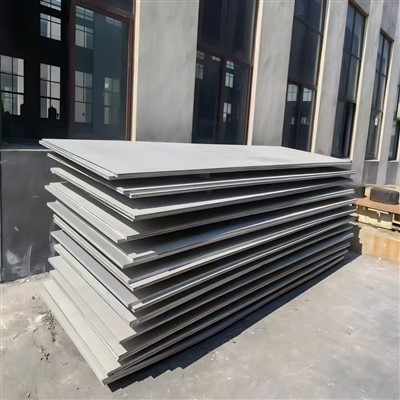

Aluminum Alloy 5059 offers several temper options, each tailored to balance strength, toughness, and corrosion resistance. Choosing the right temper is critical for marine, offshore, and structural applications. Here's a detailed breakdown:
Overview of 5059 Tempers
5059 is part of the Al-Mg-Mn alloy family. Unlike heat-treatable alloys, it is strain-hardened, so tempering mainly involves cold work and stress relief rather than heat treatment. Common 5059 tempers include:
| Temper | Description | Typical Applications |
|---|---|---|
| H321 | Strain-hardened and stabilized (resistant to stress corrosion cracking) | Ship hulls, offshore platforms, marine structures |
| H111 | Slightly cold-worked (light strain hardening) | Moderate structural parts, marine panels |
| O | Annealed (fully soft) | Forming, bending, complex shapes before further processing |
Impact of Temper on Mechanical Properties
| Temper | Yield Strength (MPa) | Ultimate Tensile Strength (MPa) | Elongation (%) | Notes |
|---|---|---|---|---|
| H321 | ~275–300 | ~370–390 | 12–15 | High SCC resistance, retains corrosion protection |
| H111 | ~195–215 | ~330–360 | 18–22 | Easier forming, lower strength than H321 |
| O | ~120 | ~280 | 25–30 | Maximum ductility, minimal residual stress |
Key Point: Higher-strength tempers like H321 provide better structural performance in high-stress marine environments, while O or H111 tempers are used when formability is a priority.
Impact of Temper on Corrosion Resistance
H321: Excellent resistance to stress corrosion cracking (SCC) and pitting in seawater. Preferred for offshore applications.
H111: Slightly lower SCC resistance than H321 but still good for moderate marine exposure.
O (annealed): Maintains inherent corrosion resistance but is mechanically weak, not ideal for structural stress.
Tip: If welding is required, post-weld stress relief is recommended to maintain H321-like corrosion performance in welded zones.
Practical Selection Guide
Shipbuilding hulls: H321
Marine tanks & storage: H321 or H111 depending on thickness
Formed or bent components: O or H111, then cold-worked to H321 if strength is needed
High-strength offshore structures: H321, sometimes with anodized surface for added corrosion protection