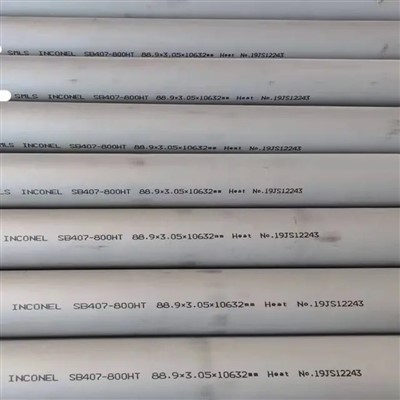


Xi'an Dongmeng Group Co., Ltd. is one of the most reliable manufacturers and suppliers of Best Materials for Hydrochloric Acid (HCl) Systems | Nickel Alloys Guide (C276, B3, C22) in China, also supports customized service. With abundant experience, we warmly welcome you to wholesale cheap products in stock here and get free sample from our factory. For price consultation, contact us.
What Is the Best Material for Hydrochloric Acid?
The best materials for hydrochloric acid systems are nickel-based alloys, especially:
Hastelloy B3 – best for pure hydrochloric acid
Hastelloy C276 – best general-purpose corrosion-resistant alloy
Hastelloy C22 – best for mixed acid environments
These materials offer superior corrosion resistance, durability, and long-term stability in harsh chemical conditions.
Hydrochloric acid (HCl) is one of the most aggressive industrial chemicals, capable of rapidly corroding conventional materials such as carbon steel and stainless steel. Selecting the right material is critical to ensure equipment safety, long service life, and reduced maintenance cost.
Among all available options, nickel alloys for HCl systems are widely recognized as the most reliable solution due to their excellent resistance to acid corrosion, pitting, and chemical attack.
In this guide, we compare the best materials for hydrochloric acid environments and help you choose the right alloy for your specific application.
In the demanding world of chemical processing, selecting the correct materials for hydrochloric acid (HCl) exposure is critical for safety and profitability. Nickel-containing alloys are the engineering cornerstone for these challenging environments. Our specialized range of nickel chromium molybdenum alloys, such as the versatile Hastelloy C-22 and INCONEL 686, deliver exceptional performance where other metals fail. These HCl acid alloys are expertly engineered to resist pitting, crevice corrosion, and stress corrosion cracking, making them the premier corrosion resistant materials for aggressive acid service. Trust our expertise in Ni-Cr-Mo alloys to protect your capital equipment and minimize downtime.
Professional team
7x24 hours

Why Hydrochloric Acid Causes Severe Corrosion
Hydrochloric acid is a strong reducing acid that aggressively attacks most metals:
Destroys protective oxide layers
Causes rapid uniform corrosion
Leads to pitting and structural failure
👉 This is why materials like 304 and 316 stainless steel are not suitable for HCl environments.
HCl Corrosion Resistance Comparison
| Material | Corrosion Resistance | Application Suitability | Risk Level |
|---|---|---|---|
| Carbon Steel | Very Poor | Low concentration only | High |
| 304 Stainless Steel | Fail | Not recommended | High |
| 316 Stainless Steel | Poor | Limited use | High |
| PVC / PTFE | Moderate | Low–medium concentration | Medium |
| Nickel 200 | Moderate | Dilute acid | Medium |
| Hastelloy B3 | Excellent | High concentration HCl | Low |
| Hastelloy C276 | Excellent | Wide range | Low |
| Hastelloy C22 | Excellent | Mixed acids | Low |
Recommended Nickel Alloys for HCl Systems
Hastelloy C276
A nickel-chromium-molybdenum alloy designed for highly corrosive environments.
Excellent resistance to pitting and crevice corrosion
Suitable for reactors, pipelines, and heat exchangers
Hastelloy B3
Optimized for pure hydrochloric acid applications.
Outstanding resistance in reducing environments
Improved thermal stability
Hastelloy C22
Designed for mixed oxidizing and reducing environments.
Superior versatility
Excellent resistance to complex chemical systems
Nickel 200 / 201
Suitable for low concentration hydrochloric acid
Not recommended for oxidizing conditions
How to Choose the Right Material (Engineering Guide)
Selecting materials for hydrochloric acid systems depends on several key factors:
1. Acid Concentration
Low concentration (<10%) → Nickel 200 possible
High concentration (>20%) → Use Hastelloy alloys
2. Temperature
Higher temperatures significantly accelerate corrosion.
👉 Requires alloys with high molybdenum content.
3. Chemical Environment
Reducing conditions → Hastelloy B3
Oxidizing or mixed acids → Hastelloy C22
4. Impurities
Elements such as Fe³⁺ or chlorine can dramatically increase corrosion rates.
Applications of Nickel Alloys in HCl Systems
Nickel alloys are widely used in:
Chemical processing equipment
Hydrochloric acid storage tanks
Pickling lines
Heat exchangers
Pharmaceutical reactors
Oil & gas acidizing systems

Product Forms Available

We supply a full range of nickel alloy products:
Pipes & tubes
Plates & sheets
Bars & rods
Fittings & flanges
Custom fabricated components
Cost vs Performance Analysis
| Material | Cost | Service Life | Recommendation |
|---|---|---|---|
| Carbon Steel | Low | Very short | Not recommended |
| Stainless Steel | Medium | Short | Risky |
| Nickel Alloys | High | Long-term | Best choice |
👉 Choosing low-cost materials in HCl systems often leads to higher long-term operational costs.
Nickel-containing Alloys for Chlorine, Hydrogen Chloride, and Hydrochloric Acid systems
Type: Plate, Pipe
Grade: Nickel 200/201, Monel 400, Inconel 600/625, Incoloy 825, Hastelloy G30/G35/C22/C4/C276/C2000
B2/B3/B4, 304L, 316L, Incoloy 800, Alloy 20, S31254, N08367, N08926, S32654, S32205
Plate Standard: ASTM B162, ASTM B127, ASTM B168, ASTM B424, ASTM B443, ASTM B575, ASTM B582, ASTM B333, ASTM A240
Pipe Standard: ASTM B161, ASTM B165, ASTM B167, ASTM B163, ASTM B444, ASTM B622, ASTM A312, ASTM B407, ASTM B729, ASTM A790
Plate Dimension: W 1000 - 4000mm x L 1000 - 12000mm x T 3 - 80mm
Pipe Size: NPS 1/2" - 48 x SCH 5S - XXS
|
Table 1 Nominal composition of nickel-containing alloys used in Chlorine, Hydrogen Chloride, and Hydrochloric Acid systems. |
|||||||||
|
Nominal composition, % |
ASTM Spec.b |
||||||||
|
Alloy |
UNS Number a |
Ni |
C |
Cr |
Mo |
Cu |
Fe |
Plate |
Seamless tube and pipe |
|
Group I - C.P. Nickel and nickel-copper alloys |
|||||||||
|
200 |
N02200 |
99.5 |
0.08 |
- |
- |
- |
0.2 |
B162 |
B161 |
|
201 |
N02201 |
99.5 |
0.01 |
- |
- |
- |
0.2 |
B162 |
B161 |
|
400 |
N04400 |
66.5 |
0.2 |
- |
- |
- |
1.2 |
B127 |
B165 |
|
Group II - Chromium-containing nickel alloys |
|||||||||
|
600 |
N06600 |
76 |
0.08 |
15.5 |
- |
- |
8 |
B168 |
B167 |
|
825 |
N08825 |
42 |
0.03 |
21.5 |
3 |
2.25 |
30 |
B424 |
B163 |
|
625 |
N06625 |
61 |
0.05 |
21.5 |
9 |
- |
2.5 |
B443 |
B444 |
|
G-30 |
N06030 |
42 |
0.01 |
29.5 |
5 |
1.8 |
15 |
B582 |
B622 |
|
G-35 |
N06035 |
55 |
0.02 |
33 |
8 |
- |
2 |
B575 |
B622 |
|
C-22/622 |
N06022 |
56 |
0.01 |
21.5 |
13.5 |
- |
4 |
B575 |
B622 |
|
C-4 |
N06455 |
66 |
0.01 |
16 |
15 |
- |
5.5 |
B575 |
B622 |
|
C-276 |
N10276 |
58 |
0.01 |
15.5 |
16 |
- |
5.5 |
B575 |
B622 |
|
59 |
N06059 |
60 |
0.01 |
23 |
15.5 |
- |
0.7 |
B575 |
B622 |
|
686 |
N06686 |
56 |
0.01 |
21 |
16 |
- |
2.5 |
B575 |
B622 |
|
C-2000 |
N06200 |
57 |
0.01 |
23 |
16 |
- |
1.5 |
B575 |
B622 |
|
Group III - Nickel-molybdenum alloys |
|||||||||
|
B-2 |
N10665 |
70.5 |
0.01 |
28 |
- |
- |
B333 |
B622 |
|
|
B-3 |
N10675 |
63 |
0.005 |
2 |
30 |
- |
2 |
B333 |
B622 |
|
B-4 |
N10629 |
66 |
0.01 |
1 |
28 |
- |
4 |
B333 |
B622 |
|
Table 1 Nominal composition of nickel-containing alloys used in Chlorine, Hydrogen Chloride and Hydrochloric Acid systems. |
|||||||||
|
Nominal composition, % |
ASTM Spec.b |
||||||||
|
Alloy |
UNS Number a |
Ni |
C |
Cr |
Mo |
Cu |
Fe |
Plate |
Seamless tube and pipe |
|
Austenitic Stainless Steels |
|||||||||
|
304L |
S30403 |
8 |
0.02 |
18 |
- |
- |
Bal |
A240 |
A312 |
|
316L |
S31603 |
10 |
0.02 |
16.5 |
2.1 |
- |
Bal |
A240 |
A312 |
|
800 |
N08800 |
33 |
0.07 |
21 |
- |
- |
Bal |
A240 |
B407 |
|
20 |
N08020 |
33 |
0.02 |
19.5 |
2.2 |
3.2 |
Bal |
A240 |
B729 |
|
6%Moc |
S31254 |
18 |
0.01 |
20 |
6.2 |
0.7 |
Bal |
A240 |
A312 |
|
6%Moc |
N08367 |
24 |
0.01 |
21 |
6.2 |
- |
Bal |
A240 |
A312 |
|
6%Moc |
N08926 |
25 |
0.01 |
20.5 |
6.2 |
1 |
Bal |
A240 |
A312 |
|
7%Mo |
S32654 |
22 |
0.01 |
24 |
7.3 |
0.5 |
Bal |
A240 |
A312 |
|
Duplex Stainless Steel |
|||||||||
|
2205 |
S32205 |
5 |
0.02 |
22 |
3.2 |
- |
Bal |
A240 |
A790 |
a - UNS numbers beginning with an "N" indicate a nickel alloy, but the definition of a nickel alloy is different than that used by ASTM.
b - in ASTM specifications, most nickel alloys fall into the "B" specifications. However, due to a redefinition of a nickel alloy, a few alloys such as 800 and 20 are being reclassified as stainless steels, and will be included in the "A" specifications. That work is still in progress.
c - the 6%Mo alloys are a series of stainless steels, many of which are proprietary, all with roughly 6%Mo content and roughly equivalent in performance.
Nickel-Molybdenum Alloys (The "B" Family)
These are the workhorses for hot, concentrated HCl service.
Key Characteristic: Very high Molybdenum content (28-32%) provides exceptional resistance to reducing acids. Chromium is deliberately kept very low because it can be detrimental in purely reducing environments.
Primary Alloys:
Hastelloy® B-2 / UNS N10665 (~Ni-28Mo): The classic alloy for the most severe HCl service.
Hastelloy® B-3® / UNS N10675: An improved version of B-2 with better thermal stability and resistance to grain boundary precipitation.
Strengths:
Excellent resistance to all concentrations of HCl, up to the boiling point.
Resistant to wet hydrogen chloride (HCl) gas.
Also excellent for sulfuric, phosphoric, and acetic acids.
Critical Weaknesses:
Poor resistance to oxidizing agents. Even small amounts of ferric (Fe³⁺), cupric (Cu²⁺), or dissolved oxygen in the HCl can cause severe and rapid corrosion.
Susceptible to corrosion in the heat-affected zone (HAZ) after welding if not properly heat treated.
Typical Applications: Reactors, distillation columns, piping, and pumps for high-temperature, concentrated HCl processes where the environment is carefully controlled to be free of oxidizers.
Nickel-Chromium-Molybdenum Alloys (The "C" Family)
These are the most versatile and widely used high-performance alloys. They offer a balance between resistance to reducing and oxidizing environments.
Key Characteristic: A balanced composition of Nickel (for the base), Chromium (for resistance to oxidizing media), and Molybdenum (for resistance to reducing media and pitting).
Primary Alloys (in order of increasing performance):
Hastelloy® C-276 / UNS N10276 (~Ni-16Cr-16Mo-4W): The industry benchmark for versatility.
Hastelloy® C-22® / UNS N06022 (~Ni-22Cr-13Mo-3W): Superior pitting and stress corrosion cracking resistance compared to C-276.
Hastelloy® C-2000® / UNS N06200 (~Ni-23Cr-16Mo-1.6Cu): Adds copper, making it excellent for both oxidizing and reducing acids.
INCONEL® 686 / UNS N06686 (~Ni-21Cr-16Mo-4W): Very high chromium and molybdenum for the most aggressive mixed acid conditions.
Strengths:
Excellent resistance to HCl, particularly when it contains oxidizing contaminants (like FeCl₃, CuCl₂, dissolved O₂, or chlorine).
Outstanding resistance to pitting and crevice corrosion from chlorides.
Good resistance to sulfuric and phosphoric acids.
Limitations:
Not suitable for hot, concentrated HCl where the B-family excels. Their resistance drops off at higher concentrations and temperatures compared to the B-alloys.
Typical Applications: The go-to choice for most complex chemical processes involving HCl mixed with other chemicals, waste streams, and where oxidizers are present. Used in scrubbers, heat exchangers, piping, and valves.
Nickel-Copper Alloys (The "400" Family)
These are excellent for specific, less severe HCl conditions.
Key Characteristic: High Copper content (~30%) provides excellent resistance to hydrofluoric acid, seawater, and non-aerated reducing acids.
Primary Alloy:
Monel® 400 / UNS N04400 (~Ni-33Cu).
Strengths:
Excellent resistance to cold, dilute HCl.
Good resistance to deaerated, hot, dilute HCl.
Critical Weaknesses:
Rapidly corroded by aerated HCl solutions and by hot, concentrated HCl.
Susceptible to stress corrosion cracking (SCC) in HCl service.
Typical Applications: Handling and transportation of dilute, cool HCl; marine applications; hydrofluoric acid service.
FAQ
What is the best metal for hydrochloric acid?
Nickel-based alloys such as Hastelloy B3 and C276 are the best choices.
Can stainless steel be used in HCl?
No. Stainless steel corrodes rapidly in hydrochloric acid environments.
What factors affect material selection?
Acid concentration, temperature, pressure, and impurities.
Do you provide custom solutions?
Yes, we offer customized material selection and fabrication services.
Contact Us
Looking for the best nickel alloys for HCl systems?
Fast quotation within 12 hours
Free material selection support
Custom size & processing available
Global export service
👉 Contact us now to get expert advice and competitive pricing
Hot Tags: Best Materials for Hydrochloric Acid (HCl) Systems | Nickel Alloys Guide (C276, B3, C22), China Best Materials for Hydrochloric Acid (HCl) Systems | Nickel Alloys Guide (C276, B3, C22) manufacturers, suppliers, factory, NIMONIC 75 Alloy, NIMONIC 90 Alloy, ASTM B622 Seamless Nickel Alloy Pipe And Tube, ASTM B165 UNS N04400 Seamless Pipe And Tube, ASTM B668 UNS N08028 N08029 Seamless Pipe, Nickel Alloy 925