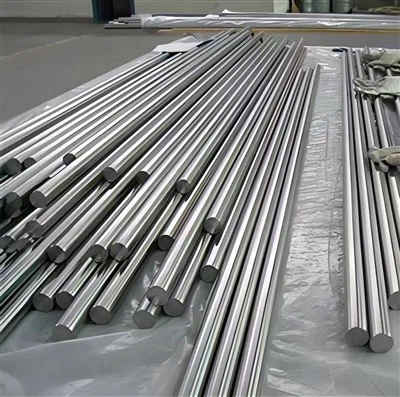


Xi'an Dongmeng Group Co., Ltd. is one of the most reliable manufacturers and suppliers of nickel alloy 400 in China, also supports customized service. With abundant experience, we warmly welcome you to wholesale cheap products in stock here and get free sample from our factory. For price consultation, contact us.

Alloy 400 (UNS N04400) – Nickel-Copper Pipe, Plate & Bar Supplier
Xi'an Dongmeng Group Co., Ltd. is a professional industrial metal materials manufacturer and exporter supplying Nickel Alloy 400 (UNS N04400) products to global distributors, engineering contractors, equipment manufacturers and industrial fabricators.
Also widely known as Monel 400, Alloy 400 is a solid-solution nickel-copper alloy designed for applications requiring corrosion resistance, good mechanical strength and toughness across a broad temperature range.
We support project-based procurement of ASTM B127 plate and sheet, ASTM B164 round bar and rod, ASTM B165 seamless pipe and tube, ASTM B163 heat exchanger tubing and other specified Alloy 400 product forms.
Our supply services include material specification review, custom size sourcing, cutting and processing coordination, inspection documentation and export packaging.
Request an Alloy 400 quotation, technical datasheet, dimensional confirmation or material inspection certificate for your next industrial project.
What Is Nickel Alloy 400?
Nickel Alloy 400 is a single-phase nickel-copper alloy consisting primarily of nickel and copper, with controlled additions of iron, manganese and other elements.
The alloy is identified internationally as UNS N04400 and is commonly associated with the registered trade name MONEL® 400.
Unlike precipitation-hardening alloys, Alloy 400 develops increased strength primarily through cold working. It offers good ductility in the annealed condition and maintains toughness at low temperatures.
Key Material Characteristics
Resistance to Marine Corrosion
Alloy 400 offers excellent general corrosion resistance in many seawater and brackish-water environments, particularly under suitable flowing conditions.
Resistance to Selected Reducing Chemicals
The alloy is used in equipment exposed to certain reducing acids, salts, alkalis and hydrofluoric-acid processing environments.
Good Mechanical Toughness
Its face-centered cubic structure contributes to useful ductility and toughness, including at cryogenic temperatures.
Fabrication Versatility
Alloy 400 can be formed, machined and welded using appropriately qualified manufacturing procedures.
Multiple Product Forms
Plate, sheet, strip, bar, pipe, tube, wire and forgings allow engineers to use the material for different structural and process-equipment components.
Material suitability must always be evaluated against the actual chemical environment, concentration, temperature, flow conditions, pressure and applicable engineering code.
Alloy 400 Product Forms and Supply Specifications
Nickel Alloy 400 is available in multiple wrought product forms under different ASTM and ASME material specifications.
| Product Form | ASTM Standard | ASME Equivalent | Typical Industrial Applications |
| Plate | ASTM B127 | ASME SB127 | Chemical vessels, fabricated components |
| Sheet | ASTM B127 | ASME SB127 | Equipment panels, formed parts |
| Strip | ASTM B127 | ASME SB127 | Precision fabricated components |
| Rod & Bar | ASTM B164 | ASME SB164 | Shafts, valve stems, fasteners |
| Wire | ASTM B164 | ASME SB164 | Wire products and specialized components |
| Seamless Pipe | ASTM B165 | ASME SB165 | Chemical and marine process piping |
| Seamless Tube | ASTM B165 | ASME SB165 | Instrumentation and mechanical tubing |
| Heat Exchanger Tube | ASTM B163 | ASME SB163 | Condensers and heat exchangers |
| Welded Pipe | ASTM B725 | ASME SB725 | Industrial piping systems |
| Welded Tube | ASTM B730 | ASME SB730 | Tubular equipment components |
| Forgings | ASTM B564 | ASME SB564 | Forged parts and equipment components |
| Wrought Fittings | ASTM B366/B366M | ASME SB366 | Elbows, tees, reducers and fittings |
The selected specification must match the actual manufacturing method, product form and required service conditions.
Alloy 400 Plate, Sheet and Strip
ASTM B127 covers nickel-copper alloy plate, sheet and strip.
Typical procurement applications include corrosion-resistant fabricated components, equipment panels, process vessels and structural attachments.
Purchasers should specify thickness, width, length, material condition, flatness, edge condition and required inspection documentation.
Alloy 400 Seamless Pipe and Tube
ASTM B165 covers seamless nickel-copper alloy pipe and tube.
Products may be ordered by specified outside diameter and wall thickness or by an agreed nominal pipe size and dimensional schedule.
Typical applications include chemical transfer lines, marine piping, refinery equipment and industrial fluid-handling systems.
Alloy 400 Heat Exchanger Tubing
ASTM B163 is applicable to seamless condenser and heat exchanger tubing.
Engineering requirements may include controlled outside diameter, average or minimum wall thickness, straightness, surface condition and additional nondestructive inspection.
Alloy 400 Round Bar and Rod
ASTM B164 covers rod, bar and wire products.
Typical machined components include pump shafts, valve stems, fasteners and corrosion-resistant industrial hardware.
Hot-finished, cold-drawn, annealed and stress-relieved conditions may be specified according to the applicable standard.
Alloy 400 Sizes and Dimensions
The following dimensions illustrate commonly requested procurement configurations. They are not guaranteed stock dimensions or published manufacturing limits. Final availability must be confirmed during quotation.
| Product | Illustrative Thickness / Diameter | Width / Length Options | Supply Considerations |
| Plate | 3–50 mm / 0.118–1.969 in | 1000–2000 mm width; cut lengths by request | Hot rolled / Annealed |
| Sheet | 0.5–3.0 mm / 0.020–0.118 in | 1000–1500 mm width; cut to size | Cold rolled / Annealed |
| Strip | 0.10–3.0 mm / 0.004–0.118 in | Slit width by request | Annealed / Cold worked |
| Round Bar | Ø6–200 mm / Ø0.236–7.874 in | Common RFQ lengths up to 6000 mm | Hot finished / Cold drawn |
| Wire | Diameter according to drawing | Coil or straightened form | Annealed / Cold drawn |
| Forgings | Drawing-specific | Customized geometry | Controlled forging process |
These ranges are quotation examples only. Dimensions outside these examples may be evaluated separately.
Alloy 400 Pipe and Tube Dimensions
| Parameter | Procurement Specification |
| Material | UNS N04400 |
| Product Standard | ASTM B165 / ASTM B163 / ASTM B725 / ASTM B730 |
| Outside Diameter | Specify in mm or inches |
| Wall Thickness | Specify nominal, minimum or average wall as applicable |
| Nominal Pipe Size | NPS / DN where relevant |
| Dimensional Schedule | SCH 5S / 10S / 40S / 80S; heavier schedules by agreement |
| Pipe Length | Random, fixed or custom cut |
| End Preparation | Plain end, beveled end or drawing-specific |
| Surface | Annealed, cleaned, pickled or specified finish |
| Inspection | According to product standard and purchase order |
For seamless tubing, dimensional tolerances must be checked against the selected ASTM product standard.
Reference dimensions for Alloy 400 pipe procurement
| NPS | DN | OD (mm) | SCH 10S WT (mm) | SCH 40S WT (mm) | SCH 80S WT (mm) |
| 1/2" | DN15 | 21.3 | 2.11 | 2.77 | 3.73 |
| 3/4" | DN20 | 26.7 | 2.11 | 2.87 | 3.91 |
| 1" | DN25 | 33.4 | 2.77 | 3.38 | 4.55 |
| 1陆" | DN40 | 48.3 | 2.77 | 3.68 | 5.08 |
| 2" | DN50 | 60.3 | 2.77 | 3.91 | 5.54 |
| 3" | DN80 | 88.9 | 3.05 | 5.49 | 7.62 |
| 4" | DN100 | 114.3 | 3.05 | 6.02 | 8.56 |
| 6" | DN150 | 168.3 | 3.4 | 7.11 | 10.97 |
Dimensions are reference values from the ASME B36.19M S-series system. They do not establish product availability or a pressure rating. Confirm the specified dimensions, tolerances and applicable standards before ordering.
For SCH 5S, SCH 160, XXS and other heavy-wall configurations, submit the required OD and wall thickness for technical confirmation.
UNS N04400 Chemical Composition
| Element | Symbol | Specification Limit |
| Nickel + Cobalt | Ni + Co | 63.0% minimum |
| Copper | Cu | 28.0–34.0% |
| Iron | Fe | 2.50% maximum |
| Manganese | Mn | 2.00% maximum |
| Carbon | C | 0.30% maximum |
| Silicon | Si | 0.50% maximum |
| Sulfur | S | 0.024% maximum |
The nickel-copper composition provides the foundation for Alloy 400's corrosion-resistant properties.
The final chemical composition of supplied materials shall comply with the applicable product specification and purchase order.
For traceability, purchasers should request heat identification and certified chemical analysis results on the material test certificate.
Alloy 400 Mechanical Properties
Mechanical properties vary according to product form, dimensions and delivery condition.
| Product Form & Condition | Tensile Strength (MPa) | Yield Strength 0.2% (MPa) | Elongation (%) |
| Rod & Bar - Annealed | 517–620 | 172–345 | 35–60 |
| Rod & Bar - Hot Finished | 552–758 | 276–690 | 30–60 |
| Rod & Bar - Cold Drawn, Stress Relieved | 579–827 | 379–690 | 22–40 |
| Plate - Hot Rolled, Annealed | 482–586 | 193–345 | 35–50 |
| Sheet - Annealed | 482–586 | 207–310 | 35–45 |
| Strip - Annealed | 482–586 | 172–310 | 35–55 |
| Seamless Pipe & Tube - Annealed | 482–586 | 172–310 | 35–50 |
| Seamless Pipe & Tube - Stress Relieved | 586–827 | 379–690 | 15–35 |
Important: These are representative published property ranges, not acceptance criteria for every size or condition.
Contractual acceptance requirements must follow the selected ASTM/ASME specification, product dimensions and agreed delivery condition.
Material Selection Considerations
Annealed material is generally preferred when ductility and forming capability are important.
Cold-worked or stress-relieved material may be selected when increased strength is required.
For applications requiring substantially higher strength, Alloy K-500 may be evaluated as an alternative.
Physical Properties of Alloy 400
| Property | Typical Value |
| Density | 8.80 g/cm³ / 0.318 lb/in³ |
| Melting Range | 1300–1350°C / 2370–2460°F |
| Modulus of Elasticity | Approximately 179 GPa / 26 × 10⁶ psi |
| Poisson's Ratio | Approximately 0.32 |
| Thermal Conductivity at 21°C | Approximately 22 W/m·K |
| Specific Heat at 21°C | Approximately 427 J/kg·K |
| Electrical Resistivity at 21°C | Approximately 0.511 μΩ·m |
| Mean Thermal Expansion, 21–100°C | Approximately 14.2 × 10⁻⁶/K |
| Approximate Curie Temperature Range | 21–49°C / 70–120°F |
The magnetic behavior of Alloy 400 is affected by composition and temperature.
It should not be assumed to be consistently nonmagnetic without verification.
Corrosion Resistance of Alloy 400
The main advantage of Alloy 400 is its resistance to several corrosive environments commonly encountered in marine engineering and chemical processing.
However, corrosion resistance depends on operating conditions rather than alloy designation alone.
Seawater and Marine Environments
Alloy 400 has excellent general corrosion resistance in many flowing seawater and brackish-water conditions.
It has been used in marine piping, pumps, valves, propeller shafts and related equipment.
Nevertheless, stagnant seawater, shielded surfaces and deposits can promote localized attack.
Crevice corrosion and pitting must be considered when designing components exposed to stagnant or poorly circulated seawater.
Hydrofluoric Acid Environments
Alloy 400 is widely recognized for its resistance to hydrofluoric acid under certain processing conditions.
This characteristic has supported its use in selected chemical-processing and refinery applications.
However, oxygen content, acid concentration, temperature, contaminants, flow conditions and operating procedures can substantially affect corrosion performance.
Hydrofluoric-acid applications require specialist corrosion assessment and an approved materials selection process.
Sulfuric and Hydrochloric Acids
Alloy 400 offers useful resistance to certain sulfuric-acid and hydrochloric-acid environments, particularly under reducing conditions.
Performance can decline significantly with changes in acid concentration, oxidizing contaminants, temperature and aeration.
It should not be selected for all concentrations or temperatures without relevant corrosion data.
Alkalis and Caustic Solutions
Alloy 400 can provide good resistance to various alkaline solutions.
Applications include selected chemical equipment and caustic-handling components.
For hot, concentrated caustic service, operating stress and stress-corrosion-cracking susceptibility must be evaluated.
Chloride Stress Corrosion Cracking
Alloy 400 has good resistance to chloride-induced stress corrosion cracking compared with many conventional stainless steels.
This advantage is useful in selected chloride-containing environments.
However, this does not mean the material is immune to every form of localized corrosion or cracking.
Corrosion Selection Guide
| Service Environment | Alloy 400 Assessment | Key Engineering Consideration |
| Flowing Seawater | Generally favorable | Flow, temperature and localized corrosion |
| Stagnant Seawater | Requires caution | Pitting and crevice corrosion |
| Brackish Water | Often suitable | Water chemistry and deposits |
| Hydrofluoric Acid | Established specialized applications | Acid chemistry and oxygen control |
| Reducing Acid Solutions | Potentially suitable | Concentration and temperature |
| Caustic Solutions | Often suitable in selected conditions | Temperature, stress and concentration |
| Strongly Oxidizing Acids | Generally unfavorable | Evaluate alternative alloys |
| Marine Atmospheric Exposure | Generally favorable | Surface contamination and fabrication details |
Engineering Note: Final material selection must be based on actual service conditions, qualified corrosion data and the applicable design code.
Alloy 400 Fabrication and Processing
Hot Working
Alloy 400 can be hot worked using controlled procedures.
Published guidance describes a general hot-working range of approximately 650–1175°C (1200–2150°F), with higher temperatures typically employed for heavy reductions.
Actual forming procedures must consider section size, deformation, heating time and required final properties.
Cold Forming
Annealed Alloy 400 has good ductility and can be cold formed by conventional techniques.
Cold deformation increases material strength and hardness.
Intermediate annealing may be required for substantial forming operations.
Machining
Alloy 400 is machinable using suitable tooling, cutting parameters and cooling methods.
Its work-hardening behavior requires appropriate machining practices.
Cold-drawn or stress-relieved stock may provide advantages for some machining operations.
Heat Treatment
Annealing can restore ductility and reduce the effects of work hardening.
Stress relief may be used to reduce residual stresses following selected fabrication operations.
Alloy 400 cannot be precipitation hardened in the same manner as Alloy K-500.
Welding
Alloy 400 can be welded using established welding processes, including:
GTAW / TIG
GMAW / MIG
SMAW / Manual Metal Arc
Other qualified processes where applicable
Typical matching welding consumables include:
| Welding Process | Common Filler Classification |
| GTAW / TIG | AWS A5.14 ERNiCu-7 |
| GMAW / MIG | AWS A5.14 ERNiCu-7 |
| SMAW | AWS A5.11 ENiCu-7 |
Filler selection and welding procedures must consider joint configuration, base materials, mechanical requirements and corrosive service conditions.
Alloy 400 vs K-500 vs Alloy 625 vs Alloy C276
Selecting the correct nickel alloy requires consideration of mechanical strength, corrosion environment, operating temperature and fabrication requirements.
| Material | UNS | Alloy Family | Main Characteristics | Typical Selection Consideration |
| Alloy 400 | N04400 | Nickel-Copper | Good corrosion resistance and ductility | Marine and selected chemical processing |
| Alloy K-500 | N05500 | Nickel-Copper-Aluminum-Titanium | Higher strength after age hardening | High-strength shafts and components |
| Alloy 625 | N06625 | Nickel-Chromium-Molybdenum-Niobium | Broad corrosion resistance and elevated-temperature capability | Aggressive chemical and offshore applications |
| Alloy C276 | N10276 | Nickel-Chromium-Molybdenum-Tungsten | Strong resistance in many severe chemical environments | Mixed-acid and demanding chemical processing |
| 316L Stainless Steel | S31603 | Austenitic Stainless Steel | General corrosion resistance and established fabrication routes | Less aggressive environments where suitable |
When Should You Choose Alloy 400?
Alloy 400 is a strong candidate when the project requires a combination of nickel-copper corrosion resistance, ductility, toughness and conventional fabrication methods.
When Is Alloy K-500 Preferable?
K-500 may be selected when significantly higher yield strength and hardness are required.
However, age-hardening requirements, corrosion service limitations and stress-corrosion concerns must be evaluated.
When Should Alloy 625 or C276 Be Considered?
Alloy 625 and C276 may be more suitable for some oxidizing, mixed-acid or highly aggressive chemical environments.
Neither alloy should be treated as a universal replacement without a detailed corrosion and mechanical assessment.
Industrial Applications of Nickel Alloy 400
Marine Engineering
Alloy 400 is used in selected seawater-handling equipment, pump components, marine hardware and piping systems.
Its corrosion performance makes it particularly relevant to properly designed marine systems.
Chemical Processing Equipment
Applications include process piping, valves, pumps and fabricated equipment handling compatible acids, alkalis and other chemicals.
Heat Exchangers and Condensers
ASTM B163 Alloy 400 seamless tubes may be specified for heat-transfer equipment operating with compatible process fluids.
Oil and Gas Processing
Alloy 400 components are used in selected refinery and hydrocarbon-processing applications.
For sour service, the specific material condition, environmental limits and applicable NACE MR0175/ISO 15156 requirements must be checked.
Pumps, Valves and Mechanical Components
Alloy 400 bar and forgings are used to manufacture shafts, stems, fasteners and other components exposed to corrosive service conditions.
Industrial Water Handling
Selected applications include freshwater equipment, brackish-water systems and specialized industrial water-handling components.
Inspection and Quality Assurance
Xi'an Dongmeng Group Co., Ltd. supports material verification and inspection arrangements according to the selected specification, product form and purchase order.
Chemical Composition Verification
Material chemistry is verified against the applicable specification using mill chemical analysis reports.
PMI may be specified as an additional alloy-identification check.
Mechanical Testing
Applicable mechanical tests may include:
Tensile strength
0.2% offset yield strength
Elongation
Hardness, where specified
Dimensional Inspection
Dimensional verification may include:
Plate thickness and flatness
Bar diameter and straightness
Pipe outside diameter
Tube wall thickness
Product length
Surface condition
Nondestructive Testing
Depending on product form and applicable requirements, testing may include:
Ultrasonic Testing (UT)
Eddy Current Testing (ET)
Liquid Penetrant Testing (PT)
Hydrostatic Testing
Other contractually specified examinations
Material Test Certificates
EN 10204 Type 3.1 certification can be requested to document relevant material inspection and test results.
Third-party inspection and additional certification requirements should be specified during quotation.
Packaging and International Shipping
Packaging arrangements depend on product geometry, dimensions and transportation requirements.
Plate and Sheet
Protective wrapping, separation materials and reinforced pallets or wooden cases may be arranged to reduce transportation damage.
Pipe and Tube
Protective end caps, bundled packaging and suitable supports may be used to protect pipe ends and surfaces.
Bar and Rod
Bars may be bundled or packed in reinforced export cases according to diameter, length and shipment weight.
Precision Components
Machined or precision products may require individual separation, additional protection or customized cases.
Packaging, marking, lifting points and inspection access can be agreed before dispatch.
Why Choose Xi'an Dongmeng Group Co., Ltd.?
Industrial Material Procurement Support
We help customers identify the applicable alloy designation, product standard, size and delivery condition before quotation.
Multi-Form Nickel Alloy Supply
Our sourcing and supply coordination supports plate, sheet, bar, pipe, tube and other specified nickel alloy products.
Custom Processing Requirements
Cutting, dimensional preparation and machining requirements can be reviewed against approved drawings.
Documentation and Traceability
Material test certificates, heat numbers, identification requirements and inspection arrangements can be incorporated into the purchasing process.
International B2B Order Support
We serve distributors, engineering companies, industrial fabricators and equipment manufacturers requiring structured export procurement support.
All product availability, processing capability, certification scope and delivery commitments are subject to order-specific confirmation.
Frequently Asked Questions
Q1. What is Nickel Alloy 400?
Nickel Alloy 400 is a solid-solution nickel-copper alloy designated UNS N04400. It offers corrosion resistance, ductility and toughness for selected industrial environments.
Q2. Is Alloy 400 the same as Monel 400?
Alloy 400 is widely referred to as Monel 400. MONEL® is a registered trademark associated with the alloy family. Procurement should identify the applicable UNS grade and material specification.
Q3. What is the chemical composition of Alloy 400?
Alloy 400 contains at least 63% nickel plus cobalt and 28–34% copper, with controlled limits for iron, manganese, carbon, silicon and sulfur.
Q4. What is the difference between Monel 400 and Monel K-500?
Alloy 400 is primarily strengthened by cold working. K-500 is a precipitation-hardenable nickel-copper alloy that can achieve significantly higher strength.
Q5. Is Alloy 400 resistant to seawater?
It has excellent general corrosion resistance in many flowing seawater environments. Stagnant seawater and crevice conditions can cause localized corrosion.
Q6. What ASTM standards cover Alloy 400?
Common standards include ASTM B127 for plate, sheet and strip; B164 for bar, rod and wire; B165 for seamless pipe and tube; and B163 for heat exchanger tubing.
Q7. Can Alloy 400 be welded?
Yes. Alloy 400 can be welded using properly qualified procedures. ERNiCu-7 and ENiCu-7 are commonly used matching filler classifications.
Q8. Can Alloy 400 be heat treated to increase hardness?
Alloy 400 is not precipitation hardenable. Strengthening is mainly achieved through cold working. Annealing and stress relief are used to control material condition.
Q9. Is Alloy 400 suitable for hydrofluoric acid?
Alloy 400 is used in selected hydrofluoric-acid processing environments. Suitability depends on operating conditions and must be confirmed by a qualified corrosion assessment.
Q10. Can Alloy 400 be supplied with EN 10204 3.1 certification?
EN 10204 Type 3.1 material certification can be specified when placing an order. Required test reports and traceability documentation should be confirmed before production or sourcing.
Q11. What information is required for an Alloy 400 quotation?
Buyers should provide the material grade, ASTM/ASME standard, product form, dimensions, quantity, delivery condition, certification requirements and destination.
Q12. What is the delivery time for Alloy 400 products?
Delivery depends on product form, size, quantity, stock status, processing requirements and inspection scope. A confirmed schedule is provided during quotation.
Request a Nickel Alloy 400 Quotation
Looking for Alloy 400 plate, seamless pipe, heat exchanger tubing or round bar for your next industrial project?
Xi'an Dongmeng Group Co., Ltd. provides professional procurement support for international customers.
Send Us Your Requirements
Please include:
Material: Alloy 400 / UNS N04400
Product standard: ASTM / ASME
Product form: Plate / Pipe / Tube / Bar / Wire
Dimensions: Thickness / OD / WT / Length
Quantity and required delivery condition
Inspection and certification requirements
Destination and required delivery schedule
Request a Quotation | Submit Your Drawing | Request MTC Details | Discuss Material Selection
Office Information
Company: Xi'an Dongmeng Group Co., Ltd.
Telephone / WhatsApp: +86 157 6921 4734
Email: office@dongmjd.com
Office Address: Room 4107, Runfeng Building, Sanqiao New Street, Weiyang District, Xi'an City, Shaanxi Province, China
Contact us to discuss Alloy 400 specifications, engineering requirements and international supply arrangements.
Hot Tags: Nickel Alloy 400, Monel 400, UNS N04400, Alloy 400 Supplier, Monel 400 Manufacturer, W.Nr. 2.4360, Nickel Copper Alloy, ASTM B127 Plate, ASTM B164 Bar, ASTM B165 Pipe, Monel 400 Seamless Tube, Alloy 400 Chemical Composition, Monel 400 Mechanical Properties, Marine Nickel Alloy, Nickel Alloy 925, ASTM B163 Condenser And Heat Exchanger Tubes, NIMONIC 80A Alloy, Nickel containing Alloys For Caustic Soda, Alloy 22, ASTM B165 UNS N04400 Seamless Pipe And Tube