
Introduction
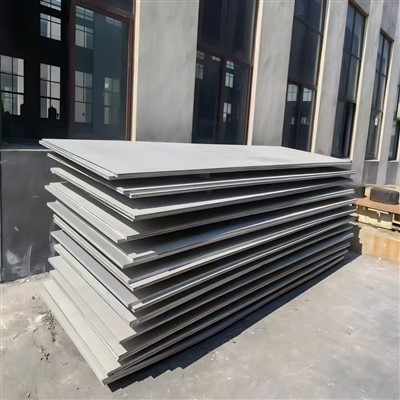
Hastelloy is a nickel-based superalloy renowned for its exceptional corrosion resistance and high-temperature performance. Unlike conventional stainless steels, Hastelloy maintains durability in aggressive chemical environments, high chloride content, and elevated temperatures, making it a preferred choice in chemical processing, petrochemical, marine, aerospace, and power generation industries.
In this article, we explore why Hastelloy is unmatched in extreme conditions, its key properties, industrial applications, and how to select the right grade for specific processes.
What Is Hastelloy?
Hastelloy refers to a family of nickel-based alloys engineered to withstand corrosion, high temperature, and stress. It is classified into several series:
C-series: Optimized for mixed acid and oxidizing environments (e.g., C-276, C-22, C-2000)
B-series: Designed for reducing acids (e.g., B-2, B-3)
X-series: Engineered for high-temperature oxidation and structural strength (e.g., Hastelloy X)
Chemical Composition
| Element | Typical Range | Function |
|---|---|---|
| Nickel (Ni) | Balance | Provides austenitic matrix & general corrosion resistance |
| Chromium (Cr) | 14–22% | Forms passive oxide layer, resists pitting & oxidation |
| Molybdenum (Mo) | 2–17% | Resists reducing acids & localized corrosion |
| Tungsten (W) | 0–4.5% | Enhances Mo performance in extreme chemical environments |
| Copper (Cu) | 0–4% | Improves sulfuric acid resistance |
| Iron (Fe) | 3–7% | Adds structural stability |
Standards: ASTM B575, B622, B564, UNS N06022, EN 2.4819
Extreme Corrosion Resistance of Hastelloy
Hastelloy outperforms stainless steel in both reducing and oxidizing environments. Its combination of Mo, Cr, W, and Cu provides resistance to:
Hydrochloric Acid (HCl) – B-series alloys like B-2/B-3
Sulfuric Acid (H₂SO₄) – C-2000, G-30, G-35
Mixed acids and chloride-rich environments – C-276, C-22
Stress corrosion cracking (SCC) – superior in chloride-rich conditions
Corrosion Resistance vs Environment
| Alloy | HCl | H₂SO₄ | Chlorides | Mixed Acids | SCC Resistance |
|---|---|---|---|---|---|
| B-2 | Excellent | Fair | Moderate | Poor | Good |
| C-276 | Good | Excellent | Excellent | Excellent | Excellent |
| C-22 | Good | Excellent | Excellent | Excellent | Excellent |
| C-2000 | Moderate | Excellent | Good | Excellent | Very Good |
| 316L Stainless Steel | Poor | Fair | Moderate | Poor | Low |
High-Temperature Performance
Hastelloy is also suitable for moderately high-temperature applications, maintaining mechanical strength and oxidation resistance:
C-series alloys: Up to 600°C
X-series alloys (Hastelloy X): Up to 1000°C, suitable for gas turbines, furnace parts, and aerospace components
Comparison with stainless steel:
| Alloy | Max Service Temperature | Notes |
|---|---|---|
| Hastelloy C-276 | 600°C | Chemical resistance focus |
| Hastelloy X | 1000°C | High-temperature strength and oxidation |
| 316L Stainless Steel | 400°C | Limited in strong acids and high temp |
Key Properties That Make Hastelloy Unique
Broad Corrosion Resistance: Performs in oxidizing and reducing acids, chlorides, and mixed media.
High-Temperature Stability: Retains strength in chemical and thermal processes.
Stress Corrosion Cracking Resistance: Particularly in chloride-rich environments.
Weldability & Fabrication: Can be fabricated into plates, pipes, bars, and custom components.
Long Service Life: Reduces maintenance and total lifecycle cost compared to stainless steels.
Industrial Applications of Hastelloy
Chemical & Petrochemical: Reactors, heat exchangers, acid recovery systems
Pharmaceutical: High-purity chemical reactors
Marine & Offshore: Equipment exposed to chlorides and mixed media
Aerospace & Power: Furnace parts, turbines, high-temperature structural components
Environmental Engineering: Flue gas desulfurization (FGD) scrubbers, wastewater treatment
Grade Selection Guide (Quick Reference)
| Environment / Requirement | Recommended Grade | Notes |
|---|---|---|
| Hydrochloric Acid | B-2, B-3 | High Mo content, low Cr |
| Sulfuric Acid | C-2000, G-30 | Cu & Cr enhance resistance |
| Mixed acids / Chlorides | C-276, C-22 | Broad chemical tolerance |
| High-Temperature Oxidation | X | Maintains mechanical strength up to 1000°C |
| Unknown / Mixed Conditions | C-276, C-22 | Safe "all-rounder" alloy |
Hastelloy vs Stainless Steel
| Factor | Hastelloy | Stainless Steel (316L) |
|---|---|---|
| Corrosion Resistance | Excellent in acids & chlorides | Limited, fails in strong acids |
| High-Temperature Strength | Up to 1000°C | Up to 400°C |
| Stress Corrosion Cracking | Very high | Low |
| Life Cycle Cost | Lower due to durability | Higher due to frequent replacement |
FAQ
Q1: Why is Hastelloy preferred over stainless steel?
A: Hastelloy outperforms stainless steel in strong acids, mixed chemicals, high chloride, and high-temperature environments.
Q2: Which Hastelloy grade is best for hydrochloric acid?
A: B-2 or B-3, due to high molybdenum content.
Q3: Can Hastelloy withstand high temperatures?
A: Yes, C-series up to 600°C, X-series up to 1000°C.
Q4: Is Hastelloy easy to weld and fabricate?
A: Yes, with proper procedures. Low carbon grades reduce intergranular corrosion risk.
Q5: Which industries benefit most from Hastelloy?
A: Chemical processing, petrochemical, pharmaceutical, marine, aerospace, power generation, and environmental engineering.
Conclusion
Hastelloy is the ultimate solution for extreme corrosion and high-temperature applications. Its combination of nickel, molybdenum, chromium, and tungsten ensures long-term durability, chemical versatility, and thermal stability where stainless steel or other alloys cannot perform.
For engineers and industrial buyers, selecting the correct Hastelloy grade ensures reduced maintenance, safer operations, and lower total lifecycle costs.
Contact us today to get expert guidance on Hastelloy grades, custom fabrication, or RFQ for plates, pipes, and bars.