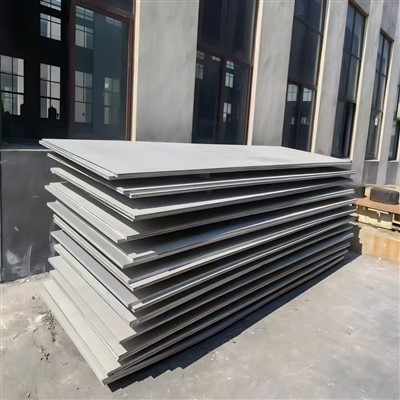

Which is better 304 or 316 stainless steel plate?
Stainless steel is renowned for its corrosion resistance, durability, and versatility, making it a popular choice for a wide range of applications across various industries. Two of the most commonly used grades of stainless steel plates are 304 and 316. While both offer excellent properties, they have distinct differences that may influence their suitability for specific applications. In this comprehensive comparison, we explore the characteristics, advantages, and applications of 304 and 316 stainless steel plates to help you make an informed decision.
1. Chemical Composition:
304 Stainless Steel: Also known as UNS S30400, grade 304 stainless steel contains chromium (Cr) and nickel (Ni) as its primary alloying elements. It typically contains 18-20% chromium and 8-10.5% nickel, along with small amounts of carbon, manganese, silicon, phosphorus, sulfur, and nitrogen.
316 Stainless Steel: Commonly referred to as UNS S31600, grade 316 stainless steel contains chromium, nickel, and molybdenum (Mo) as its primary alloying elements. It typically contains 16-18% chromium, 10-14% nickel, and 2-3% molybdenum, along with similar trace elements as 304 stainless steel.
2. Corrosion Resistance:
304 Stainless Steel: Grade 304 stainless steel offers good corrosion resistance in a wide range of environments, including atmospheric, marine, and mild chemical environments. However, it may be susceptible to corrosion in highly corrosive environments containing chlorides or acidic solutions.
316 Stainless Steel: Grade 316 stainless steel exhibits superior corrosion resistance compared to 304 stainless steel, particularly in aggressive environments containing chlorides, acids, or saline solutions. The addition of molybdenum enhances its resistance to pitting and crevice corrosion.
3. Mechanical Properties:
304 Stainless Steel: Grade 304 stainless steel has excellent tensile strength, yield strength, and hardness properties, making it suitable for various structural and mechanical applications. It offers good formability and weldability, allowing for ease of fabrication.
316 Stainless Steel: Grade 316 stainless steel possesses similar mechanical properties to 304 stainless steel but with slightly higher tensile strength and yield strength. It also exhibits excellent toughness and ductility, making it suitable for applications requiring high-strength components.
4. Heat Resistance:
304 Stainless Steel: Grade 304 stainless steel has good resistance to oxidation at temperatures up to 870°C (1600°F) in intermittent service and 925°C (1700°F) in continuous service. However, it may experience carbide precipitation at elevated temperatures, leading to sensitization and reduced corrosion resistance.
316 Stainless Steel: Grade 316 stainless steel offers superior heat resistance compared to 304 stainless steel, with oxidation resistance up to 870°C (1600°F) in intermittent service and 925°C (1700°F) in continuous service. Its higher molybdenum content provides enhanced resistance to thermal fatigue and oxidation.
5. Cost Considerations:
304 Stainless Steel: Grade 304 stainless steel is generally more affordable than 316 stainless steel, making it a cost-effective option for many applications. Its widespread availability and lower alloying content contribute to its lower cost.
316 Stainless Steel: Grade 316 stainless steel tends to be more expensive than 304 stainless steel due to its higher nickel and molybdenum content. However, its superior corrosion resistance and durability may justify the higher initial cost in applications where reliability is paramount.
6. Applications:
1). 304 Stainless Steel: Common applications of grade 304 stainless steel include:
Food Processing Equipment: Used for manufacturing food processing machinery, storage tanks, and conveyor systems.
Architectural Trim: Employed for decorative elements in architectural design, including handrails, door and window frames, and facade cladding.
Kitchen Appliances: Utilized for manufacturing sinks, countertops, and kitchen utensils due to its corrosion resistance and aesthetic appeal.
Chemical Processing: Widely used in chemical processing equipment such as reactors, tanks, and piping systems.
Automotive Components: Found in automotive trim, exhaust systems, and structural components due to its durability and resistance to corrosion.
2).316 Stainless Steel: Common applications of grade 316 stainless steel include:
Marine Equipment: Widely used in marine environments for components such as boat fittings, propeller shafts, and marine hardware due to its superior corrosion resistance to seawater.
Medical Instruments: Commonly employed in medical and surgical instruments, implants, and equipment due to its biocompatibility, sterilizability, and resistance to corrosion in bodily fluids.
Pharmaceutical Equipment: Utilized in the pharmaceutical industry for manufacturing equipment such as reactors, storage tanks, and sanitary piping systems due to its cleanliness, corrosion resistance, and compatibility with pharmaceutical processes.
Chemical Processing: Found in chemical processing plants for equipment such as storage tanks, reaction vessels, and piping systems due to its resistance to corrosive chemicals and high temperatures.
Aerospace Components: Used in aerospace applications for components such as aircraft fittings, fasteners, and structural elements due to its strength, durability, and resistance to extreme temperatures and environmental conditions.
Conclusion:
In conclusion, both 304 and 316 stainless steel plates offer exceptional properties and performance, but they differ in terms of corrosion resistance, mechanical properties, heat resistance, and cost. While 304 stainless steel is suitable for many applications requiring good corrosion resistance and mechanical properties at a lower cost, 316 stainless steel is preferred for more demanding environments where superior corrosion resistance, especially to chlorides and acids, is required. Ultimately, the choice between 304 and 316 stainless steel plates depends on the specific requirements of the application, including environmental conditions, performance criteria, and budget considerations.
Why Choose Dongmeng Steel?
Comprehensive Product Range: Whether you are in need of stainless steel sheets for industrial applications, precision coils for manufacturing, corrosion-resistant strips for critical projects, or custom-designed stainless steel products, Dongmeng Steel has it all. Our comprehensive product range ensures that we meet and exceed all your stainless steel requirements.
Request a Quote: Request a quote, and our sales team will promptly provide you with competitive pricing for the stainless steel products you require. We believe in transparent pricing and ensuring you get the best value for your investment.
Experience Seamless Procurement:: Once you've made your selection, experience a seamless procurement process. From order placement to delivery, we prioritize efficiency and customer satisfaction every step of the way.
Contact E-mail:office@dongmjd.com
References:
American Society for Testing and Materials. (2019). ASTM A240/A240M: Standard Specification for Chromium and Chromium-Nickel Stainless Steel Plate, Sheet, and Strip for Pressure Vessels and for General Applications. West Conshohocken, PA: ASTM International.
Callister Jr., W. D., & Rethwisch, D. G. (2018). Materials Science and Engineering: An Introduction (10th ed.). Hoboken, NJ: John Wiley & Sons, Inc.
Davis, J. R. (Ed.). (2005). Metals Handbook Desk Edition (2nd ed.). Materials Park, OH: ASM International.
Ratner, J. (2010). Mirror-Finished Stainless Steel. In J. R. Davis (Ed.), ASM Specialty Handbook: Stainless Steels (pp. 398-401). Materials Park, OH: ASM International.