

Solar Mounting & Racking Systems
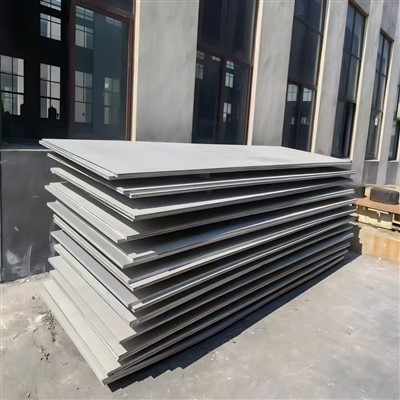
Steel is widely used in ground mounts, roof racks, and tracking systems because of its strength and durability. Common types include:
Galvanized Steel (Most Common)
Hot-dip galvanized (HDG) steel – Coated with zinc for corrosion resistance, ideal for outdoor use.
Used in ground-mount posts, rails, and clamps.
Stainless Steel (For High-Corrosion Areas)
Used in coastal or high-humidity environments where rust is a concern.
More expensive but longer-lasting.
Carbon Steel (Less Common, Needs Coating)
Sometimes used in structural supports but must be painted or coated to prevent rust.

Solar Tracking Systems
►Steel is used in tracker arms, poles, and rotating mechanisms due to its strength.
►Often powder-coated or galvanized for weather resistance.

Utility-Scale Solar Farms
►Steel piles (screw piles, driven piles) are used for ground-mount solar farms.
►Structural steel beams may support large solar canopies or carports.
What metal processing is involved in the solar industry?
Understanding the metal processing techniques involved is vital to appreciating the quality and reliability of steel components in solar projects. Precise metal processing techniques, such as roll forming, slitting, fabrication, and tube processing, ensure the components used in solar installations meet specific requirements and maintain structural integrity.
►Roll Forming
Roll forming is a key technique employed in shaping various steel components used in solar installations. This process ensures precision and consistency in creating profiles such as tubes, purlins, and trusses.
►Slitting
Slitting is crucial for producing steel strips of the required width, ensuring uniformity in the components used in solar tracker systems and other applications. Roll forming ensures precision and consistency in creating profiles such as tubes, purlins, and trusses, while slitting is crucial for producing steel strips of the required width.
►Fabrication
Fabrication involves assembling different steel elements and creating the final components used in solar installations. This step contributes to the solar system's overall structural integrity and performance.
►Tube Processing
Tube processing techniques, such as torque tubes, are applied to shape and refine tubular steel components. This ensures that these components meet the specific requirements for supporting solar panels in tracker systems and rooftop installations.
►The Importance of Steel to Solar Installations
The solar industry relies heavily on steel products and metal processing techniques to ensure solar installations' efficiency, durability, and versatility. Steel components such as tubes, purlins, trusses, and beams are crucial in providing foundational support and shaping the primary structures of solar installations. These components undergo steel galvanization post-processing, ensuring they can withstand the elements and provide a robust foundation for solar installations.
Use of Steel in the Generation of Solar and Wind Power
At present energy transition is taking place around the world. Renewable energy is at the centre of the transition for a less carbon-intensive society. Strategic moves and heavy investments are being made in the field of renewal energy. Renewable energies include solar, wind, geothermal, hydro, and others. Out of all types of renewable energies, the solar energy and wind energy have a very high percentage of investment with the solar power installations occupying the leading position followed by the wind power installations.
This has put steel in the centre stage of this transition since steel is needed by each of these technologies for the renewable power. Steel plays an important role in all renewables, including and especially solar and wind. Steel is important in the conversion of solar energy into electricity as well as hot water. It serves as a base for solar thermal panels, heat exchanges, tanks, and pumps. The future of steel in the energy transition is exciting. Steel occupies an excellent position to provide safe, sustainable solution for the future of energy.
Without steel, none of the renewable energy sources are possible. Every renewable energy structure, whether a wind turbine or a solar panel needs steel. Each new mega watt (MW) of solar power needs between 35 tons to 45 tons of steel, and each new MW of wind power needs 120 tons to 180 tons of steel. Transmission and distribution lines also need steel, and probably more of it, as installations moves further offshore. The average high-voltage transmission tower includes around 18 tons to 27 tons of steel. Transmission wire contains steel. An ACSR (aluminum conductor steel reinforced) wire having a weight of around 2.4 kilograms per metre has in it around 0.4 kilograms of steel per metre.
Our address
Room 4107, Runfeng Building, Sanqiao New Street, Weiyang District, Xi'an City, Shaanxi Province
Phone Number
+86 15769214734