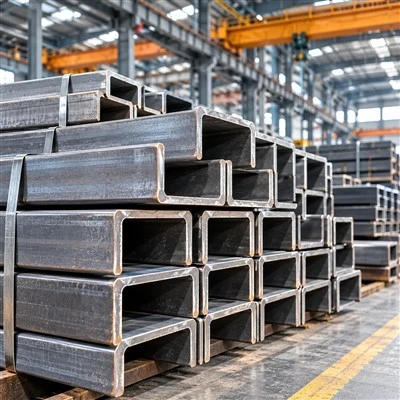


Xi'an Dongmeng Group Co., Ltd. is one of the most reliable manufacturers and suppliers of cold formed c purlin in China, also supports customized service. With abundant experience, we warmly welcome you to wholesale cheap products in stock here and get free sample from our factory. For price consultation, contact us.

Cold Formed C Purlin
Galvanized Steel C Section Purlins for Roofing, Wall Cladding & Steel Structure Buildings
Xi'an Dongmeng Group Co., Ltd. supplies Cold Formed C Purlins for industrial warehouses, steel structure workshops, commercial buildings, agricultural facilities, and prefabricated construction projects. Our C-shaped steel purlins are available in galvanized and other project-specified finishes, with customizable section dimensions, material grades, lengths, and pre-punched connection holes.
Manufactured by cold roll forming steel strip into accurately shaped lipped C sections, these lightweight structural members are widely used as secondary framing components to support roofing sheets, wall cladding, and other building envelope systems.
Dongmeng Group supports international steel structure contractors, engineering companies, distributors, and construction material buyers with material selection, customized processing, inspection documentation, and export-oriented supply solutions.
Request a quotation for standard or custom cold formed C purlins based on your drawings, material requirements, and project specifications.
What Is a Cold Formed C Purlin?
A cold formed C purlin is a lightweight steel structural member manufactured by progressively bending steel strip through a series of roll-forming stations. Its cross-section resembles the letter C and commonly includes inward-facing lips along the flange edges.
The section typically consists of four principal dimensional features:
Web Depth (H): The overall depth of the C section, influencing bending resistance and section behavior.
Flange Width (B): The width of the horizontal portions used for connections and roof or wall support.
Lip Length (C): The short return edges that contribute to flange stability and section performance.
Base Metal Thickness (t): The thickness of the steel substrate excluding metallic coating.
The combination of web, flanges, and lips creates an efficient cross-section for many secondary steel framing applications.
Unlike conventional hot-rolled structural channels, cold formed C purlins are produced from relatively thin steel strip and may require consideration of local buckling, distortional buckling, member restraint, and connection behavior during structural design.
They are commonly used in pre-engineered steel buildings and light industrial construction, where structural efficiency, installation speed, and component consistency are important.
Product Overview & Key Specifications
| Parameter | Product Details |
| Product Name | Cold Formed C Purlin |
| Material Standards | ASTM A653/A653M, EN 10346, or other project-specified material standards |
| Steel Grades | S250GD, S350GD, ASTM Structural Steel Grade 50, or equivalent project-approved grades |
| Material Type | Galvanized structural steel strip or suitable cold-forming carbon steel |
| Manufacturing Process | Cold Roll Forming |
| Surface Finish | Pre-Galvanized, Uncoated, or Project-Specified Protective Finish |
| Section Depth | Typically 80–300 mm; custom sizes subject to confirmation |
| Flange Width | Typically 40–80 mm |
| Lip Length | Typically 10–25 mm |
| Base Metal Thickness | Typically 1.2–3.0 mm |
| Length | Custom Cut-to-Length; longer sections subject to manufacturing and transport limits |
| Zinc Coating | Z100, Z180, Z275 or other agreed coating designation, subject to material availability |
| Hole Processing | Custom Web/Flange Punching Where Technically Feasible |
| Dimensional Requirements | EN 10162 Where Applicable or Agreed Project Drawings |
| Inspection | Dimensional, Thickness, Surface, and Coating Verification as Specified |
| Documents | Mill Test Certificate, Inspection Reports, Material Traceability Records as Available |
| Applications | Roof Purlins, Wall Girts, Steel Buildings, Industrial Sheds, Prefabricated Structures |
All sizes and specifications are indicative options, not a confirmed stock list. Final supply requirements, tolerances, material grades, and coating specifications are established at the quotation and order stage.
Key Advantages of Cold Formed C Purlins
1. Efficient Strength-to-Weight Performance
Cold formed C sections use an optimized steel profile to provide structural resistance with relatively low self-weight.
When appropriately designed, they can help reduce secondary framing weight and simplify material handling.
2. Consistent Section Geometry
Continuous roll forming supports repeatable web, flange, and lip configurations.
Consistent profile dimensions help improve compatibility with steel framing connections, roof sheeting, and prefabricated building components.
3. Galvanized Corrosion Protection
C purlins manufactured from suitable galvanized steel coils provide a protective zinc coating.
Coating selection should account for atmospheric exposure, expected service conditions, and project-specific corrosion protection requirements.
4. Custom Lengths and Connection Details
Purlins can be supplied in project-specific lengths and with pre-punched connection holes, subject to processing capability and design verification.
These options can reduce some site measurement, cutting, and drilling activities.
5. Suitable for Modular and Prefabricated Construction
Cold formed purlins integrate with bolted steel frame assemblies, modular construction systems, and pre-engineered building packages.
Their relatively low weight and repeatable dimensions make them practical for transportation and organized on-site assembly.
Cold Formed C Purlin Sizes & Dimensions
Selecting the correct C purlin requires consideration of the roof or wall structural system, design loads, span, restraint conditions, and material properties.
The following table illustrates commonly requested nominal C-section configurations.
| Section Designation | Web H (mm) | Flange B (mm) | Lip C (mm) | Example Thickness (mm) |
|---|---|---|---|---|
| C80 × 40 × 15 | 80 | 40 | 15 | 1.2–1.6 |
| C100 × 50 × 20 | 100 | 50 | 20 | 1.5–2.0 |
| C120 × 50 × 20 | 120 | 50 | 20 | 1.5–2.0 |
| C150 × 50 × 20 | 150 | 50 | 20 | 1.5–2.5 |
| C180 × 60 × 20 | 180 | 60 | 20 | 1.5–2.5 |
| C200 × 70 × 20 | 200 | 70 | 20 | 1.8–3.0 |
| C250 × 75 × 20 | 250 | 75 | 20 | 2.0–3.0 |
| C300 × 80 × 25 | 300 | 80 | 25 | 2.0–3.0 |
Important engineering notes:
These are illustrative inquiry sizes, not a standardized universal product series or verified load table.
Actual section dimensions, bend radii, flange geometry, and available thicknesses vary by tooling and manufacturer.
Purlin section designation conventions should be confirmed against a dimensioned drawing.
Actual mass per meter and section properties should be calculated from the approved cross-section, material thickness, and applicable coating conditions.
Final structural suitability must be confirmed by the responsible structural engineer.
Custom C Purlin Dimensions
For projects requiring non-standard configurations, Dongmeng Group can evaluate supply options based on customer drawings.
Customization requests may include different web depths, flange widths, lip lengths, material thicknesses, lengths, and punched connection patterns.
Send your CAD drawing or section requirements for a manufacturing feasibility review.
Material Grades and Applicable Standards
Material selection affects strength, formability, durability, and traceability. For structural applications, the steel substrate must meet the mechanical properties required by the project design.
| Standard / Reference | Material or Application | Key Consideration |
|---|---|---|
| ASTM A653/A653M | Hot-dip zinc-coated steel sheet, including structural grades | Material strength and coating designation |
| EN 10346 | Continuously hot-dip coated steel flat products | Steel grade, coating type, and delivery requirements |
| EN 10162 | Roll-formed steel sections | Dimensional and cross-sectional tolerances where applicable |
| AISI S100 | Cold-formed steel structural member design | Member strength and structural stability |
| EN 1993-1-3 | European design rules for cold-formed steel members | Structural verification under applicable project rules |
| AS/NZS 4600 | Cold-formed steel structures | Design requirements for relevant Australian and New Zealand projects |
Material standards and structural design standards perform different functions. For example, ASTM A653/A653M specifies requirements for coated sheet materials, while AISI S100 provides structural design provisions for cold-formed steel members.
The applicable standard, edition, material grade, and inspection requirements should be confirmed before production.
S350GD Galvanized Steel C Purlins
S350GD is a structural steel grade commonly specified under EN 10346. It has a specified minimum yield strength of 350 MPa, subject to the relevant standard edition and product requirements.
For example, S350GD+Z275 identifies a zinc-coated structural steel grade with a specified coating mass designation.
It may be considered for structural purlin applications when its mechanical properties, formability, coating system, and section design satisfy the project requirements.
ASTM Structural Steel C Purlins
ASTM A653/A653M structural steel grades provide another material specification route for galvanized steel sections.
For North American projects, material specifications and structural design requirements should be coordinated with the applicable building code, AISI design provisions, and approved engineering drawings.
Galvanized C Purlins: Surface Protection Options
Corrosion protection is an important consideration for roofing and wall-framing components, particularly in humid, industrial, or other demanding environments.
Pre-Galvanized Steel
Pre-galvanized C purlins are roll formed from steel strip coated before the forming operation.
This method provides a consistent factory-applied metallic coating on the original strip surfaces.
Common coating designations include Z100, Z180, and Z275 where offered by the relevant material standard and supplier.
Additional Protective Finishes
Alternative protective systems may be considered for project-specific exposure conditions.
Options may include suitable coating or paint systems and, where the section geometry and process requirements allow, galvanizing after fabrication.
Post-fabrication galvanizing is a separate process and must not be confused with the coating designation of pre-galvanized coil.
How to Choose the Coating
Selection should consider:
Interior or exterior exposure
Local humidity and atmospheric corrosivity
Proximity to marine or industrial environments
Required service life and maintenance expectations
Compatibility with fasteners and adjoining building materials
Cut edges, punched holes, and any coating repair requirements
Note: A zinc coating designation identifies coating mass requirements; it is not a guaranteed service-life rating. Coating mass and service-life expectations should not be treated as interchangeable.
Manufacturing Process & Customization
Cold formed C purlins are generally produced using continuous roll-forming technology.
Typical Production Workflow
Raw Material Verification - Confirm coil grade, specified thickness, surface condition, and available material documentation.
Coil Feeding and Leveling - Prepare steel strip for continuous profile forming.
Cold Roll Forming - Gradually shape the web, flanges, and return lips using sequential forming rolls.
Hole Punching - Produce approved connection holes and slots at specified positions when required.
Cutting to Length - Cut sections according to the approved cutting schedule.
Dimensional Inspection - Check cross-section dimensions, length, straightness, and relevant hole positions.
Packaging and Identification - Bundle, label, and protect finished materials according to shipping requirements.
The processing sequence may vary depending on the equipment and customer specifications.
Available Customization Requirements
| Customization Item | Options |
|---|---|
| Section Shape | Standard or approved custom lipped C profiles |
| Steel Grade | Specified structural steel grade |
| Dimensions | Custom web, flange, lip, and thickness |
| Length | Project-specific cut-to-length |
| Hole Position | Approved connection-hole layout |
| Hole Shape | Round or slotted holes where technically feasible |
| Surface Finish | Specified galvanized or protective finish |
| Packaging | Bundles, protective wrapping, and identification labels |
| Documentation | Material and inspection records as agreed |
Pre-punched openings must be included in structural and connection design. Hole placement and edge distances should not be changed without engineering approval.
Structural Performance & Purlin Selection
A suitable roof purlin is selected through structural calculations, rather than by section depth or steel thickness alone.
Important Design Factors
1. Span and Support Conditions
The distance between primary supporting frames influences bending moments, shear forces, deflection, and structural stability.
2. Roof Dead Loads
Roof sheets, insulation, services, and permanently attached components contribute to the load carried by the purlins.
3. Wind Uplift and Snow Loads
Depending on the project location, wind suction and snow loading may significantly affect the required section and connection design.
4. Lateral Restraint and Bridging
Roof sheeting, bridging systems, and other restraints may influence purlin stability. Their effectiveness must be verified rather than assumed.
5. Connection Design
Bolts, cleats, fasteners, and connection holes must be designed for applicable loads, including wind uplift and potential local failure modes.
6. Serviceability
Deflection and movement limits must be appropriate for the roof or wall cladding system.
What Is the Maximum Span of a C Purlin?
There is no single maximum span that applies to every cold formed C purlin.
Allowable span depends on the complete structural system, including section properties, material strength, design loading, continuity, lateral restraint, and serviceability limits.
For accurate section selection, provide your structural drawings, load requirements, and design standard.
Project-specific load/span calculations and verified section property data should be used before approving a purlin for structural installation.
Cold Formed C Purlin vs. Z Purlin
Both C and Z purlins are widely used as secondary structural members in metal building systems, but they differ in geometry and typical connection arrangements.
| Comparison | C Purlin | Z Purlin |
|---|---|---|
| Cross Section | C-shaped, normally with lips | Z-shaped, normally with lips |
| Common Application | Roof purlins, wall girts, framing | Roof purlins and wall girts |
| Section Geometry | Typically symmetrical about the horizontal section axis when flanges and lips match | Typically uses an offset flange arrangement |
| Lapped Connections | Usually requires specific detailing for continuity | Many proprietary systems are designed to permit overlapping sections |
| Typical Design Consideration | Section strength, restraint, connections | Section strength, restraint, lap and connection behavior |
| Customization | Lengths, sizes, hole patterns | Lengths, sizes, lap details, hole patterns |
Which Is Better for a Steel Structure Building?
C purlins are commonly selected for straightforward secondary framing arrangements and projects where their geometry suits the connection details.
Z purlins are often used in engineered systems with designed lapped connections over primary supports.
Neither section is universally stronger or more economical. The appropriate choice depends on the engineering design, connection system, project span, loading, and construction requirements.
Applications of Cold Formed Steel C Purlins
Industrial Warehouses
Used as roof and wall secondary framing elements supporting metal cladding in industrial warehouse buildings.
Steel Structure Workshops
Integrated with steel columns and beams to support roofing and wall systems in production workshops and manufacturing buildings.
Prefabricated Steel Buildings
Suitable for engineered pre-assembled construction packages where standardized profiles and project-specific lengths are required.
Agricultural Buildings
Used in selected agricultural sheds, storage facilities, and farm buildings, with appropriate consideration of moisture and corrosion exposure.
Commercial Steel Buildings
Applied to roof and wall support systems in commercial structures requiring lightweight secondary framing.
Wall Girts and Cladding Supports
C sections can serve as wall girts to transfer cladding loads to the primary structural frame when properly engineered.
Quality Control & Inspection
For international construction projects, material identity and dimensional consistency are essential.
Dongmeng Group can coordinate quality inspection and documentation requirements according to the agreed purchase specifications.
| Inspection Item | Verification Focus |
|---|---|
| Raw Material | Grade identification, coil traceability, available certificates |
| Thickness | Base steel thickness according to agreed tolerance |
| Section Dimensions | Web, flange, lip, and relevant bend geometry |
| Straightness | Longitudinal alignment according to agreed criteria |
| Length | Finished length and cutting accuracy |
| Punching | Hole size, shape, location, and alignment |
| Coating | Specified coating type and appropriate inspection method |
| Surface | Visible damage, deformation, and coating condition |
| Packaging | Bundle identification, protection, and transport suitability |
| Documentation | Conformity with agreed inspection and traceability requirements |
Material Test Certificates
Mill Test Certificates such as EN 10204 Type 3.1 may be supplied when supported by the material producer, traceability arrangements, and contractual requirements.
Independent third-party inspection can also be arranged where specified in the purchase order.
Certification availability and inspection scope should be confirmed before order acceptance.
Packaging and Export Delivery
C purlins require appropriate handling and packaging to reduce transport damage and maintain section geometry.
Available export arrangements may include:
Secure steel strapping and bundled sections
Protective separation materials where necessary
Moisture-protection measures agreed for the shipping route
Section identification and batch labels
Project-specific packing lists
Container or breakbulk shipment planning depending on length and total weight
Long purlin sections should be reviewed for shipping feasibility before finalizing cutting lengths.
Why Choose Dongmeng Group?
Xi'an Dongmeng Group Co., Ltd. supports international buyers with steel material sourcing, customized processing coordination, and export supply solutions.
Our focus is to make technical specifications clear and ensure that the ordered materials match the requirements of the construction project.
Our B2B supply approach includes:
Material Selection Support: Review specified grades, coatings, and section requirements.
Customization Coordination: Evaluate cut-to-length and punching requirements against approved drawings.
Documentation Support: Coordinate available mill and inspection records.
Export-Oriented Packaging: Arrange product identification and packing according to shipment requirements.
Project Procurement Support: Assist with consolidated requirements involving related steel sections and construction materials.
We welcome inquiries from steel structure contractors, engineering procurement companies, building material distributors, and international project buyers.
Frequently Asked Questions About Cold Formed C Purlins
1. What is a cold formed C purlin used for?
Cold formed C purlins are primarily used as secondary structural members to support roof sheeting, wall cladding, and associated building envelope systems. They are common in warehouses, workshops, industrial sheds, and prefabricated steel buildings.
2. What are the common sizes of C purlins?
Commonly requested depths include 100, 150, 200, 250, and 300 mm, with various flange widths, lips, and thicknesses. Exact product geometry should always be confirmed against the project specification or manufacturer's profile drawing.
3. What is the difference between a cold formed C purlin and a hot-rolled steel channel?
A cold formed C purlin is shaped from steel strip at approximately ambient temperature, usually with relatively thin walls and return lips. A hot-rolled channel is produced by hot rolling and normally has a different cross-sectional geometry and structural design basis.
4. Can C purlins be manufactured with custom lengths and punched holes?
Yes. Customized lengths and connection-hole arrangements are commonly requested. Feasibility depends on tooling, material thickness, section geometry, and the approved connection design.
5. Which steel grade is suitable for galvanized C purlins?
Structural grades such as S350GD under EN 10346 or appropriate ASTM A653/A653M structural grades may be considered. The selected material must meet the mechanical and forming requirements of the project.
6. Are C purlins available in galvanized steel?
Yes. C purlins can be manufactured from pre-galvanized structural steel strip. The coating designation should be specified in the purchase documents, and the required durability should be assessed for the service environment.
7. What is the difference between BMT and TCT?
BMT means Base Metal Thickness and refers to the steel substrate excluding the metallic coating. TCT means Total Coated Thickness and includes the coating. Structural calculations and thickness comparisons must use the correct specified thickness basis.
8. How much weight can a C purlin support?
Load capacity depends on section dimensions, material properties, span, restraint, connection conditions, and load type. An engineer should calculate the applicable member resistance and serviceability limits using the relevant design standard.
9. Can C purlins be used for both roofs and walls?
Yes. C sections may be used as roof purlins or wall girts, provided the section and connections are designed for their respective support and loading conditions.
10. What is the difference between C purlins and Z purlins?
C purlins have a C-shaped profile, while Z purlins have a Z-shaped profile. Z sections are frequently used in systems designed for lapped continuity at supports, while C sections are commonly used with other connection arrangements. Selection should follow the structural design.
11. What inspection documents can be provided?
Depending on the material source and purchase agreement, available documentation may include mill test certificates, material traceability information, dimensional inspection reports, and third-party inspection records.
12. What information is needed for an accurate C purlin quotation?
Please provide the section dimensions, base metal thickness, steel grade, coating requirement, finished length, hole drawings if applicable, required quantity, destination port, and inspection requirements.
If you need assistance selecting a section, include the applicable structural drawings, loading conditions, and design criteria.
Request a Quote for Cold Formed C Purlins
Looking for a reliable supply solution for galvanized or customized steel C purlins?
Dongmeng Group welcomes project inquiries involving standard profiles, customized dimensions, punched connection holes, and steel structure material packages.
Send us your technical requirements or project drawings for a quotation review.
Please include:
Required C purlin size and thickness
Steel grade and surface coating
Quantity and finished lengths
Punching drawings or connection details
Destination and required delivery schedule
Contact Xi'an Dongmeng Group Co., Ltd. for Cold Formed C Purlin pricing, technical specifications, and customized supply options.
Office Information
Completely recapitalize 24/7 communities via standards compliant metrics whereas.
Phone Number & Email
+8615769214734
office@dongmjd.com
Dong: +8615769214734
Our Office Address
Room 4107, Runfeng Building, Sanqiao New Street, Weiyang District, Xi'an City, Shaanxi Province
Hot Tags: Cold Formed C Purlin, Galvanized C Purlin, Steel C Purlin, C Section Purlin, Cold Formed Steel C Section, C Channel Purlin, C Purlin Manufacturer, C Purlin Supplier, Galvanized Steel Purlin, Roof C Purlin, Steel Structure C Purlin, C Purlin Sizes, C Purlin Dimensions, Cold Rolled C Purlin, Custom C Purlin