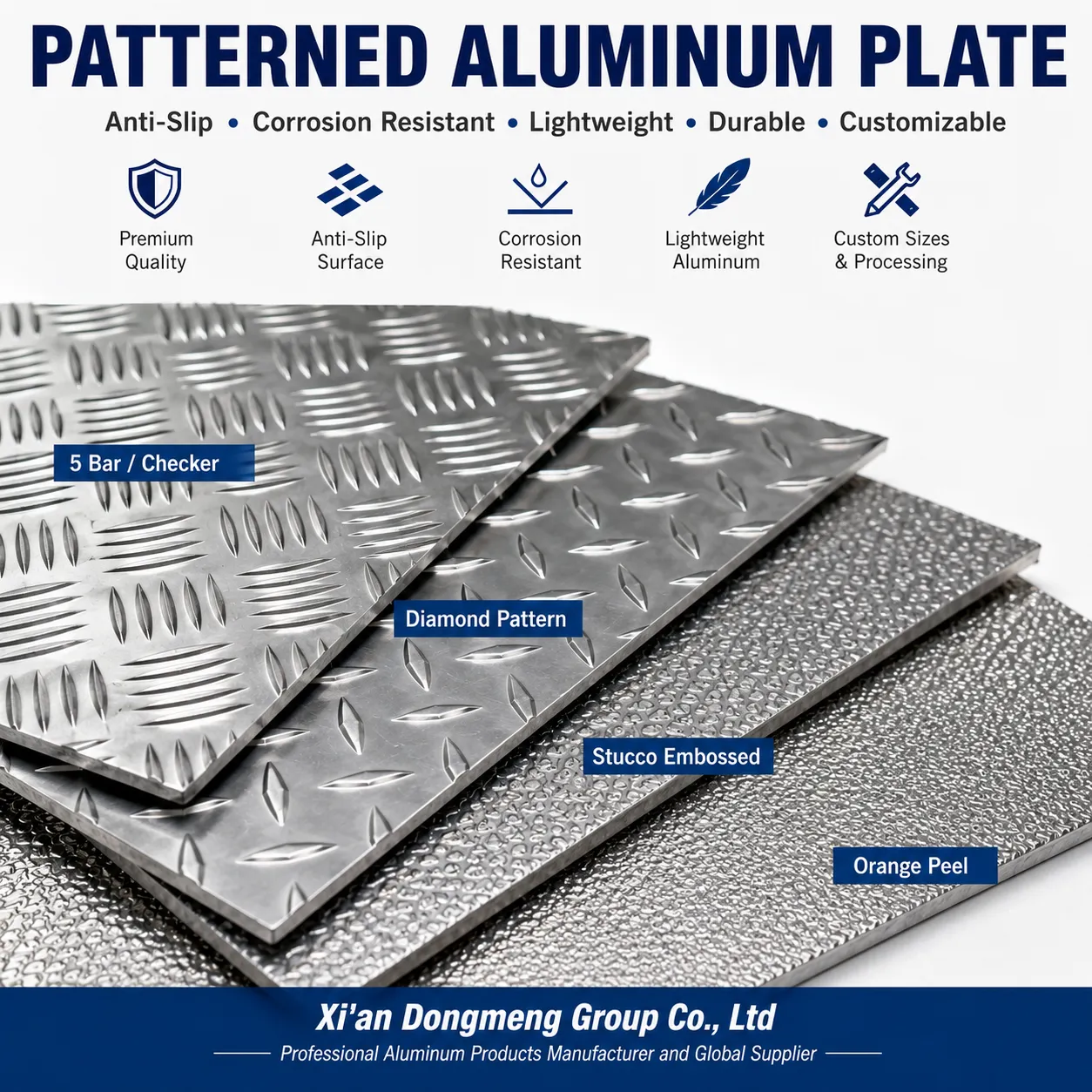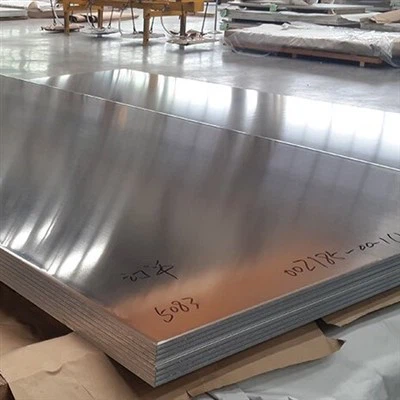


Xi'an Dongmeng Group Co., Ltd. is one of the most reliable manufacturers and suppliers of 7075 t651 aluminum plate supplier | astm b209 aerospace grade aluminum in China, also supports customized service. With abundant experience, we warmly welcome you to wholesale cheap products in stock here and get free sample from our factory. For price consultation, contact us.

7075-T651 Aluminum Plate – High-Strength Aerospace & CNC Machining Plate Supplier
ASTM B209/B209M | AMS 4045 | Stress-Relieved Aluminum Alloy Plate | Custom Cut-to-Size Supply
Xi'an Dongmeng Group Co., Ltd. supplies 7075-T651 aluminum plate for aerospace-component manufacturing, CNC precision machining, industrial tooling, high-load mechanical components, and OEM production.
7075-T651 is a high-strength, heat-treatable 7xxx series aluminum-zinc-magnesium-copper alloy. Its T651 temper combines solution heat treatment, controlled stretching for residual stress relief, and artificial aging. This makes it particularly suitable for machined components requiring high strength, reduced machining distortion, and reliable dimensional control.
Compared with conventional 6061 aluminum plate, 7075-T651 offers substantially higher mechanical strength while maintaining a favorable strength-to-weight ratio. However, its corrosion resistance, weldability, and forming limitations must be considered during material selection.
We support international distributors, machining workshops, equipment manufacturers, and industrial procurement teams with material selection, dimensional customization, inspection documentation, and export-ready supply.
Request a quotation: Send your plate thickness, width, length, quantity, required standard, and inspection requirements for a tailored offer.
What Is 7075-T651 Aluminum Plate?
7075-T651 aluminum plate is a precipitation-hardened aluminum alloy engineered for applications requiring high mechanical strength and comparatively low weight.
Its principal alloying elements are zinc, magnesium, and copper. During controlled heat treatment, strengthening precipitates develop within the aluminum matrix, substantially increasing the material's strength.
The T651 temper involves three essential stages:
Solution heat treatment: The alloy is heated under controlled conditions to dissolve soluble alloying constituents, followed by quenching.
Stress relief by stretching: The plate is permanently stretched by a controlled amount to reduce residual stresses introduced during quenching.
Artificial aging: The material undergoes controlled precipitation hardening to develop the specified strength.
The stretching operation makes T651 particularly useful for machining large plates, deep pockets, precision fixtures, and components requiring significant material removal.
Stress relief reduces distortion risk but does not guarantee distortion-free machining. Finished-part stability also depends on machining sequence, plate thickness, material removal, and fixture design.
7075-T651 Aluminum Plate – Technical Overview
| Parameter | Specification |
|---|---|
| Product | 7075-T651 Aluminum Plate |
| Alloy designation | AA7075 / EN AW-7075 / UNS A97075 |
| Alloy family | 7xxx Series, Al-Zn-Mg-Cu |
| Material form | Rolled Plate / Cut Plate / Machining Blank |
| Temper | T651 |
| Principal standard | ASTM B209/B209M |
| Aerospace specification | SAE AMS 4045, subject to applicable revision and qualification |
| Chemical composition | ASTM B209/B209M or EN 573-3, as specified |
| Heat treatment | Solution Heat Treated, Stress-Relieved by Stretching, Artificially Aged |
| Published inquiry range | 3–200 mm thickness, subject to confirmation of product form and temper |
| Width / length | Up to 2500 mm / 12000 mm, subject to size combination and availability |
| Surface condition | Mill Finish; additional finishing by agreement |
| Processing services | Saw Cutting, Sizing, Drilling and Machining Preparation |
| Inspection | Chemical, Mechanical, Dimensional and Surface Inspection; Additional UT on Request |
| Documentation | Mill Test Report, Traceability Records, EN 10204 3.1 Documentation Where Agreed |
| Main applications | Aerospace Components, CNC Parts, Tooling, Machinery Components, High-Load Brackets |
Important purchasing note: Not every thickness is available or qualified under every material standard. Thin-gauge products may be classified as sheet rather than plate, and aerospace specifications may impose narrower thickness limits than the general commercial supply range.
Chemical Composition of 7075 Aluminum Alloy
The following composition ranges represent commonly specified AA7075 alloy limits. Actual acceptance must follow the applicable material specification.
| Element | Content (% by Weight) |
|---|---|
| Zinc (Zn) | 5.1–6.1 |
| Magnesium (Mg) | 2.1–2.9 |
| Copper (Cu) | 1.2–2.0 |
| Chromium (Cr) | 0.18–0.28 |
| Iron (Fe) | ≤0.50 |
| Silicon (Si) | ≤0.40 |
| Manganese (Mn) | ≤0.30 |
| Titanium (Ti) | ≤0.20 |
| Other Elements, Each | ≤0.05 |
| Other Elements, Total | ≤0.15 |
| Aluminum (Al) | Balance |
Zinc and magnesium provide the main precipitation-hardening response, while copper contributes to the alloy's strength and aging behavior. Chromium helps control the grain structure and associated material properties.
For critical orders, chemical composition should be verified against a traceable mill certificate and the specified alloy standard.
Mechanical and Physical Properties of 7075-T651
The following are widely published typical reference values, not guaranteed minimum properties for every plate thickness.
| Property | Typical Reference Value |
|---|---|
| Ultimate Tensile Strength | 572 MPa / 83 ksi |
| 0.2% Yield Strength | 503 MPa / 73 ksi |
| Elongation | Approximately 11% |
| Brinell Hardness | Approximately 150 HB |
| Elastic Modulus | Approximately 71 GPa |
| Shear Strength | Approximately 331 MPa |
| Density | Approximately 2.81 g/cm³ |
| Fatigue Strength | Approximately 158 MPa under specified laboratory test conditions |
Mechanical properties vary with thickness, testing direction, product form, and applicable specification.
For purchase acceptance, use the minimum mechanical properties stated in ASTM B209/B209M, the applicable AMS specification, or the agreed European standard for the ordered dimensions.
Why Thickness Matters
Mechanical strength is not necessarily uniform across all 7075-T651 plate sizes.
| Plate Thickness | Technical Purchasing Considerations |
|---|---|
| 6–12 mm | Verify product classification, temper availability, flatness and strength requirements |
| Over 12–25 mm | Common precision component applications; specify thickness tolerance and certification |
| Over 25–50 mm | Consider residual stress, machining allowance and mechanical-property requirements |
| Over 50–100 mm | Confirm through-thickness requirements, testing direction, internal soundness and certification |
| Over 100 mm | Verify applicable specifications, mechanical-property qualification and special-order availability |
For aerospace and other safety-critical applications, do not substitute typical data for the mechanical-property limits required by the approved drawing or purchasing specification.
Available Sizes and Custom Plate Supply
Dongmeng Group accepts inquiries for standard-size and custom-dimension 7075-T651 aluminum plates, including machining blanks and project-specific cut pieces.
| Supply Parameter | Options |
|---|---|
| Thickness | Published inquiry range: 3–200 mm; T651 plate availability to be verified |
| Width | Up to 2500 mm, subject to rolling and stock limitations |
| Length | Up to 12000 mm, subject to thickness, weight and availability |
| Common RFQ Thicknesses | 10, 12, 15, 20, 25, 30, 40, 50, 60, 80, 100 mm |
| Cut Dimensions | According to customer drawings or cutting lists |
| Edge Condition | Mill Edge / Saw-Cut Edge |
| Surface | Mill Finish / Additional Finishing on Request |
| Dimensional Tolerance | Applicable product standard or agreed drawing |
| Flatness | Mill Standard or Agreed Inspection Requirement |
| Quantity | Trial, Production and Bulk Orders, Subject to Confirmation |
For precision CNC applications, please distinguish between mill-supplied plate tolerance and the required dimensions of a finished machined blank.
We recommend providing both the raw stock dimensions and final component dimensions for machining allowance evaluation.
Why Choose 7075-T651 Aluminum Plate?
1. High Strength-to-Weight Ratio
7075-T651 provides significantly higher tensile and yield strength than many conventional aluminum alloys, making it suitable for weight-sensitive, highly loaded components.
2. Reduced Residual Stress
Controlled stretching reduces residual stresses associated with solution heat treatment and quenching, helping reduce distortion during subsequent machining.
3. Excellent Machining Potential
The hardened microstructure generally provides favorable chip formation and surface finish in CNC milling, drilling, pocketing, and profiling operations.
4. Good Fatigue Performance
7075-T651 is used for cyclically loaded components when fatigue properties, component geometry, surface condition, and service environment have been adequately evaluated.
5. Suitable for Precision Components
Its combination of high strength and stress-relieved condition makes it useful for demanding tooling, fixtures, brackets, mounts, and precision mechanical components.
6. Traceable Industrial Supply
Material verification, certificate review, heat or lot identification, and dimensional inspection can be incorporated into the procurement and quality-control process.
7075-T651 vs 7075-T6 vs 7075-T7351 Aluminum
Selecting the correct temper is essential for balancing strength, machining performance, and corrosion-related service requirements.
| Property | 7075-T6 | 7075-T651 | 7075-T7351 |
|---|---|---|---|
| Heat Treatment | Solution Treated & Artificially Aged | Solution Treated, Stretched & Artificially Aged | Solution Treated, Stretched & Overaged |
| Strength Level | Very High | Very High | Lower Than T651 |
| Stretch Stress Relief | Not Inherent in T6 Designation | Yes | Yes |
| Machining Distortion Risk | Depends on Initial Residual Stress | Reduced by Stress Relief | Reduced by Stress Relief |
| Stress-Corrosion Resistance | Comparatively Limited | Comparatively Limited | Improved |
| Typical Selection | High-Strength Parts | High-Strength Precision Machined Plate | Corrosion-Sensitive, Highly Stressed Parts |
When to Choose 7075-T651
Choose 7075-T651 when high strength and CNC machining stability are primary requirements and the component's service environment is compatible with the alloy.
When to Consider 7075-T7351
Consider 7075-T7351 when improved resistance to stress-corrosion cracking is more important than obtaining the highest possible strength.
This is especially relevant for highly stressed components exposed to moisture or aggressive environments.
Engineering recommendation: Final temper selection should be based on the applicable design specification, loading direction, required toughness, corrosion exposure, and qualified material properties.
7075-T651 vs 6061-T651 Aluminum Plate
Both alloys are widely used for machined aluminum components, but their applications are not interchangeable.
| Selection Factor | 7075-T651 | 6061-T651 |
|---|---|---|
| Alloy Family | Al-Zn-Mg-Cu | Al-Mg-Si |
| Relative Strength | Significantly Higher | Moderate to High |
| Density | ~2.81 g/cm³ | ~2.70 g/cm³ |
| CNC Machining | Very Good | Very Good |
| Stress Relief | Stretching | Stretching |
| General Corrosion Resistance | Lower | Better |
| Conventional Fusion Welding | Generally Not Recommended | Generally Suitable With Design Precautions |
| Cold Forming | Limited in Hardened Temper | More Versatile, Depending on Geometry |
| Relative Material Cost | Generally Higher | Generally Lower |
| Typical Applications | Highly Loaded Machined Components | General Machinery, Fabricated and Welded Structures |
Choose 7075-T651 for components where strength-to-weight ratio and high-load machining performance justify the material cost.
Choose 6061-T651 when moderate strength, corrosion performance, weldability, and overall fabrication economics are more important.
CNC Machining Guide for 7075-T651 Aluminum Plate
7075-T651 is frequently selected for high-precision milling, drilling, and machining applications.
Recommended Machining Practices
Rough Machining
Use appropriate high-performance aluminum cutting tools and avoid excessive localized heat. Large-volume material removal should be planned to control distortion.
Machining Sequence
For asymmetric or heavily pocketed components, staged roughing, intermediate inspection, and controlled finishing passes can help maintain dimensional accuracy.
Tool Selection
Sharp carbide cutting tools with suitable aluminum machining geometry are commonly used. Cutting conditions should be based on tool manufacturer recommendations and machine capability.
Finishing Operations
Deburring, fine milling, surface finishing, and dimensional inspection should be planned according to the final component specification.
Machining Allowance
Allow sufficient stock for sawing tolerance, clamping, machining distortion, and final surface finishing.
Fabrication Limitations
Welding: Conventional fusion welding is generally unsuitable for high-strength 7075-T651 components because of cracking susceptibility and heat-affected-zone strength reduction.
Bending: Cold formability is limited in the hardened temper. Tight bends should not be assumed feasible.
Corrosion: Protective surface treatment may be necessary depending on exposure conditions.
Through-Thickness Loading: Stress-corrosion cracking and other direction-dependent properties require careful evaluation.
Typical Applications
Aerospace & Aircraft Components
7075-T651 is used in aerospace component manufacturing for selected brackets, fittings, machined structural components, and other high-strength parts.
Aircraft applications require compliance with the actual engineering drawing, approved material specification, traceability, and any additional qualification requirements. Alloy designation alone does not establish aerospace approval.
CNC Precision Machining
Machining workshops use 7075-T651 for high-strength parts with complex contours, pockets, bores, and precision-machined interfaces.
Industrial Tooling & Fixtures
The alloy is suitable for selected machine fixtures, tooling components, assembly jigs, and other applications where strength and dimensional control are important.
High-Performance Automotive Engineering
Potential uses include suspension-related machined components, mounting structures, lightweight brackets, and motorsport parts, subject to appropriate engineering design and validation.
Industrial Machinery
7075-T651 is used for specialized mechanical assemblies, load-bearing machined components, and precision equipment where conventional aluminum alloys may not provide sufficient strength.
Processing & Customization Services
Dongmeng Group supports project-based processing requirements for industrial aluminum plate buyers.
| Service | Buyer Benefit |
|---|---|
| Plate Saw Cutting | Supply of custom dimensions and machining blanks |
| Cut-to-Length / Width | Reduced preparation work at the customer's facility |
| Drilling / Basic Machining | Project-specific pre-processing, subject to drawing review |
| Machining Allowance Planning | Better selection of raw blank dimensions |
| Dimensional Inspection | Verification of specified dimensions and tolerances |
| Additional NDT Coordination | Testing arrangements for specified quality requirements |
| Surface Protection | Reduced handling and transportation damage |
| Custom Export Packaging | Support for international shipment of heavy plates |
Processing capability and final tolerance commitments are confirmed after technical and drawing review.
For OEM orders, customers are encouraged to submit 2D drawings, CAD files, required tolerances, critical surfaces, and inspection criteria.
Standards, Testing & Quality Assurance
For professional procurement, specifying the correct material standard and obtaining meaningful inspection records are as important as choosing the alloy.
Applicable Standards
| Standard | Relevance |
|---|---|
| ASTM B209/B209M | Aluminum and Aluminum-Alloy Sheet and Plate |
| SAE AMS 4045 | 7075-T6 Sheet and 7075-T651 Plate, within the applicable edition's scope |
| EN 573-3 | Chemical Composition of Wrought Aluminum Alloys |
| EN 485-2 | Mechanical Properties of Aluminum Sheet, Strip and Plate |
| EN 10204 3.1 | Inspection Certificate Type, When Required by Contract |
For AMS 4045 orders, the exact revision, thickness coverage, mill qualification, and applicable inspection requirements must be established before confirmation.
Inspection Options
Chemical Composition Verification
Mill chemical analysis is reviewed against specified alloy composition limits.
Mechanical Property Verification
Tensile strength, yield strength, and elongation are verified according to the applicable material standard and testing requirements.
Dimensional Inspection
Plate thickness, width, length, flatness, and applicable surface requirements are checked against the agreed order.
Surface Inspection
Visual examination is performed for relevant surface damage and unacceptable defects.
Ultrasonic Testing
UT can be specified where internal soundness testing is required. The method, acceptance criteria, coverage, and authorized inspection provider must be confirmed in advance.
Documentation & Traceability
The documentation package may include mill certificates, test reports, material identification records, and agreed third-party inspection documentation.
For critical procurement, the required documentation must be explicitly included in the purchase order.
Why Work With Dongmeng Group?
Material-Oriented Procurement Support
We help buyers review alloy, temper, size, processing and documentation requirements before order confirmation.
Customized Material Supply
Commercial plates and application-specific machining blanks can be quoted based on project dimensions.
Industrial Quality Coordination
Chemical, mechanical, dimensional, and additional inspection requirements can be incorporated into the purchasing process.
OEM and Industrial Project Support
We work with manufacturers and international buyers requiring project specifications, repeat orders, and traceable material supply.
Export Packaging & Logistics
Heavy plates and cut blanks can be prepared with protective materials, secure packaging, identification labels, and appropriate international shipment arrangements.
Export Packaging and Delivery
Packaging is determined according to plate dimensions, quantity, finish, and transportation requirements.
Typical protective arrangements include:
Protective interlayers or film where appropriate
Edge and corner protection
Reinforced wooden pallets or export crates
Secure strapping and moisture protection
Package labels identifying alloy, temper, dimensions and traceability references
Lead time, shipment method, packaging requirements, and delivery terms will be confirmed during quotation.
Frequently Asked Questions About 7075-T651 Aluminum Plate
Q1. What does T651 mean in 7075 aluminum plate?
T651 indicates that the material has been solution heat treated, stress-relieved by controlled stretching, and artificially aged. The stress-relief operation is especially valuable for precision machining.
Q2. What is the difference between 7075-T6 and 7075-T651?
Both are high-strength precipitation-hardened tempers. T651 includes controlled stretching to reduce residual stresses, making it particularly suitable for rolled plate intended for extensive machining.
Q3. Is 7075-T651 stronger than 6061-T651?
Yes. 7075-T651 generally provides substantially higher tensile and yield strength, although exact acceptance values must be based on the specified product thickness and standard.
Q4. Is 7075-T651 suitable for aerospace applications?
It can be used for aerospace components when the supplied material and its documentation comply with the applicable engineering and procurement requirements. Aerospace use should not be approved solely on the basis of alloy and temper designation.
Q5. Can 7075-T651 aluminum plate be CNC machined?
Yes. It is widely used in CNC machining. Its high strength, favorable machining behavior, and stress-relieved temper are beneficial for complex, high-load components.
Q6. Can 7075-T651 aluminum plate be welded?
Conventional fusion welding is generally not recommended for high-strength applications because of hot-cracking risk and reduction of mechanical properties near the weld.
Q7. Is 7075-T651 corrosion-resistant?
Its corrosion resistance is lower than that of many 5xxx and 6xxx alloys. Protective finishes and appropriate temper selection should be considered where moisture, corrosive conditions, or sustained tensile stress are present.
Q8. What is the difference between 7075-T651 and 7075-T7351?
T651 prioritizes high strength, while T7351 is overaged to improve resistance to stress-corrosion cracking, generally at the expense of some mechanical strength.
Q9. What thicknesses of 7075-T651 plate can be supplied?
The catalog inquiry range covers 3–200 mm, but actual T651 availability depends on thickness, plate classification, producing mill and required specification. Buyers should confirm the exact size and material standard before ordering.
Q10. Can you supply precision-cut aluminum plate blanks?
Cut-to-size and machining-blank requirements can be quoted according to thickness, dimensions, quantity, machining allowance and inspection requirements.
Q11. Are mill test certificates available?
Mill test reports and EN 10204 3.1 inspection documentation may be provided as required by the agreed order. Buyers should specify the needed documents when submitting their RFQ.
Q12. Is ultrasonic testing available for 7075-T651 plate?
Additional ultrasonic inspection can be arranged subject to plate dimensions, test method, acceptance criteria and testing availability.
Q13. Can 7075-T651 plate be anodized?
Yes, anodizing is possible, but coating appearance and corrosion performance depend on the alloy, surface preparation, process and exposure conditions. Decorative results may differ from those obtained with 6xxx alloys.
Q14. How should I specify 7075-T651 aluminum plate on a purchase order?
A complete purchase specification should identify alloy 7075, temper T651, product form, applicable standard and revision, dimensions, tolerances, quantity, inspection requirements, certificates, and any additional application-specific requirements.
Request a Quote for 7075-T651 Aluminum Plate
Looking for a reliable supply partner for high-strength aluminum plate?
Xi'an Dongmeng Group Co., Ltd. supports international buyers with technical clarification, customized dimensions, project-oriented procurement and export delivery.
Send Us Your RFQ
For a faster and more accurate quotation, please provide:
| RFQ Information | Example |
|---|---|
| Material | 7075-T651 Aluminum Plate |
| Required Standard | ASTM B209/B209M or AMS 4045 |
| Dimensions | 25 × 500 × 1000 mm |
| Quantity | 20 Pieces |
| Processing | Saw Cut With Machining Allowance |
| Inspection | MTC / Additional UT If Required |
| Destination | Country and Destination Port |
| Delivery Terms | EXW / FOB / CIF / Other Agreed Terms |
Our team will review the requested material and dimensional requirements before preparing the quotation.
Office Information
Company: Xi'an Dongmeng Group Co., Ltd.
Phone: +86 15769214734
Email: office@dongmjd.com
WhatsApp: +86 15769214734
Office Address: Room 4107, Runfeng Building, Sanqiao New Street, Weiyang District, Xi'an City, Shaanxi Province, China
Send your 7075-T651 Aluminum Plate RFQ today for pricing, availability and technical support.
Hot Tags: 7075 T651 Aluminum Plate, 7075-T651 Aluminum Plate Supplier, ASTM B209 7075 Aluminum Plate, AMS 4045 Aluminum Plate, Aerospace Aluminum Plate, High Strength Aluminum Plate, Stress Relieved Aluminum Plate, 7075 Aluminum Plate for CNC Machining, 7075 Aluminum Tooling Plate, Cut to Size 7075 Aluminum Plate, 7075 T651 Aluminum Plate China, Aluminium Sheet, Patterned Aluminum Plate, 6061 Aluminium Sheet