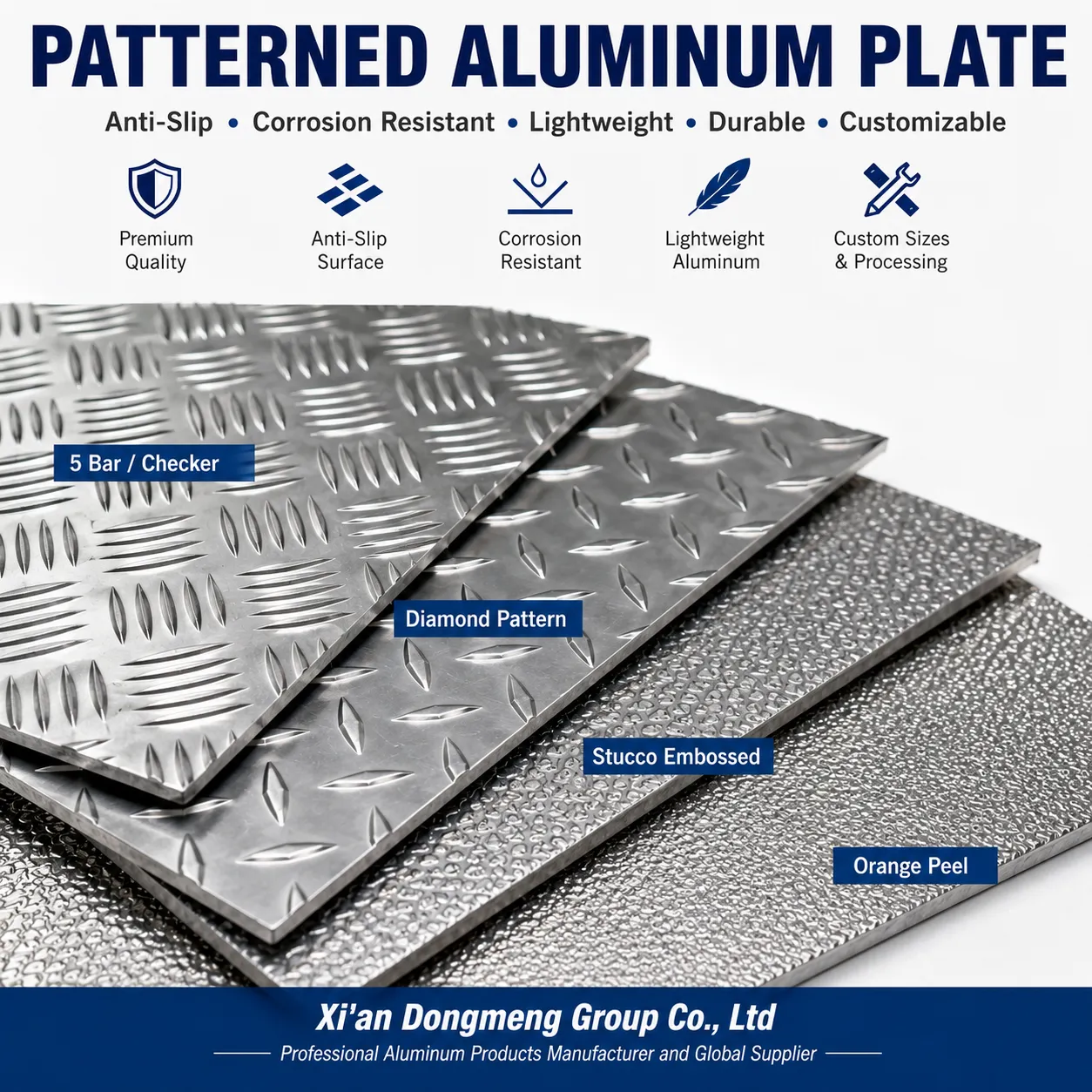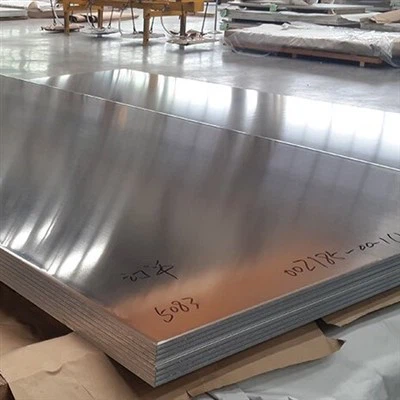


Xi'an Dongmeng Group Co., Ltd. is one of the most reliable manufacturers and suppliers of 3003 aluminum sheet in China, also supports customized service. With abundant experience, we warmly welcome you to wholesale cheap products in stock here and get free sample from our factory. For price consultation, contact us.

3003 Aluminum Sheet
Aluminum-Manganese Sheet for Forming, HVAC and General Fabrication
Xi'an Dongmeng Group Co., Ltd. supplies 3003 aluminum sheet for equipment panels, ventilation components, formed covers and general sheet-metal fabrication. Send your required temper, dimensions, quantity and application to discuss material selection, cutting, surface protection, inspection documents and export packing.
H14, H24 and H18 enquiries are welcome, with annealed O-temper requirements reviewed for forming applications. Availability is confirmed against the complete specification.
Request a Quote | Send Your Drawing | Discuss Inspection Requirements
What Is 3003 Aluminum Sheet?
3003 is a wrought aluminum alloy with manganese as its principal alloying element. It offers moderate strength and useful formability for bending, drawing, spinning and roll forming. The required temper depends on how severely the sheet will be formed and the strength needed in the finished component.
3003 is not strengthened through precipitation-hardening treatments such as T6. Its condition is controlled through cold working and annealing. For purchasing, specify 3003 plus the temper, rather than the alloy number alone.
Supply Specifications
| Item | Ordering Information |
|---|---|
| Main product | Plain, uncoated 3003 aluminum sheet |
| Thickness enquiry range | 0.3–6.0 mm, approximately 0.012–0.236 in |
| Width enquiry range | Up to 2,000 mm, approximately 78.74 in |
| Length enquiry range | Up to 6,000 mm, approximately 236.22 in |
| Example metric formats | 1,000 × 2,000 mm; 1,250 × 2,500 mm; 1,500 × 3,000 mm |
| Imperial-format enquiries | Specify exact dimensions, such as 48 × 96 in |
| Custom blanks | Drawing or cutting list required |
| Base surface | Mill finish |
| Surface protection | Protective film or interleaving requirements to be agreed |
| Additional finishes | Brushed, polished or coated requirements reviewed separately |
| Dimensional requirements | Thickness tolerance, width, length, flatness and squareness |
| Edge requirements | Cutting method, permitted burr and edge condition |
| Order quantity | State sheet count, total weight or both |
The dimensions above are an enquiry range, not a stock list or a guarantee that every thickness, width, length and temper combination is available. Example formats are provided to help prepare an RFQ.
For repeat fabrication orders, identify the critical requirements explicitly. A sheet can meet nominal dimensions while still requiring tighter flatness, surface or edge controls for your production process.
Choosing Between O, H14, H24 and H18
| Temper | Processing Condition | Procurement Guidance |
|---|---|---|
| O | Annealed | A starting point for demanding drawing, spinning and forming operations |
| H14 | Work-hardened to half-hard condition | Consider for folded panels and general fabrication where strength and forming requirements must be balanced |
| H24 | Work-hardened, then partially annealed to half-hard condition | Specify when required by the drawing or approved production process; do not substitute automatically for H14 |
| H18 | Work-hardened to full-hard condition | Consider where higher strength is required and forming demands are limited; assess tight bends carefully |
The temper designations describe different processing conditions. H14 and H24 are both half-hard designations, but their processing routes and applicable property requirements differ.
For bending enquiries, send the sheet thickness, bend angle, inside radius, rolling-direction requirement and drawing. For demanding production parts, agree a representative forming trial before approving bulk material.
If your specification already requires H14, see our 3003-H14 Aluminum Sheet page.
Standards and Purchase Order Requirements
| Specification | Purchasing Purpose |
|---|---|
| ASTM B209/B209M | Requirements for aluminum sheet, coiled sheet and plate within its scope |
| EN 573-3 | Alloy chemical composition |
| EN 485-1 | Technical conditions for inspection and delivery |
| EN 485-2 | Mechanical properties of applicable sheet, strip and plate |
| EN 485-3 / EN 485-4 | Dimensional and form tolerances for hot-rolled / cold-rolled products, respectively |
ASTM and EN requirements should be reviewed separately. A material certificate should identify the standard actually ordered; an EN-based property comparison does not establish ASTM compliance. ASTM also treats SI and inch-pound requirements as separate systems.
Painted, embossed and other specialized products may require additional or different specifications. State the finished product form rather than applying a plain-sheet specification to every variant.
Chemical Composition
The following reference composition limits are expressed as mass percentages. Maximum values are shown unless a range is stated. They are not the measured chemistry of a particular shipment.
| Element | Content, wt.% |
|---|---|
| Manganese, Mn | 1.00–1.50 |
| Copper, Cu | 0.05–0.20 |
| Silicon, Si | ≤0.60 |
| Iron, Fe | ≤0.70 |
| Zinc, Zn | ≤0.10 |
| Other elements, each | ≤0.05 |
| Other elements, total | ≤0.15 |
| Aluminum, Al | Remainder |
Verify the shipment chemistry against the ordered specification and material certificate.
Mechanical Properties: Temper Comparison
The following published EN AW-3003 sheet reference values apply to the 1.5–3.0 mm thickness band, for example a 2.0 mm sheet. They illustrate the differences between conditions and are not shipment test results.
| Temper | Tensile Strength Rm, MPa | 0.2% Proof Strength Rp0.2, Minimum MPa | Elongation A50, Minimum |
|---|---|---|---|
| O | 95–135 | 35 | 20% |
| H14 | 145–185 | 125 | 3% |
| H24 | 145–185 | 115 | 5% |
| H18 | ≥190 | 170 | 2% |
A50 refers to a 50 mm gauge length. Other thickness bands can have different requirements. Confirm contractual acceptance limits using the standard, edition, thickness and temper stated in the purchase order.
Higher strength should not be interpreted as permission to use the same bending process for every temper. H18 needs particular attention where tight radii or substantial drawing are involved.
Theoretical Sheet Weight
For material planning, use a reference density of 2.73 g/cm³.
Weight, kg = Thickness, mm × Width, m × Length, m × 2.73
| Thickness | Calculated Weight per m² | Calculated Weight: 1,250 × 2,500 mm |
|---|---|---|
| 1.0 mm | 2.73 kg | 8.53 kg |
| 2.0 mm | 5.46 kg | 17.06 kg |
| 3.0 mm | 8.19 kg | 25.59 kg |
| 6.0 mm | 16.38 kg | 51.19 kg |
These calculated weights exclude protective film and packaging. Actual weights vary with dimensional tolerances. Confirm whether the quotation uses actual or theoretical weight.
3003 vs 1100 vs 5052
| Material | Selection Priority | What to Check |
|---|---|---|
| 1100 | High formability where strength requirements are modest | Forming severity and whether the specified strength is sufficient |
| 3003 | General formed sheetwork requiring useful strength and formability | Temper, thickness, bend geometry and finish |
| 5052 | Applications requiring higher strength from an Al-Mg sheet alloy | Actual temper properties, fabrication requirements and service conditions |
3003 provides increased strength compared with commercially pure 1100, while 5052 is a higher-strength alternative in comparable soft conditions. These are selection directions, not approval for substitution; compare the specified alloy and temper together.
Processing and Surface Requirements
Cutting and blank preparation
Provide finished blank dimensions, quantity, permitted burr and squareness requirements. Where parts will be nested or formed automatically, identify the dimensions that directly affect production yield or machine feeding.
Bending and forming
Assess thickness, temper, rolling direction and tooling together. A successful simple fold does not establish suitability for a deep-drawn part. State any required forming trial, sample approval or appearance criteria before material is released for production.
Welding
3003 can be welded using suitable aluminum welding procedures. Welding can soften work-hardened material in the heat-affected zone, so the original H-temper strength should not be assumed throughout a welded assembly. Filler selection and joint preparation should follow the qualified fabrication procedure.
Visible surfaces and finishing
Specify the exposed face, acceptable handling marks, protective film and any directional finish. Mill finish should not be described as a guaranteed decorative finish.
3003 can be anodized, but its anodized appearance may be less consistent than required for decorative panels. Agree a finished sample where color uniformity or appearance matching matters.
Plain 3003 Sheet and Brazing Sheet Are Different Products
Plain 3003 sheet is not automatically a clad brazing sheet.
Heat-exchanger brazing sheet can combine a 3xxx-series core with a 4xxx-series brazing layer. Examples include a 3003 core with 4343 or 4045 cladding. The layer arrangement is part of the product specification.
For a brazed assembly, provide the core alloy, cladding alloy, clad side or sides, clad ratio, total thickness and brazing process. Request a separate review rather than ordering only "3003 aluminum sheet."
Applications and Buyer Priorities
| Application | Candidate Components | Information Needed for Selection |
|---|---|---|
| HVAC and ventilation | Duct sections, equipment covers and formed panels | Thickness, seam design, bend geometry and surface condition |
| General equipment fabrication | Guards, housings and access panels | Flatness, finished dimensions, joining method and visible-face requirements |
| Architectural sheetwork | Flashings, gutter components and formed cladding parts | Coating system, exposure conditions, appearance and forming requirements |
| Appliance manufacture | Covers, liners and formed housings | Drawing severity, surface cleanliness and finishing process |
| Tanks and process equipment | Components approved for the intended service | Contents, concentration, temperature, pressure and corrosion compatibility |
Application names alone are insufficient for material approval. Identify the operating conditions and applicable design requirements when the component will contain chemicals, operate under pressure or perform a structural function.
Inspection and Documentation
Agree the inspection scope before order placement so the delivered material can be checked against the same criteria used for purchasing.
| Inspection Area | Items to Define |
|---|---|
| Material identification | Alloy, temper, producer identification and production lot |
| Chemical composition | Certificate results against the ordered alloy specification |
| Mechanical properties | Tensile strength, proof strength and elongation for the applicable thickness and condition |
| Dimensions | Thickness, width, length, flatness and squareness |
| Surface and edges | Scratches, dents, handling marks, burr and protective film condition |
| Traceability | Consistent identification between material, packages and inspection documents |
EN 10204 3.1 documentation and third-party inspection can be requested. Confirm document availability, test scope and any witness points before production or material allocation.
For repeat orders, retain the approved specification, surface sample and packing requirements so subsequent enquiries reference the same acceptance criteria.
Export Packing and Receiving Requirements
Packing requirements can include:
Supported sheet packs on suitable pallets or in crates.
Interleaving or protective film for surface-sensitive orders.
Edge protection and moisture-resistant wrapping.
Package labels identifying alloy, temper, size, quantity or weight, and order reference.
Agreed maximum pack weight and forklift access for unloading.
Include your destination, handling limitations and storage conditions in the enquiry. Packing and delivery schedules are confirmed with the order specification.
Frequently Asked Questions
1. Which 3003 temper should I choose for deep forming?
Annealed O temper is a useful starting point. Final selection depends on the drawing, thickness, tooling and required strength after forming. For demanding parts, request representative samples for a forming trial.
2. Can H24 replace H14?
Not automatically. They have different processing histories, and their specified properties can differ. Obtain approval against the drawing and purchasing specification before substitution.
3. Can 3003-H18 be bent?
It can be formed within suitable limits, but its forming allowance is more restricted than softer conditions. Provide the proposed radius and thickness for assessment instead of assuming a universal minimum bend radius.
4. Is 3003 available in T6 condition?
T6 is not the normal strengthening condition for 3003. Specify the required O or H temper for the intended forming and strength requirements.
5. Is plain 3003 sheet suitable for a brazed heat exchanger?
The assembly may require a clad product or a separately specified filler arrangement. Confirm the material structure and brazing process; plain sheet and brazing sheet are not interchangeable purchase descriptions.
6. Can I order sheet suitable for decorative anodizing?
Submit the appearance requirement and request evaluation of a finished sample. "Mill finish" does not guarantee a uniform decorative anodized result.
7. Can you quote cut-to-size sheets with tighter tolerances?
Send the cutting list or drawing, including thickness, finished dimensions, flatness, squareness and edge requirements. Feasibility and processing charges are reviewed against those requirements.
8. Can the same order comply with both ASTM and EN standards?
Dual compliance must be explicitly reviewed and supported by the relevant inspection results. Listing two standards on a webpage is not sufficient evidence.
9. Can I request inspection documents before shipment?
State the required certificate type, test records and review stage in the enquiry. Third-party inspection and witness arrangements should be agreed before the relevant work begins.
10. What are the MOQ, sample policy and lead time?
These depend on temper, dimensions, quantity, finishing, processing and inspection requirements. Send your target quantity and delivery date so suitable supply and sample arrangements can be confirmed.
Request a 3003 Aluminum Sheet Quotation
Send your specification or drawing to Dongmeng Group. For an initial quotation, include:
Alloy and temper: For example, 3003-H14.
Dimensions: Thickness × width × length, with critical tolerances.
Quantity: Sheet count, kilograms or metric tons.
Standard and finish: Applicable specification, surface condition and protection.
Additional requirements: Cutting, inspection documents or third-party inspection.
Delivery: Destination and required date.
Example RFQ
"Please quote 3003-H14 aluminum sheet, 2.0 × 1,250 × 2,500 mm, 5 metric tons, to ASTM B209/B209M. We require mill finish, protective film on one side and EN 10204 3.1 inspection documentation. Destination: Jebel Ali. Please confirm dimensional tolerances, packing, availability and lead time."
Request a Quote | Send Your Drawing
Office Information
| Contact | Details |
|---|---|
| Phone | +86 15769214734 |
| office@dongmjd.com | |
| +86 15769214734 | |
| Office Address | Room 4107, Runfeng Building, Sanqiao New Street, Weiyang District, Xi'an City, Shaanxi Province, China |
Hot Tags: 3003 aluminum sheet,3003 aluminium sheet,3003 aluminum sheet supplier,3003 H14 aluminum sheet,3003 H24 aluminum sheet,3003 O aluminum sheet,3003 H18 aluminum sheet,EN AW-3003,AlMn1Cu sheet,ASTM B209 3003,3003 aluminum sheet cut to size,3003 vs 5052, Aluminium Sheet, Patterned Aluminum Plate, 6061 Aluminium Sheet