


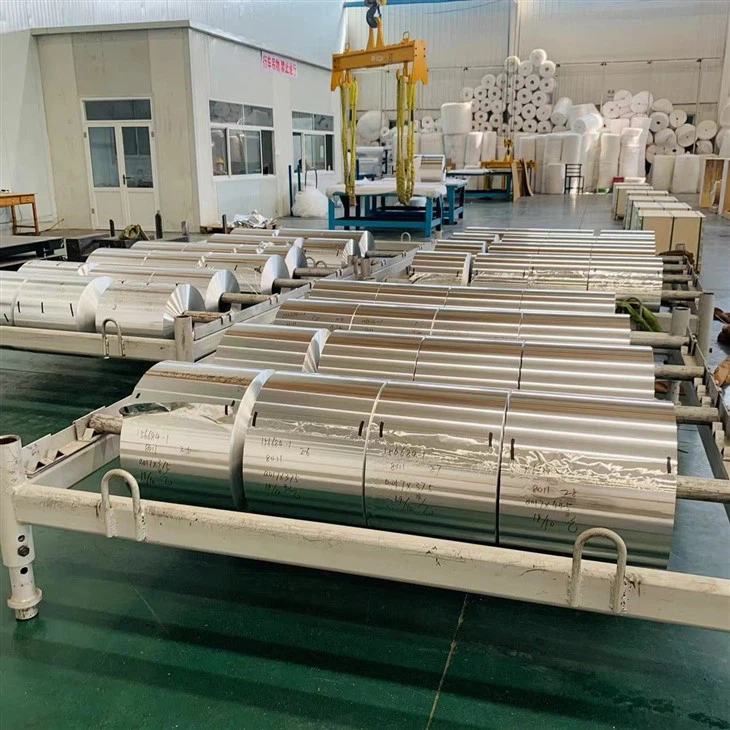
Xi'an Dongmeng Group Co., Ltd. is one of the most reliable manufacturers and suppliers of 8021 Aluminum Foil Supplier | 8021-O Pharma Cold Form Foil in China, also supports customized service. With abundant experience, we warmly welcome you to wholesale cheap products in stock here and get free sample from our factory. For price consultation, contact us.

8021 Aluminum Foil Supplier
Xi'an Dongmeng Group Co., Ltd. supplies 8021 aluminum foil in O temper for pharmaceutical packaging converters, flexible packaging manufacturers and battery pouch laminate producers.
8021 is an aluminium-iron alloy developed for applications requiring a combination of controlled tensile strength, high elongation, smooth surface quality and low pinhole risk. It is commonly selected as the aluminum barrier layer in pharmaceutical cold-form blister laminates and aluminum-plastic films used for pouch battery packaging.
We supply bare 8021 foil according to the required alloy designation, temper, thickness, width, coil inside diameter, roll weight, surface condition and inspection standard. Custom slitting, sample evaluation and third-party inspection can be arranged according to the purchase specification.
8021 foil is recognized for high workability, tensile strength, stretchability and a smooth surface with minimal pinholes, making it suitable for demanding converter applications.
What Is 8021 Aluminum Foil?
8021 aluminum foil is a non-heat-treatable 8xxx-series wrought aluminum alloy in which iron is the principal controlled alloying element.
Unlike general-purpose household foil, 8021 is mainly selected when the converter requires reliable elongation, deep-forming performance, stable gauge and controlled surface quality.
The most common condition for deep-forming applications is O temper, because the fully annealed foil provides the ductility required during cold forming. Harder tempers such as H18 may be used for selected converter applications but should not be presented as the standard choice for deep-drawn Alu-Alu blister structures.
The Aluminum Association registers AA 8021 with Fe at 1.2–1.7%, Si at a maximum of 0.15% and Cu at a maximum of 0.05%. AA 8021, 8021A and EN AW-8021B have related but not identical chemistry limits, so cross-reference approval should always be based on the applicable standard and MTC rather than the alloy number alone.
8021 Aluminum Foil Supply Range
| Item | Recommended Page Content |
|---|---|
| Product | Bare 8021 Aluminum Foil Jumbo Roll |
| Alloy | AA 8021 / EN AW-8021B |
| Temper | O; H18 by technical agreement |
| Thickness | 0.018–0.20 mm |
| Pharma Cold-Form Thickness | 0.045 / 0.050 / 0.060 mm or customized |
| Width | Custom slit width according to order |
| Coil ID | 76 mm / 152 mm or customized |
| Surface | Bright / matt; smooth and clean |
| Edge | Slit edge; no severe burr or edge damage |
| Winding | Uniform winding and controlled telescoping |
| Roll Weight | According to width, OD and handling requirement |
| Surface Treatment | Bare / degreased / treatment by agreement |
| Lamination | Bare foil supplied for downstream lamination |
| Inspection | Gauge, width, tensile, elongation, surface and pinhole |
| Documentation | COA, MTC and inspection report as agreed |
| Packing | Suspended wooden case or export seaworthy packing |
EN 546-1 applies to wrought aluminum foil in a gauge range from approximately 6 to 200 μm and covers technical inspection and delivery conditions; the EN 546 series also contains separate parts for mechanical properties, dimensional tolerances and special property requirements.
Product Characteristics
Chemical Composition
8021 aluminum foil belongs to the Al - Fe - Si series alloy. Its main chemical components include aluminum (Al) as the base metal, with appropriate amounts of iron (Fe) and silicon (Si). The addition of these elements gives 8021 aluminum foil excellent mechanical properties and processing performance. The specific chemical composition is strictly controlled within a certain range to ensure the stability and consistency of the product's performance.
Mechanical Properties
It has good tensile strength and elongation. The tensile strength allows it to withstand a certain degree of pulling force during processing and use without breaking, ensuring the integrity of the product. The appropriate elongation makes it easy to be processed into various shapes, meeting the needs of different application scenarios. Whether it is stamping, bending or other processing methods, 8021 aluminum foil can show good performance.
Surface Quality
The surface of 8021 aluminum foil is smooth and clean, without obvious defects such as scratches, pinholes and oil stains. This high-quality surface not only improves the appearance of the product, but also helps to ensure its barrier properties. The smooth surface reduces the possibility of moisture and gas penetration, enhancing the protection effect on the packaged items.
Application Scenarios
Food Packaging Industry
In the food packaging industry, 8021 aluminum foil is widely used. It can be made into various forms of packaging, such as aluminum foil bags, aluminum foil boxes and so on. Due to its excellent barrier properties, it can effectively prevent the invasion of oxygen, moisture and light, thus extending the shelf life of food. For example, it is suitable for packaging meat, snacks, dairy products and other foods. It can keep the food fresh, prevent oxidation and deterioration, and maintain the original flavor of the food.
Pharmaceutical Packaging Field
In the pharmaceutical packaging field, 8021 aluminum foil is an important material for blister packaging. It can form a good seal with the plastic substrate, providing a closed environment for drugs, which can prevent moisture, oxygen and microorganisms from entering, ensuring the stability and effectiveness of drugs. Especially for some drugs that are sensitive to environmental factors, 8021 aluminum foil can play a good protective role.
Battery Industry
With the development of the new energy industry, 8021 aluminum foil is also used in the battery industry. It can be used as a current collector in lithium - ion batteries, which has good electrical conductivity and corrosion resistance. It can effectively improve the performance and service life of the battery, contributing to the development of the new energy industry.
AA 8021 Chemical Composition
| Element | AA 8021 Limit, wt.% |
|---|---|
| Silicon, Si | 0.15 max. |
| Iron, Fe | 1.20–1.70 |
| Copper, Cu | 0.05 max. |
| Other Elements, Each | 0.05 max. |
| Other Elements, Total | 0.15 max. |
| Aluminum, Al | Remainder |
Technical note: Do not retain the current page table showing Fe ≤0.40% or aluminum purity of approximately 99.3–99.5%. Those figures do not match the registered AA 8021 composition.
Cross-Reference Notice
AA 8021, 8021A and EN AW-8021B should not be treated as automatically interchangeable. Final material approval must be based on the specified standard, chemical composition, mechanical properties and mill certificate.
EN AW-8021B O Temper Mechanical Properties
| Foil Thickness | Tensile Strength Rm | Minimum Elongation |
|---|---|---|
| 6–10 μm | 60–100 MPa | 2% |
| >10–25 μm | 65–105 MPa | 3% |
| >25–40 μm | 70–110 MPa | 7% |
| >40–90 μm | 75–110 MPa | 12% |
| >90–140 μm | 75–110 MPa | 14% |
| >140–200 μm | 75–110 MPa | 16% |
For H18 temper, EN 546-2 specifies a minimum tensile strength of 160 MPa for EN AW-8021B, while maximum tensile strength and elongation may be agreed between supplier and purchaser.
The values depend on alloy designation, thickness, test direction, gauge length and applicable standard. Purchase orders should therefore specify both the required mechanical limits and testing method.
Why Buyers Select 8021 Foil
1. Deep-Forming Performance
The O temper provides the ductility required for forming deep blister cavities and pouch structures while reducing the risk of rupture during conversion.
2. Low Pinhole Surface
Controlled rolling, filtration and surface inspection help reduce pinhole defects that can affect barrier performance after lamination.
3. Stable Thickness Profile
Consistent gauge across the width supports uniform lamination, forming behavior and roll-to-roll processing.
4. Clean Surface for Lamination
Surface oil, residue, scratches and contamination must be controlled to support adhesive bonding and downstream coating or lamination.
5. Custom Slitting and Coil Configuration
Width, coil ID, roll weight, OD and splice requirements can be matched to the converter's unwinding and laminating equipment.
6. Batch Traceability
Heat or batch identification, inspection data and packing labels should remain traceable from raw material to finished roll.
Pharmaceutical Cold-Forming Application
8021-O Foil for Pharmaceutical Cold-Form Blister Packaging
8021-O aluminum foil is commonly used as the metallic barrier layer in cold-form pharmaceutical blister laminates.
A typical cold-form laminate may combine:
OPA / Adhesive / Aluminum Foil / Adhesive / PVC
The aluminum layer contributes the primary light, moisture and gas barrier, while the polymer layers provide forming support, sealing compatibility and mechanical protection.
Common commercial aluminum layer thicknesses include:
45 μm
50 μm
60 μm
Custom thickness according to forming depth
The finished laminate performance depends not only on the alloy, but also on foil thickness, pinhole level, adhesive system, polymer layers, forming depth, tooling radius and seal integrity. Commercial cold-form structures commonly use soft-temper 8021 foil in approximately the 45–60 μm range.
Buyer Information Required
For technical review, the buyer should provide:
Final laminate structure
Aluminum layer thickness
Finished laminate thickness
Blister cavity dimensions
Forming depth
Maximum web width
Printing or coating requirement
Sealing material
Pinhole acceptance criteria
Annual consumption
Battery Pouch Lamination Application
8021 Aluminum Foil for Battery Pouch Laminate
8021-O foil may be supplied as the aluminum layer used in aluminum-plastic laminate structures for pouch cells.
Its purpose is different from battery electrode foil:
It is not cathode current collector foil
It is not anode current collector foil
It is used as part of the outer pouch packaging laminate
The foil layer provides barrier and forming support within the completed laminate. Selection should consider drawing depth, corner radius, laminate adhesion, electrolyte resistance requirements and the converting process.
Typical Purchase Information
Aluminum alloy and temper
Foil thickness
Laminate structure
Required drawing depth
Cell dimensions
Surface treatment
Width and roll weight
Core ID
Tensile and elongation limits
Pinhole criteria
Cleanliness requirements
8021 vs 8079 vs 8011
| Selection Factor | 8021 / 8021B | 8079 | 8011 / 8011A |
|---|---|---|---|
| Main Positioning | Deep-form and high-barrier converter foil | Flexible packaging and converter foil | General packaging and lidding applications |
| Principal Chemistry | Higher controlled Fe range | Al-Fe-Si alloy | Al-Fe-Si alloy |
| O-Temper Formability | Excellent | Very good | Good, depending on thickness |
| Common Cold-Form Use | Preferred option | Alternative according to laminate design | Less commonly positioned as the first choice |
| Hard-Temper Lidding | Not primary positioning | Available for selected applications | Commonly selected |
| Buyer Decision | Forming depth and barrier requirement | Lamination and flexibility requirement | General packaging and cost-performance balance |
Do not select the alloy by price or designation alone. Confirm the temper, foil thickness, tensile strength, elongation, pinhole requirement, forming depth and laminate structure before approval.
Surface and Conversion Requirements
Surface Requirements for Lamination-Grade 8021 Foil
The foil surface should be evaluated for:
Pinhole level
Rolling marks
Scratches and dents
Oil stains
Black spots and oxidation
Surface residue
Edge burr
Coil telescoping
Loose winding
Splices
Adhesion suitability
Bright and matt side consistency
Pinhole Inspection
Pinhole acceptance should be agreed by foil thickness, test area and inspection method. ASTM B926 is a recognized light-table method for determining pinholes in plain aluminum foil.
Exceptional Features of 8021 Aluminum Foil
Superior Barrier Properties
8021 aluminum foil has excellent barrier capabilities. Its dense structure effectively blocks moisture, oxygen, and light. For example, in food packaging, this property helps to keep food fresh for a longer time by preventing the ingress of moisture that could cause spoilage, and blocking light that might trigger chemical reactions in the food. In pharmaceutical packaging, it protects drugs from environmental factors, ensuring their efficacy and safety.
High Strength and Ductility
This type of aluminum foil offers a good balance between strength and ductility. It can withstand handling during the manufacturing process without tearing, while still being flexible enough to be formed into various shapes. In the production of battery soft packs, for instance, the foil needs to be shaped precisely around the battery cells. The strength of 8021 aluminum foil ensures that it can protect the delicate battery components, and its ductility allows for seamless wrapping.
Non - Toxic and Hygienic
8021 aluminum foil is non - toxic and hygienic, making it suitable for applications where direct contact with food, medicine, and other sensitive products is required. It does not leach harmful substances into the products it packages, meeting strict safety standards in the food and pharmaceutical industries. This makes it a reliable choice for packaging items such as fresh food, medical tablets, and capsules.
Customizable Specifications
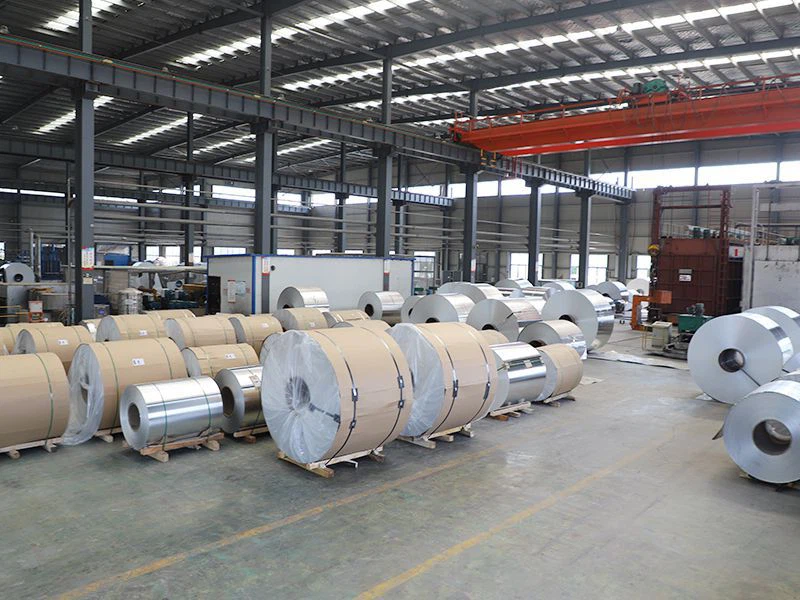
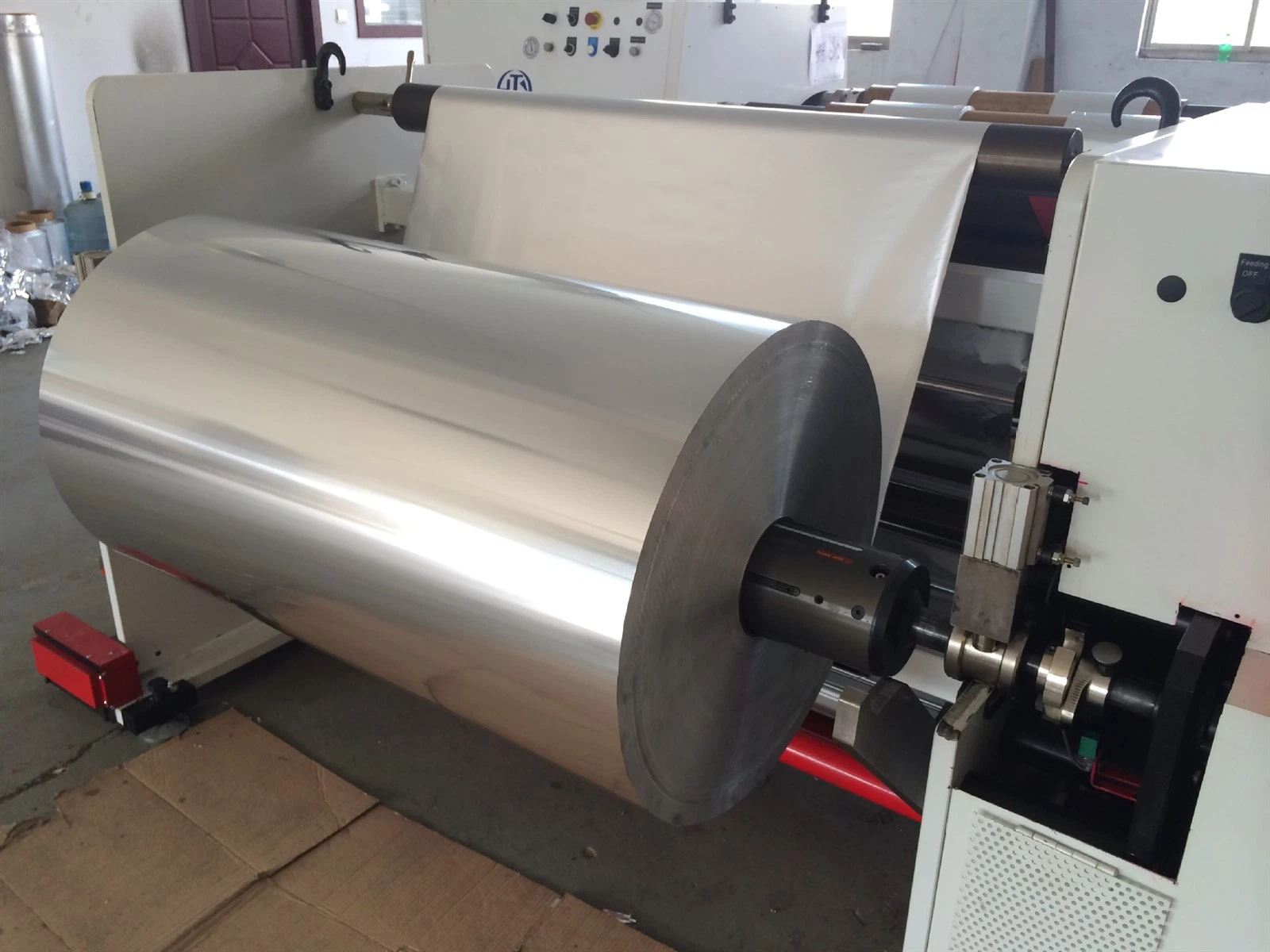
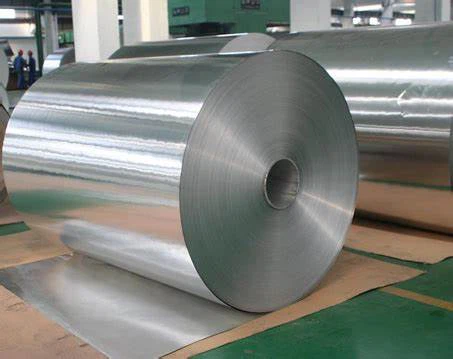
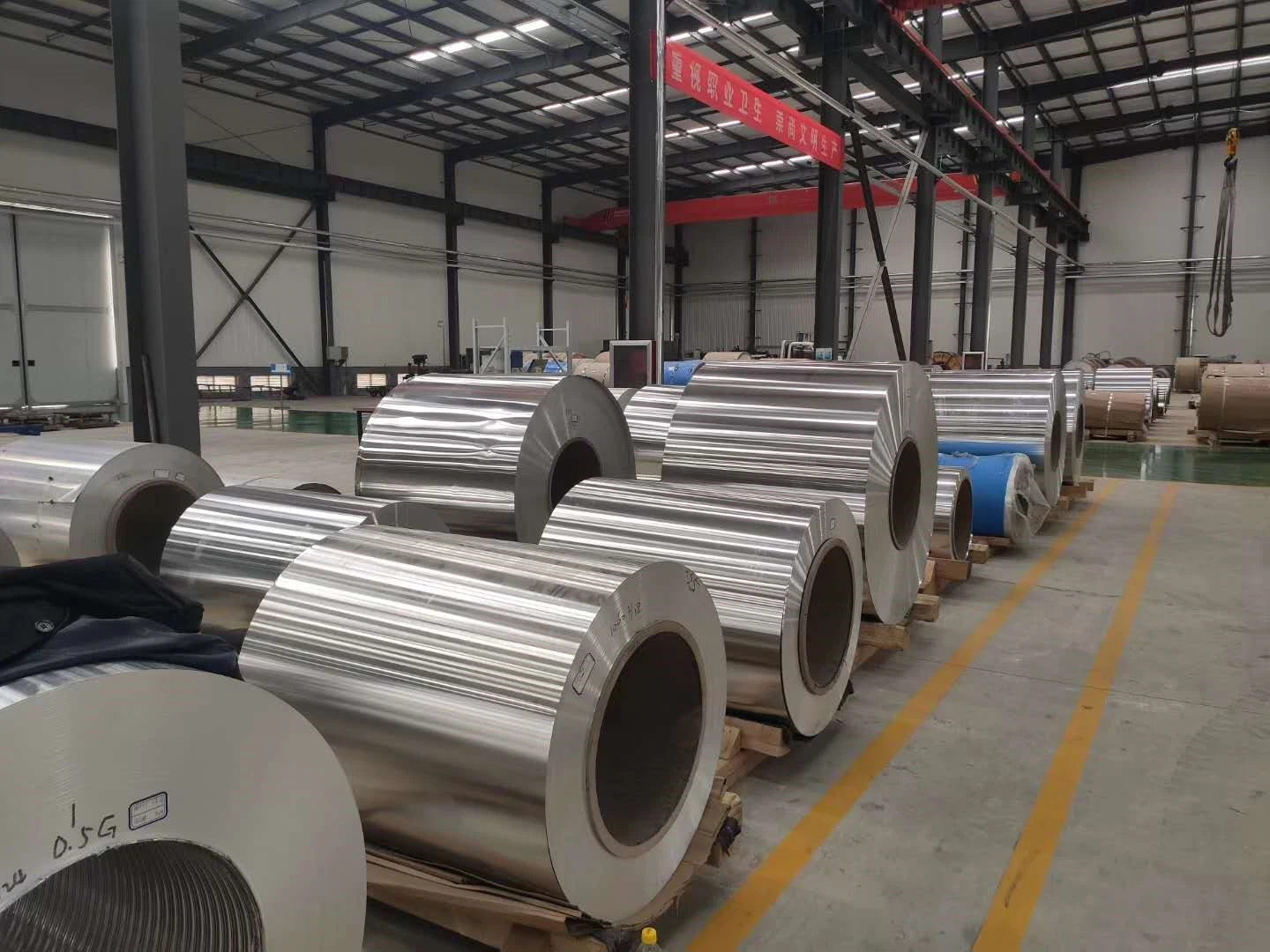
Our 8021 aluminum foil is available in a wide range of specifications to meet your specific needs.
Thickness
The thickness of our 8021 aluminum foil can range from as thin as 0.018mm to as thick as 0.5mm. Whether you need a thin foil for delicate packaging or a thicker one for more robust applications, we can provide the right solution.
Width
We offer 8021 aluminum foil with widths ranging from 100mm to 1600mm. This wide range of widths allows for flexibility in different manufacturing processes and packaging requirements.
Temper
The foil is available in various tempers, including O, H14, H16, H18, H19, H22, and H24. Each temper has its own unique mechanical properties, such as different levels of hardness and formability, enabling you to choose the most suitable one for your application.
Why Choose Our 8021 Aluminum Foil?
Quality Assurance
We have a strict quality control system in place to ensure that every roll of 8021 aluminum foil meets the highest standards. Our production process is closely monitored, from the selection of raw materials to the final product inspection.
Customization
We understand that different customers have different needs. That's why we offer customization services, allowing you to order 8021 aluminum foil with specific thickness, width, and temper requirements.
Competitive Pricing
Despite our high - quality products and customization services, we offer competitive pricing. We strive to provide cost - effective solutions without compromising on quality.
Quality Inspection
Quality Control for 8021 Aluminum Foil
Raw Material Verification
Alloy chemistry verification
Raw material batch identification
Supplier and heat traceability
Rolling Process Control
Online or offline gauge measurement
Rolling speed and tension control
Surface cleanliness monitoring
Annealing parameter control
Coil shape and winding inspection
Finished Product Testing
Chemical composition
Thickness and width
Tensile strength
Elongation
Surface appearance
Pinhole inspection
Edge quality
Coil ID and OD
Roll weight
Winding alignment
Optional Buyer-Specified Inspection
Surface cleanliness or wettability
Residual oil
Special pinhole criteria
Lamination trial
Forming trial
Third-party inspection
Customer witness inspection
Documentation
Certificate of Analysis
Mill Test Certificate
Dimensional report
Mechanical property report
Packing list and coil list
Third-party report when ordered
EN 10204 3.1 inspection certificate can be discussed when required by the purchase specification and supported by the applicable quality system.
Applicable Standards and Technical References
| Standard | Application |
|---|---|
| Aluminum Association Registration | AA alloy designation and chemistry |
| EN 573-3 | Chemical composition and wrought alloy designation |
| EN 515 | Temper designation |
| EN 546-1 | Foil inspection and delivery conditions |
| EN 546-2 | Mechanical properties |
| EN 546-3 | Dimensional tolerances |
| EN 546-4 | Special property requirements |
| ASTM B479 | Annealed foil for flexible barrier and related applications |
| ASTM B926 | Pinhole determination by light table |
| Customer Specification | Lamination, forming and final application requirements |
ASTM B479 covers annealed foil used for flexible barrier, food handling and related packaging applications in thicknesses from 0.0064 mm to below 0.15 mm. EN 546-1 covers wrought foil from approximately 6 to 200 μm.
Packaging and Shipping
Export Packing for 8021 Aluminum Foil Rolls
8021 foil rolls require rigid, moisture-resistant packing to protect the edge, surface and winding condition during international transport.
Recommended Packing Process
Roll identification and inspection
Protective film or moisture-proof wrapping
Edge and end-face protection
Desiccant placement when required
Steel or aluminum core support
Suspended wooden case or fumigated wooden box
Shipping marks and coil labels
Container loading and securing
Coil Label Information
Alloy and temper
Thickness and width
Coil number
Net and gross weight
Production batch
Core ID
Customer PO number
Inspection status
Request an Accurate 8021 Foil Quotation
Please send:
Alloy designation
Temper
Thickness
Width
Coil inside diameter
Maximum roll OD
Roll weight
Bright or matt side requirement
Laminate structure
Forming depth
Pinhole criteria
Quantity
Destination port
Required documents
Our address
Room 4107, Runfeng Building, Sanqiao New Street, Weiyang District, Xi'an City, Shaanxi Province
Phone Number
+86 15769214734

FAQ
1. What is 8021 aluminum foil mainly used for?
8021 aluminum foil is mainly used as a high-performance converter foil for pharmaceutical cold-form blister laminates, battery pouch laminates and other flexible barrier structures requiring good elongation and controlled pinhole performance.
2. Is 8021 foil the same as finished Alu-Alu foil?
No. Bare 8021-O aluminum foil is normally one component of the finished cold-form laminate. The completed Alu-Alu material also contains polymer films and adhesive layers.
3. What temper is recommended for cold forming?
O temper is normally selected because it provides the ductility required for deep forming. The final mechanical requirements should be agreed according to foil thickness and the applicable standard.
4. What thickness is commonly used for pharmaceutical cold-form foil?
Common aluminum layer thicknesses include 45, 50 and 60 μm. The correct thickness depends on cavity depth, tooling design and laminate structure.
5. Is 8021 suitable for PTP blister lidding foil?
8021 can be used in selected packaging structures, but it should not automatically be positioned as the standard alloy for every PTP lidding application. The buyer should confirm whether the requirement is hard-temper lidding foil or soft-temper cold-form base foil.
6. What is the difference between AA 8021 and EN AW-8021B?
They are related Al-Fe alloy designations but their registered chemistry limits are not identical. Final equivalence must be approved according to the specified standard and material certificate.
7. Can you guarantee zero pinholes?
Pinhole level depends on thickness, production route, test area and test method. We inspect pinholes according to the agreed acceptance criteria rather than using an unsupported absolute zero-pinhole claim.
8. Can 8021 foil be used as battery electrode foil?
It is mainly positioned as a barrier layer in battery pouch laminate. Cathode and anode current collectors are different foil products with different purity, surface and electrical requirements.
9. What information is needed before quotation?
Please provide alloy, temper, thickness, width, core ID, roll weight, surface condition, laminate structure, forming depth, quantity and destination.
10. Can you provide custom slit widths?
Yes. Custom slit widths, roll weights, core IDs and packing configurations can be supplied according to the confirmed production capability and purchase specification.
11. What inspection documents are available?
COA, MTC, dimensional and mechanical test reports can be supplied as agreed. Third-party inspection can also be arranged.
12. How should 8021 foil rolls be stored?
The foil should remain in its original moisture-resistant packing and be stored indoors in a clean, dry environment. Before conversion, the material should be allowed to acclimatize when there is a significant temperature difference to reduce condensation risk.
Hot Tags: 8021 Aluminum Foil Supplier | 8021-O Pharma Cold Form Foil, China 8021 Aluminum Foil Supplier | 8021-O Pharma Cold Form Foil manufacturers, suppliers, factory, Printed Aluminum Foil, 1100 Aluminum Foil, 8021 Aluminum Foil, Food Grade Aluminum Foil Roll, Rotogravure Printing Aluminum Foil, 3004 Aluminum Foil


