



Xi'an Dongmeng Group Co., Ltd. is one of the most reliable manufacturers and suppliers of Titanium Wire & Bar Supplier | ASTM B348/B863 Gr2, Gr5, Gr23 in China, also supports customized service. With abundant experience, we warmly welcome you to wholesale cheap products in stock here and get free sample from our factory. For price consultation, contact us.

Titanium Wire & Bar Supplier | ASTM B348/B863 Gr2, Gr5, Gr23
Xi'an Dongmeng Group Co., Ltd. supplies titanium wire, titanium round bar and titanium alloy rod for international industrial buyers, precision machining companies, equipment manufacturers and engineering contractors. Our product range covers commercially pure titanium and high-performance titanium alloys, including Grade 1, Grade 2, Grade 5 (Ti-6Al-4V), Grade 7, Grade 9, Grade 12 and Grade 23 (Ti-6Al-4V ELI).
Titanium bars are available for procurement under ASTM B348/B348M, while titanium wire can be specified according to ASTM B863. Additional requirements, including aerospace material specifications, welding filler classifications, surface finishing and special inspection, can be evaluated against the customer's purchase specification.
We support customized diameters, cut lengths, straightened wire, coils, spools, precision-ground bars and export packaging. Material test reports, heat-number traceability and third-party inspection arrangements are available according to the agreed order requirements.
Whether you require Grade 2 titanium for corrosion-resistant equipment or Grade 5 titanium round bar for precision-machined components, our team can assist with specification review, material selection and quotation preparation.
What Are Titanium Wire and Titanium Bar?
Titanium wire and bar are wrought titanium products manufactured into continuous wire, straight rods or larger-diameter bars through controlled forming, heat treatment and finishing operations.
They include both commercially pure titanium and titanium alloys. These material groups have different mechanical properties, processing characteristics and application requirements.
Titanium Wire
Titanium wire is generally supplied in relatively small diameters and can be delivered in coils, spools or straight lengths.
Depending on the grade and specification, it is used for precision components, formed parts, specialized fasteners, springs and industrial welding applications.
For welding applications, filler metal must be specified by its applicable welding classification rather than relying solely on an industrial titanium wire designation.
Titanium Round Bar and Rod
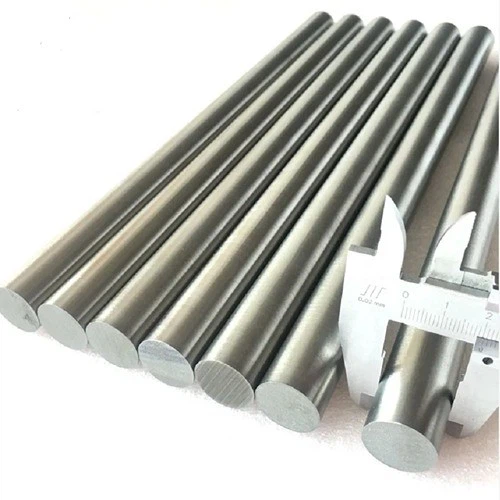
Titanium round bar is commonly supplied in larger diameters for machining, forging, structural components and corrosion-resistant equipment.
Titanium rods can be supplied in standard or customized lengths, with different surface finishes and dimensional tolerances.
Grade 2 is widely selected for corrosion resistance and fabrication, while Grade 5 is preferred for many applications requiring higher strength.
Key Material Advantages
Low density compared with conventional steels.
High strength-to-weight ratio, particularly in titanium alloys.
Excellent corrosion resistance in many seawater and chloride-containing environments.
Good performance in many oxidizing chemical environments.
Multiple commercially pure and alloyed grades for different engineering requirements.
Compatibility with precision machining, forming and welding when suitable processes are used.
Material selection must always consider the operating environment, temperature, applied stress and applicable engineering specifications.
Titanium Grades and UNS Material Designations
Different titanium grades are selected according to corrosion conditions, strength requirements, fabrication methods and industry specifications.
| Titanium Grade | UNS Designation | Material Type | Main Characteristics | Typical Applications |
|---|---|---|---|---|
| Grade 1 | R50250 | Commercially Pure Titanium | High ductility and formability | Chemical equipment, formed components |
| Grade 2 | R50400 | Commercially Pure Titanium | Corrosion resistance and weldability | Marine equipment, reactors, industrial parts |
| Grade 3 | R50550 | Commercially Pure Titanium | Higher strength than Grade 2 | Industrial components, pressure equipment |
| Grade 4 | R50700 | Commercially Pure Titanium | Highest strength among common CP grades | Precision components, medical instruments |
| Grade 5 | R56400 | Ti-6Al-4V | High strength-to-weight ratio | Aerospace parts, fasteners, CNC components |
| Grade 7 | R52400 | Titanium-Palladium Alloy | Improved resistance in selected corrosive media | Chemical processing equipment |
| Grade 9 | R56320 | Ti-3Al-2.5V | Balanced strength and formability | Lightweight components, formed parts |
| Grade 12 | R53400 | Ti-0.3Mo-0.8Ni | Improved corrosion performance in selected environments | Chemical and marine equipment |
| Grade 23 | R56407 | Ti-6Al-4V ELI | Controlled interstitial content and good toughness | High-integrity machined components |
Important specification note: ASTM B348/B348M Grade 23 uses UNS R56407. ASTM F136 surgical-implant material uses UNS R56401. Medical implant applications require their own applicable material specification and qualification requirements.
Grade 23 supplied under a general industrial bar standard must not automatically be described as ASTM F136-compliant implant material.
Titanium Wire and Bar Size Chart
1. Titanium Wire Dimensions - ASTM B863
Titanium wire can be supplied in coils, spools and straight lengths according to grade, diameter, finishing method and production feasibility.
| Specification | Metric Range | Imperial Equivalent | Supply Information |
|---|---|---|---|
| Indicative Wire Diameter | 0.10–6.00 mm | 0.004–0.236 in | Grade-dependent |
| Fine Wire | 0.10–0.50 mm | 0.004–0.020 in | Precision applications |
| Medium Wire | 0.50–2.00 mm | 0.020–0.079 in | General industrial applications |
| Heavy Wire | 2.00–6.00 mm | 0.079–0.236 in | Formed parts and straight wire |
| Coil Weight | 1–20 kg | 2.2–44 lb | Indicative packaging range |
| Delivery Form | Coil / Spool / Straight | - | By purchase order |
| Surface Finish | Bright / Pickled / Polished | - | Grade-dependent |
| Material Condition | Annealed / Cold-Worked | - | Per applicable requirements |
Note: The dimensional ranges are indicative supply options, not universal ASTM B863 dimensional limits. Actual availability, tolerance, mechanical properties and delivery condition must be confirmed for the selected grade and wire diameter.
2. Titanium Round Bar Dimensions - ASTM B348/B348M
| Specification | Metric Range | Imperial Equivalent | Notes |
|---|---|---|---|
| Indicative Diameter Range | 3–300 mm | 0.118–11.81 in | Subject to grade and mill capability |
| Small-Diameter Bar | 3–20 mm | 0.118–0.787 in | Fasteners and precision machining |
| Medium-Diameter Bar | 20–80 mm | 0.787–3.150 in | Mechanical parts and shafts |
| Large-Diameter Bar | 80–300 mm | 3.150–11.81 in | Heavy machining and forging stock |
| Indicative Length | 1000–6000 mm | 39.37–236.22 in | Fixed or random lengths |
| Surface | Peeled / Turned / Ground / Polished | - | Selected by application |
| Delivery Condition | Annealed or specified condition | - | Grade and standard dependent |
| Tolerance | Standard or precision-ground | - | Defined by specification and purchase order |
Precision-ground titanium bars can be requested when CNC machining, automated feeding or precision fitting requires tighter diameter control.
Diameter tolerances, ovality, straightness and surface roughness should be stated explicitly in the purchase order. Precision tolerance classes such as h9 or h11 are not automatically applicable to every titanium bar.
3. Common Titanium Bar Diameter Options
| Diameter (mm) | Approx. Diameter (inch) | Typical Procurement Application |
|---|---|---|
| 3 mm | 0.118 in | Small precision components |
| 5 mm | 0.197 in | Pins and small machined parts |
| 6 mm | 0.236 in | Fasteners and precision components |
| 8 mm | 0.315 in | CNC machining |
| 10 mm | 0.394 in | Industrial rods |
| 12 mm | 0.472 in | Precision shafts |
| 16 mm | 0.630 in | Mechanical components |
| 20 mm | 0.787 in | General machining stock |
| 25 mm | 0.984 in | Shafts and fasteners |
| 30 mm | 1.181 in | Structural components |
| 40 mm | 1.575 in | Equipment manufacturing |
| 50 mm | 1.969 in | Large machined components |
| 60 mm | 2.362 in | Heavy-duty parts |
| 80 mm | 3.150 in | Large precision parts |
| 100 mm | 3.937 in | Heavy machining stock |
| 150 mm | 5.906 in | Large equipment components |
| 200 mm | 7.874 in | Custom forging and machining stock |
These are common purchasing dimensions. Stock availability and manufacturing feasibility vary by titanium grade and product condition.
Titanium Chemical Composition
Titanium grades differ in alloying content and controlled residual elements. These differences affect strength, ductility, corrosion behavior and suitability for particular applications.
Representative Chemical Composition - Weight %
| Grade | Main Alloying Elements | Fe Max (%) | O Max (%) | Ti |
|---|---|---|---|---|
| Gr1 | Commercially Pure | 0.20 | 0.18 | Balance |
| Gr2 | Commercially Pure | 0.30 | 0.25 | Balance |
| Gr5 | Al 5.5–6.75%, V 3.5–4.5% | 0.40 | 0.20 | Balance |
| Gr7 | Pd 0.12–0.25% | 0.30 | 0.25 | Balance |
| Gr9 | Al 2.5–3.5%, V 2.0–3.0% | 0.25 | 0.15 | Balance |
| Gr12 | Mo 0.2–0.4%, Ni 0.6–0.9% | 0.30 | 0.25 | Balance |
| Gr23 | Al 5.5–6.5%, V 3.5–4.5% | 0.25 | 0.13 | Balance |
The table provides representative material information. Final chemical acceptance, including hydrogen, nitrogen, carbon and other controlled elements, must follow the specified standard edition and material grade.
Why Oxygen and Hydrogen Control Matters
Interstitial elements have a significant effect on titanium properties.
Oxygen influences strength and ductility, while hydrogen contamination may contribute to embrittlement under certain conditions.
For critical titanium applications, chemical inspection should include the elements required by the relevant material specification.
Handheld XRF or conventional PMI testing alone cannot adequately verify oxygen, nitrogen or hydrogen content. Appropriate laboratory methods are required for these elements.
Mechanical Properties of Titanium Wire and Bar
Mechanical properties depend on titanium grade, diameter, manufacturing process and delivery condition.
The following figures are commonly used reference minimum values for annealed wrought titanium bar grades. They should not be applied automatically to cold-worked wire, welding filler material or products covered by different specifications.
| Grade | Tensile Strength (MPa) | Yield Strength (MPa) | Main Engineering Advantage |
|---|---|---|---|
| Gr1 | ≥240 | ≥170 | High ductility |
| Gr2 | ≥345 | ≥275 | Corrosion resistance and fabrication |
| Gr3 | ≥450 | ≥380 | Increased strength |
| Gr4 | ≥550 | ≥485 | High-strength CP titanium |
| Gr5 | ≥895 | ≥828 | High strength-to-weight ratio |
| Gr7 | ≥345 | ≥275 | Improved corrosion performance |
| Gr9 | ≥620 | ≥483 | Strength with good formability |
| Gr12 | ≥483 | ≥345 | Corrosion-resistant equipment |
| Gr23 | ≥860 | ≥795 | High-integrity ELI alloy applications |
Technical note: The values above are reference data for material selection, not a substitute for the governing standard. Actual acceptance criteria, specimen orientation, elongation requirements and other test conditions must be verified against the ordered specification and product size.
Titanium Grade 2 vs Grade 5
Grade 2 is a commercially pure titanium grade selected mainly for its corrosion resistance, weldability and formability.
Grade 5 is an alpha-beta titanium alloy containing approximately 6% aluminum and 4% vanadium. It offers considerably higher strength and is widely used for mechanically demanding components.
For chemical processing equipment, Grade 2 is often a suitable starting point.
For lightweight high-strength components, Grade 5 may be a more appropriate choice.
The selection should also consider machining requirements, fatigue loading, temperature and corrosion conditions.
Physical Properties of Titanium
| Property | Commercially Pure Titanium | Ti-6Al-4V Grade 5 |
|---|---|---|
| Density | Approximately 4.51 g/cm³ | Approximately 4.43 g/cm³ |
| Elastic Modulus | Approximately 100–110 GPa | Approximately 110–120 GPa |
| Thermal Conductivity | Approximately 16–22 W/m·K | Approximately 6–8 W/m·K |
| Magnetic Behavior | Generally non-ferromagnetic | Generally non-ferromagnetic |
| Corrosion Resistance | Excellent in many oxidizing and chloride-containing environments | Good in many suitable environments |
| Strength Level | Depends on CP grade | High strength |
Titanium has a substantially lower density than conventional carbon and stainless steels. However, its elastic modulus is also lower, so stiffness and deflection must be considered during component design.
The melting temperature of titanium does not define its maximum allowable service temperature. Long-term use at elevated temperatures requires evaluation of oxidation, creep, mechanical strength and operating environment.
Titanium Wire and Bar Manufacturing & Processing
The production route is selected according to alloy grade, product dimensions, mechanical requirements and surface quality.
Titanium Round Bar Processing
Typical processing operations may include:
Titanium melting and alloy composition control.
Billet preparation, forging or rolling.
Heat treatment according to material specification.
Surface peeling, turning or grinding.
Straightening and dimensional finishing.
Mechanical testing and material inspection.
Cutting, identification and export packaging.
For precision applications, centerless grinding can be used to achieve tighter diameter control and improved surface finish.
Titanium Wire Processing
Titanium wire production may involve controlled reduction, drawing, intermediate annealing, cleaning and final finishing.
Depending on the grade, products may be supplied as:
Titanium wire coils.
Titanium wire on spools.
Straightened titanium wire.
Cut-length titanium wire.
Titanium welding filler rods.
The processing route is important because cold work and heat treatment can significantly affect strength, elongation and final dimensional accuracy.
CNC Machining Considerations
Titanium has relatively low thermal conductivity and can generate concentrated heat at the cutting zone.
Successful machining generally requires appropriate cutting tools, controlled cutting parameters, adequate cooling and stable workpiece support.
For precision-machined titanium components, buyers should specify diameter tolerance, surface roughness, straightness and any additional inspection requirements.
Titanium Welding Wire & Welding Performance
Commercially pure titanium and many titanium alloys can be welded using suitable procedures.
However, titanium becomes highly reactive with oxygen, nitrogen and hydrogen at elevated temperatures. Inadequate shielding may cause contamination and reduce weld quality.
Recommended Welding Practices
| Welding Factor | Technical Recommendation |
|---|---|
| Shielding Gas | High-purity argon or a qualified shielding-gas system |
| Weld Preparation | Remove grease, moisture, particles and surface contamination |
| Gas Protection | Protect the weld pool, cooling weld metal and heated backside as required |
| Filler Metal | Select the correct AWS classification for the base material and welding procedure |
| Heat Input | Control according to material grade and qualified WPS |
| Inspection | Visual examination and additional testing according to project requirements |
Titanium Welding Filler Metal Selection
Common welding classifications include:
| Welding Classification | General Material Family |
|---|---|
| ERTi-1 | Commercially Pure Titanium Grade 1 |
| ERTi-2 | Commercially Pure Titanium Grade 2 |
| ERTi-5 | Ti-6Al-4V Alloy |
| ERTi-7 | Titanium-Palladium Alloy |
| ERTi-9 | Ti-3Al-2.5V Alloy |
| ERTi-12 | Titanium-Molybdenum-Nickel Alloy |
Titanium welding electrodes and rods should be ordered according to AWS A5.16/A5.16M or another applicable filler-metal specification.
Material intended for structural or pressure equipment welding must also meet the requirements of the relevant welding procedure and construction code.
Titanium Corrosion Resistance & Grade Selection
Titanium develops a protective oxide film that provides excellent corrosion resistance in many industrial environments.
This passive behavior makes titanium particularly useful in seawater handling, chemical processing, heat exchange equipment and other corrosive-service applications.
However, titanium is not universally resistant to all chemicals or operating temperatures.
Corrosion Performance by Application
| Operating Environment | Grades to Evaluate | Selection Considerations |
|---|---|---|
| Seawater Systems | Gr2, Gr7, Gr12 | Temperature, crevice geometry and operating conditions |
| Chloride-Containing Solutions | Gr2, Gr7, Gr12 | Concentration, temperature and local chemistry |
| Chemical Processing Equipment | Gr2, Gr7, Gr12 | Specific chemical exposure and corrosion data |
| Marine Fasteners | Gr2, Gr5 | Mechanical load and galvanic compatibility |
| Lightweight Mechanical Components | Gr5, Gr9 | Strength, fatigue and fabrication requirements |
| Corrosion-Resistant Machined Parts | Gr2, Gr7, Gr12 | Media compatibility and dimensional requirements |
Important Corrosion Limitations
Titanium can be vulnerable in certain reducing acids, hydrofluoric acid-containing environments and other conditions that destabilize its passive film.
Dry chlorine and particular high-temperature reactive environments may also present serious safety concerns.
Grade 7 and Grade 12 offer improved corrosion performance in selected environments, but they should not be treated as universally superior alternatives.
For critical applications, the selected titanium grade should be verified using corrosion data relevant to the actual chemical composition, temperature, pressure and service conditions.
How to Choose the Right Titanium Wire or Bar Grade
Grade 2 - General Industrial and Corrosion-Resistant Applications
Choose Grade 2 when corrosion resistance, formability and welding performance are the main purchasing priorities.
Typical uses include chemical processing components, seawater equipment, industrial fasteners and general machined parts.
Grade 5 - High-Strength Mechanical Components
Choose Grade 5 Ti-6Al-4V when strength-to-weight ratio is a major design requirement.
It is commonly used for aerospace-related components, precision-machined parts, fasteners and high-strength mechanical assemblies.
Aerospace applications require compliance with the specific aerospace material standard and qualification requirements.
Grade 7 - Selected Aggressive Chemical Environments
Grade 7 contains a small palladium addition that can enhance corrosion performance in certain environments.
It is often considered for chemical processing applications where commercially pure titanium may require additional corrosion resistance.
Grade 9 - Formable Titanium Alloy Components
Grade 9 Ti-3Al-2.5V provides a combination of moderate-to-high strength and useful formability.
It is suitable for selected lightweight mechanical components and fabricated products.
Grade 12 - Chemical Processing and Marine Systems
Grade 12 contains molybdenum and nickel additions.
It may be selected for equipment exposed to certain corrosive environments, including applications where crevice corrosion resistance is important.
Grade 23 - Extra Low Interstitial Titanium Alloy
Grade 23 is a Ti-6Al-4V ELI alloy with more closely controlled interstitial elements than conventional Grade 5 material.
It is used in demanding applications requiring suitable strength, toughness and material quality.
For surgical implant manufacturing, ASTM F136 or another explicitly applicable implant material specification must be specified separately.
Titanium Wire and Bar Standards
Titanium products should be ordered according to the standard that matches their product form, intended use and service requirements.
| Standard | Product Scope | Typical Procurement Use |
|---|---|---|
| ASTM B348/B348M | Titanium and titanium alloy bars and billets | General industrial bar and rod |
| ASTM B863 | Titanium and titanium alloy wire | Industrial wire |
| ASME SB-348 | Titanium bars and billets | Applicable ASME-code projects |
| ASME SB-863 | Titanium wire | Applicable ASME material requirements |
| AWS A5.16/A5.16M | Titanium welding electrodes and rods | Welding filler metals |
| AMS 4928 | Annealed Ti-6Al-4V wrought products | Aerospace material procurement |
| ASTM F67 | Unalloyed titanium for surgical implant applications | Medical implant material |
| ASTM F136 | Wrought Ti-6Al-4V ELI for surgical implant applications | Medical implant alloy |
| ISO 5832-3 | Wrought Ti-6Al-4V for surgical implants | Specified medical applications |
Standard Selection Notes
ASTM B348/B348M is primarily used for titanium bars and billets, while ASTM B863 covers titanium wire.
Welding filler materials should be specified according to the relevant AWS classification.
Medical implant applications require compliance with the relevant implant material standard and any additional regulatory, processing and traceability requirements.
The correct standard edition must be specified in the purchase order. A material's nominal chemical composition alone does not establish full compliance with another material specification.
Custom Titanium Wire and Bar Supply Capabilities
Xi'an Dongmeng Group Co., Ltd. supports customized titanium material procurement based on engineering drawings, material specifications and project requirements.
| Customization Item | Available Supply Options |
|---|---|
| Titanium Grade | Commercially pure and alloyed titanium grades |
| Wire Diameter | Standard and custom-drawn diameters |
| Bar Diameter | Standard and custom-machined diameters |
| Wire Packaging | Coils, spools and straight lengths |
| Bar Length | Standard, fixed and cut-to-length |
| Surface Finish | Pickled, bright, peeled, turned, ground or polished |
| Material Condition | According to grade and applicable standard |
| Precision Tolerance | Evaluated against drawing and process capability |
| Inspection | Standard material testing and optional supplementary inspection |
| Documentation | MTC, heat traceability, dimensional reports and agreed test documents |
Production and Delivery Planning
Manufacturing feasibility depends on material grade, diameter, quantity and product condition.
Common industrial specifications may have different procurement schedules from precision-ground bars, special-grade wire and high-integrity materials requiring additional testing.
For customized orders, buyers should provide the required specification, dimensions, tolerance, delivery condition, inspection requirements and quantity.
Our team can review the technical requirements and confirm an appropriate quotation and delivery arrangement.
Inspection & Quality Assurance
Quality assurance is particularly important for titanium products because chemical composition, interstitial contamination, mechanical properties and material traceability directly influence performance.
Xi'an Dongmeng Group Co., Ltd. supports inspection planning and documentation according to the agreed product standard and purchase order.
1. Chemical Composition Verification
Chemical analysis may include:
Alloying element verification.
Iron and other controlled residual elements.
Oxygen, nitrogen and hydrogen determination.
Carbon testing where required.
Heat-number identification and traceability.
Appropriate analytical methods should be selected for each element.
2. Mechanical Property Testing
Testing may include:
Ultimate tensile strength.
Yield strength.
Elongation.
Hardness when specified.
Additional material testing required by the purchase specification.
Acceptance criteria depend on material grade, dimensions, product condition and governing standard.
3. Dimensional and Surface Inspection
For titanium wire:
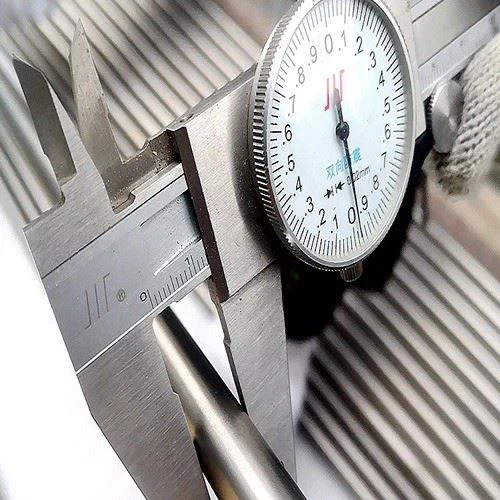
Diameter measurement.
Ovality and dimensional uniformity.
Surface condition.
Coil or spool identification.
Straightness where applicable.
For titanium bars:
Diameter and length.
Ovality.
Straightness.
Surface finish.
Visual examination for unacceptable defects.
4. Non-Destructive Testing
Additional non-destructive testing may be arranged when required by the material specification or customer order.
Available inspection planning may include ultrasonic testing, liquid penetrant testing and other suitable examinations.
The selected testing method and acceptance criteria should be agreed upon before production.
5. Material Documentation
Supporting documents may include:
Material Test Certificate (MTC).
Chemical analysis report.
Mechanical test report.
Heat-number traceability.
Dimensional inspection report.
Non-destructive testing report, when applicable.
Third-party inspection report, when specified.
EN 10204 3.1 documentation or additional certification requirements can be reviewed during order confirmation.
Third-party inspection by an agreed inspection organization may be arranged according to project requirements.
Titanium Wire and Bar Packaging & International Shipping
Proper packaging helps protect titanium products from scratches, moisture, mechanical damage and contamination during storage and transportation.
| Product Form | Packaging Method |
|---|---|
| Titanium Wire Coil | Protective wrapping, carton or export wooden case |
| Titanium Wire Spool | Secured spool with protective outer packaging |
| Straight Titanium Wire | Protective sleeves and bundled packaging |
| Titanium Round Bar | Surface protection, secured bundles or wooden cases |
| Precision-Ground Titanium Bar | Individual wrapping and reinforced export packaging |
| Cut-to-Length Titanium Rod | Bundled or individually protected packaging |
Product labels can include grade, specification, diameter, length, quantity, batch or heat number, and identification information required by the purchase order.
Export packaging is arranged according to product dimensions, transportation method and customer requirements.
Why Choose Xi'an Dongmeng Group Co., Ltd.?
Xi'an Dongmeng Group Co., Ltd. supports global B2B procurement of titanium and titanium alloy products.
Our supply services focus on specification matching, customized material requirements, inspection coordination and international order support.
Broad Titanium Grade Selection
We support procurement of commercially pure and alloyed titanium materials for various industrial applications.
Customized Dimensions and Finishing
We can review special diameter, length, machining allowance, tolerance and surface-finish requirements.
Specification-Oriented Procurement
We help customers distinguish industrial material requirements from welding, aerospace and medical material specifications.
Material Inspection and Traceability
Chemical analysis, mechanical testing, heat traceability and additional inspection documentation can be incorporated into the agreed order requirements.
International Export Support
We support overseas distributors, equipment manufacturers, contractors and industrial buyers with technical quotations, packaging arrangements and order coordination.
Frequently Asked Questions About Titanium Wire and Bar
1. What is the difference between titanium wire and titanium bar?
Titanium wire is typically smaller in diameter and supplied in coils, spools or straight lengths. Titanium bar is generally larger and used for machining, forging and mechanical components. The applicable material standard depends on the product form.
2. Which ASTM standard applies to titanium round bar?
ASTM B348/B348M is a commonly specified standard for titanium and titanium alloy bars and billets. The applicable edition, grade, dimensions and delivery condition should be identified in the purchase order.
3. What is ASTM B863 titanium wire?
ASTM B863 specifies requirements for titanium and titanium alloy wire. Buyers should identify the required grade, wire diameter, product condition and additional inspection requirements.
4. Which titanium grade is best for corrosion-resistant equipment?
Grade 2 is commonly considered for general chemical and marine applications. Grade 7 and Grade 12 may provide advantages in selected corrosive environments. Final selection depends on the specific process conditions.
5. What is the difference between Grade 2 and Grade 5 titanium bar?
Grade 2 is commercially pure titanium offering good corrosion resistance and weldability. Grade 5 is Ti-6Al-4V alloy, offering significantly higher strength for mechanically demanding applications.
6. Can titanium bar be supplied with precision-ground surfaces?
Yes. Precision-ground titanium bars can be evaluated for applications requiring controlled diameter, straightness and surface finish. The required tolerances should be stated in the inquiry.
7. Can titanium wire be supplied in coils or straight lengths?
Yes. Titanium wire supply options include coils, spools and straight lengths, depending on grade, diameter and manufacturing feasibility.
8. Is Grade 23 titanium the same as ASTM F136 titanium?
Not automatically. ASTM B348 Grade 23 is identified as UNS R56407, while ASTM F136 specifies Ti-6Al-4V ELI implant material under UNS R56401. Compliance with ASTM F136 must be independently verified.
9. Can titanium wire be used as welding filler metal?
Only when it meets the applicable welding filler specification and classification. Titanium welding electrodes and rods are commonly specified under AWS A5.16/A5.16M.
10. What inspection documents can be supplied?
Material test certificates, chemical analysis reports, tensile test reports, dimensional inspection records and additional agreed documentation can be provided according to the order requirements.
11. Can you manufacture titanium bars according to engineering drawings?
We can review drawings and technical requirements for customized diameters, lengths, tolerances, surface finishes and processing arrangements. Feasibility is confirmed during quotation.
12. What information is required for a titanium wire or bar quotation?
Please provide the titanium grade, material standard and edition, diameter, length or coil requirements, delivery condition, surface finish, tolerance, quantity, destination and required inspection documentation.
Request a Quote for Titanium Wire & Bar
Looking for ASTM B348 titanium round bar, ASTM B863 titanium wire or customized Ti-6Al-4V rod for your industrial project?
Contact Xi'an Dongmeng Group Co., Ltd. for a technical quotation and material specification review.
Our team can assist with grade selection, dimensional requirements, surface finishing, inspection arrangements and export supply.
For an accurate quotation, please provide:
Material grade and specification.
Required diameter and length.
Delivery condition and surface finish.
Dimensional tolerance and inspection requirements.
Order quantity and destination.
Required material certificates or third-party inspection.
Office Information
Company: Xi'an Dongmeng Group Co., Ltd.
Phone / WhatsApp: +86 15769214734
Email: office@dongmjd.com
Address: Room 4107, Runfeng Building, Sanqiao New Street, Weiyang District, Xi'an City, Shaanxi Province, China.
Send us your titanium material requirements to request a quotation, dimensional availability review or material documentation support.
Hot Tags: Titanium wire and bar, titanium alloy bar, titanium wire supplier, titanium bar supplier, titanium round bar, titanium rod, ASTM B348 titanium bar, ASTM B863 titanium wire, Grade 2 titanium wire, Grade 5 titanium bar, Ti-6Al-4V round bar, Grade 23 titanium rod, titanium welding wire, titanium bar manufacturer, titanium alloy wire supplier., Gr2 Titanium Plate, Gr2 Titanium Plate Sheet, Titanium Alloy Wire And Bar

